
Translation result.
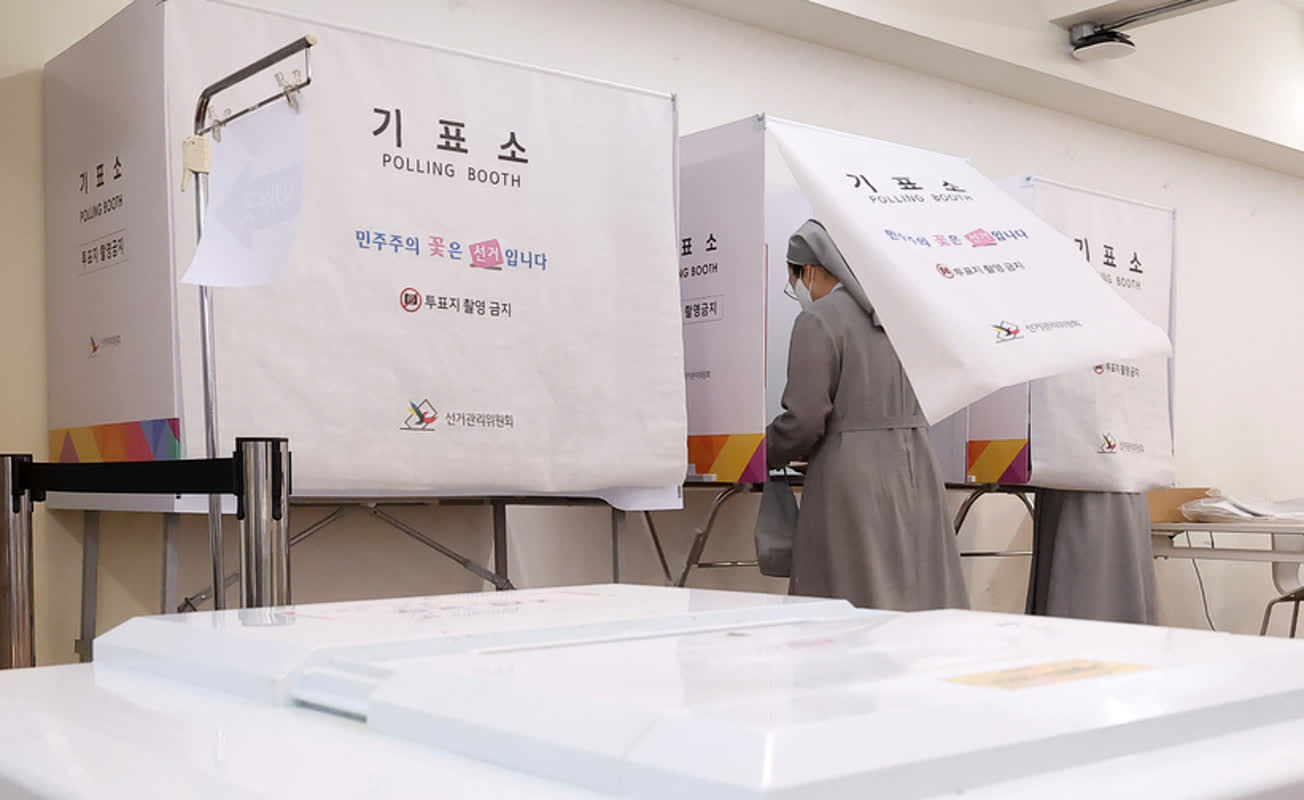
In the June 3 local elections, the number of foreign residents eligible to vote surpassed 150,000 for the first time.
On the 27th, the National Election Commission and the Ministry of the Interior and Safety reported that foreign voters in the 9th nationwide local elections totaled 151,532—an increase of 23,909 (18.7%) from the previous local elections (127,623). Their share of the overall electorate also reached a record high of 0.34%.
Foreign residents who are 18 or older and have held permanent residency (F-5 visa) for at least three years are eligible to vote in elections for local government heads and local councils. They do not have voting rights in presidential or National Assembly elections.
When foreign residents first participated in local elections in 2006, only 6,726 were registered. The number exceeded 100,000 for the first time in 2018, and this year—20 years after the system was introduced—the foreign electorate has grown to roughly 22.5 times that initial figure.
Ansan and Siheung in Gyeonggi Province, which have large foreign resident populations, registered the highest shares of foreign voters at 1.8% each, followed by Bucheon at 1.3%, Suwon at 0.8%, and Hwaseong at 0.5%.
Eumseong County in North Chungcheong Province has one of the highest proportions of foreign residents nationwide—about 16%—yet foreign voters accounted for only 0.8% of the registered electorate there. Authorities say this reflects that relatively few foreign residents meet the three-year permanent residency requirement.
Some observers have expressed concern that a disproportionately large share of foreign voters in specific municipalities or electoral districts could become a decisive factor in election results. Calls for reciprocity have also been raised, with critics arguing that countries that deny Koreans voting rights should not be afforded reciprocal voting privileges here.
By contrast, turnout among foreign voters has declined even as their numbers have increased: foreign voter turnout in local elections fell from 35.2% in 2010 to 17.6% in 2014, then to 13.5% in 2018 and 13.3% in 2022.












Most Commented