
Translation result
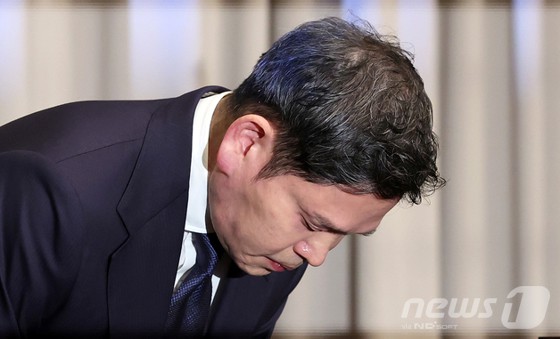
This is a strange and unfamiliar sight — not simply because the Shinsegae Group chairman issued a public apology, but because of the government’s sweeping interventions over the past week, triggered by the controversy around Starbucks Korea’s “Tank Day” promotion.
Let’s face the facts. In the past 70 years of corporate history, has a government ever singled out a private company for a broad, state-driven veto or organized boycott?
Governments frequently initiate tax audits, criminal investigations, fines, and regulatory measures against specific firms.
Those actions are generally taken to address legal violations or halt illegal conduct: when tax evasion or illicit money flows are suspected; when major crimes such as embezzlement, breach of trust, or technology leaks are uncovered; or when dominant market players abuse their position, engage in collusion, or commit unfair subcontracting practices. In those cases, authorities act to restore compliance or order the cessation of unlawful behavior.
Does the Starbucks “Tank Day” controversy fall into any of those categories? If you pause and think about it, you will reach a single clear conclusion. The answer is intuitive and commonsensical.
The closest analogue might be the 2019 backlash after South Korea’s Supreme Court issued rulings on wartime labor. In retaliation, Japan’s Abe administration imposed export controls on semiconductor materials, which prompted a grassroots “No Japan” movement that emerged voluntarily within the public.
Excess is never a virtue. The moon waxes and wanes; water that rises eventually spills over. That overflow reached a peak on the night of the 23rd, when the president delivered stinging criticisms of Starbucks’ “Siren Event.” The rhetoric grew heated: critics accused the company of acts unfit for human decency, of mercenary behavior, and of amoral commercialization. But one point needs clarification.
The siren has been Starbucks’ signature logo since the company opened its first U.S. store in Seattle in 1971. In Greek myth, a siren is a sea creature that lures sailors with an enchanting song. Starbucks adopted the siren to symbolize its brand philosophy: to captivate customers with irresistibly compelling coffee.
Building on that motif, Starbucks Korea has operated its mobile ordering system, “Siren Order,” continuously since May 2014. Over the past 12 years, Siren Order has processed more than 700 million orders. Nearly 8 million monthly active users access the Siren Order feature through the Starbucks app. For more than a decade, millions of Korean consumers used Siren Order without controversy. Who decided to place a red mark on the word “siren”?
On the 20th, after the president criticized the event at a Cabinet meeting and asked how people could behave so, the justice minister hinted at possible ministry-level intervention. On the 21st, the interior minister announced that the Interior Ministry would not use Starbucks products at events it sponsors. On the 22nd, the Defense Ministry suspended a troop welfare program involving Starbucks, and the Justice Ministry ordered prosecutor’s offices to urgently report any purchases of Starbucks products made with this year’s budget.
On the 24th, police opened a probe and registered Chairman Jeong Yong-jin as a suspect following a complaint that he had insulted the May 18 Gwangju Democratization Movement. Two days later, Jeong bowed repeatedly and offered a public apology: “I will make no excuses. I take full responsibility for this matter. It was my fault.”
I have written only the facts as they are. Be honest with yourself and think this through. If, after reading this, you find yourself feeling anger toward a particular person or institution, that reaction reveals something about you.










Most Commented