
Sejong Administrative Capital: What Does the 2029 Presidential Office Move Mean for Korea?
Daniel Kim Views
Translation result.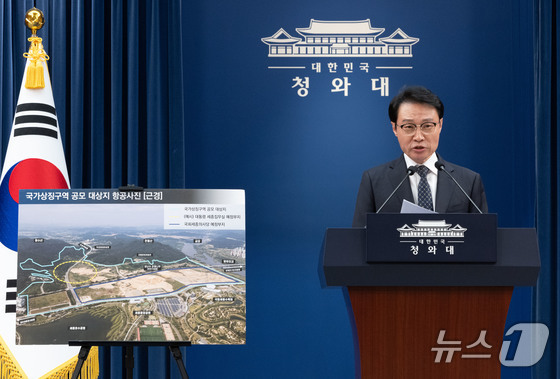
On April 14, after the Blue House announced plans to issue a bid notice to prepare the site for a presidential office in Sejong, political leaders across the Sejong region expressed unanimous support.
At a briefing, Blue House communications chief Lee Gyu-yeon said the administration plans to issue the bid notice on April 15 to prepare the site for the president’s Sejong office, and pledged that “we will do everything possible” to enable occupancy by August 2029.
Democratic Party chief spokesman Kang Jun-hyun (Sejong-eul) welcomed the Blue House announcement and said the move is giving concrete form to President Lee Jae-myung’s intention to hold his retirement ceremony in Sejong.
He described the initiative as “a strategic declaration to reorganize the center of national administration rather than a simple relocation,” and argued that completing the administrative capital is inevitable, not optional. He added that the shift beginning in Sejong will reshape South Korea’s balance and future.
Independent Rep. Kim Jong-min (Sejong Gap) wrote on social media, “Finally, we are breaking ground. Plans are becoming reality,” and said he “wholeheartedly welcomes President Lee Jae-myung’s promise to hold his retirement ceremony in Sejong.”
Kim stressed that, beyond the cost, the president’s commitment to hold his retirement ceremony in Sejong is the most important factor, and called the August 2029 move-in target more than a slogan — a concrete timeline to be welcomed.
At the same time, he urged swift passage of the Special Administrative Capital Act now that full-scale construction is about to begin.
Hwang Un-ha of the Joguk Innovation Party, who has announced his candidacy for Sejong mayor, also praised the announcement as a signal for the early completion of the administrative capital.
Hwang said the president’s indication that he will likely hold his retirement ceremony in Sejong and his strong commitment to completing the administrative capital within his term respond to the expectations of Sejong residents and all citizens who favor balanced national development.
He called on the Administrative City Construction Agency and other relevant ministries to move quickly, as the president requested, and to ensure rapid progress through bold, meticulous schedule management. He added that prompt enactment of the Special Administrative Capital Act is necessary to support the president’s governance.
Sejong mayoral hopefuls also lined up to welcome the plan.
Democratic hopeful Lee Chun-hee wrote on Facebook that steps to complete Sejong as the administrative capital are accelerating, and called the start of site-preparation work “welcome news” driven by the president’s strong will. He said he and all Sejong residents warmly welcome the development.
Fellow Democratic hopeful Jo Sang-ho noted that the president’s strong commitment to completing Sejong appears as a standalone item at No. 50 on the national agenda, and wrote that the Democratic Party must regain the Sejong mayor’s office to accelerate the effort.
People Power Party hopeful Choi Min-ho, in a personal statement, said he and 390,000 Sejong residents “sincerely welcome” the president’s instruction to hasten construction of the Sejong office.
Choi added that the government’s announcement of the construction site and the August 2029 occupancy goal mark the start of national balanced development and signify more than a simple relocation — they signal an effort to position Sejong as the administrative capital and a new center of governance for South Korea.












Most Commented