
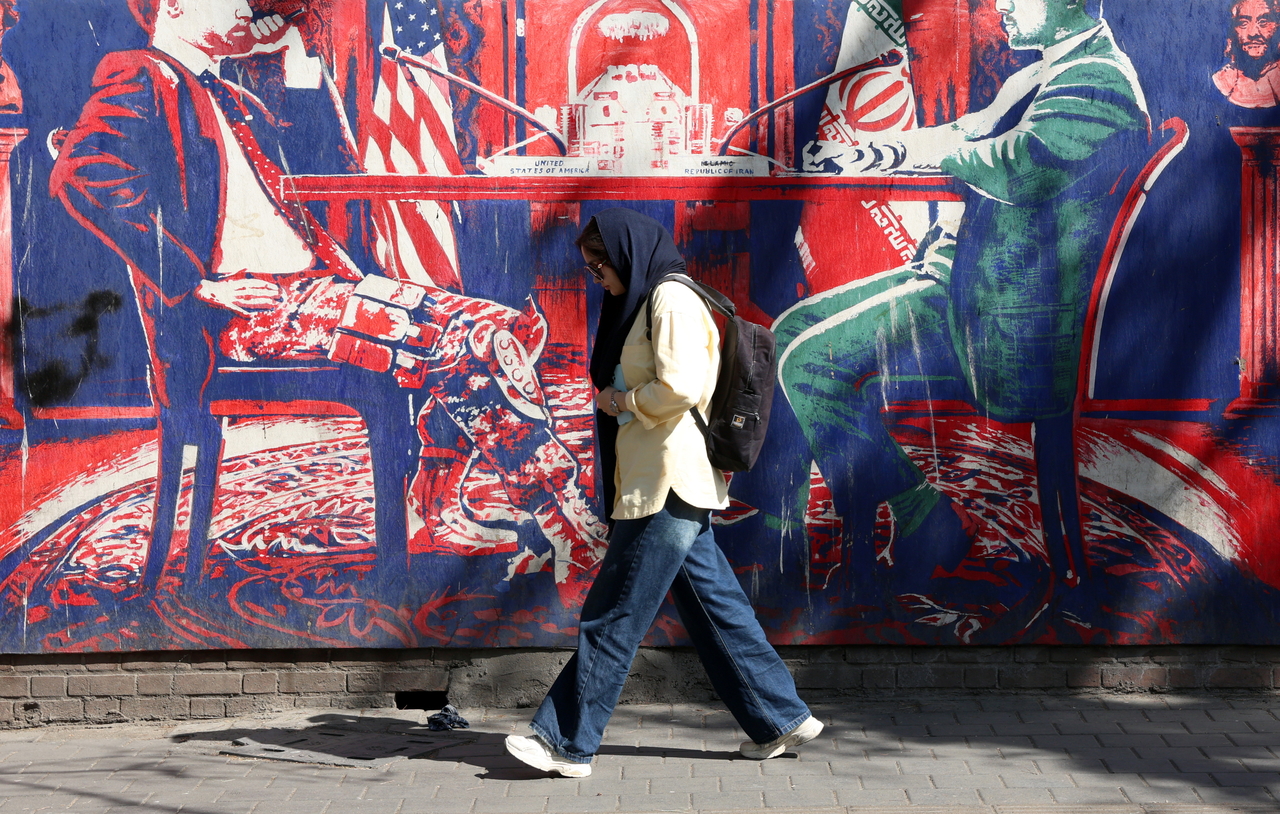
[Herald Economy = Reporter Park Hyewon] As hopes for U.S.-Iran talks rise under Pakistani mediation, hardline sentiment toward the United States remains strong inside Iran.
On the 11th (local time), government spokeswoman Fatemeh Mohajerani said in a statement that dispatching a negotiating delegation demonstrates Iran’s resolve to engage in talks. She added, however, that President Masoud Pezeshkian warned the delegation will “negotiate with a finger on the trigger.”
Mohajerani said Iran is open to dialogue but is also acutely aware of its lack of trust in the United States. As a result, the delegation is approaching the talks with the utmost seriousness, she said, and under the supreme leader’s guidance Iran will not concede or abandon its rights.
Mohammad Reza Aref, Iran’s first vice president, told X the same day that if the U.S. sends an “America-first” delegation, a mutually beneficial agreement could be possible for both sides and for the world. But he warned that if the U.S. delegation prioritizes Israel, a deal would be impossible.
He added that in that scenario Iran would inevitably strengthen its defenses beyond current levels, and the international community would pay a greater cost.
On the talks, Mehr news agency quoted international relations expert Dr. Mehdi Hanaalizadeh as saying the United States has not accepted the conditions Iran set, making an agreement unlikely.
Dr. Hanaalizadeh argued that the U.S. lacks the appetite to continue a war and cannot reopen the Strait of Hormuz by military means. He said the fundamental gap between U.S. demands for Iranian denuclearization and Iran’s refusal to negotiate on nuclear issues makes a deal highly unlikely.
He noted that none of the four preconditions Iran said the U.S. had accepted have been implemented, leaving the Strait of Hormuz effectively closed. He described the negotiating atmosphere as tense, saying bilateral talks are impossible and that discussions are taking place in a three-way format with Pakistan present.
He also said that because the U.S. vice president is scheduled to return within hours, Iran’s delegation is likely to depart Pakistan soon. Given recent developments, he assessed that the likelihood of either a definitive deal or an outright continuation of war has diminished, and that a protracted state of neither war nor agreement now seems the most probable outcome.












Most Commented