
Controversy Erupts: Is the Daegu-Gyeongbuk Administrative Integration Law a ‘Slave City’ Initiative?
Daniel Kim Views
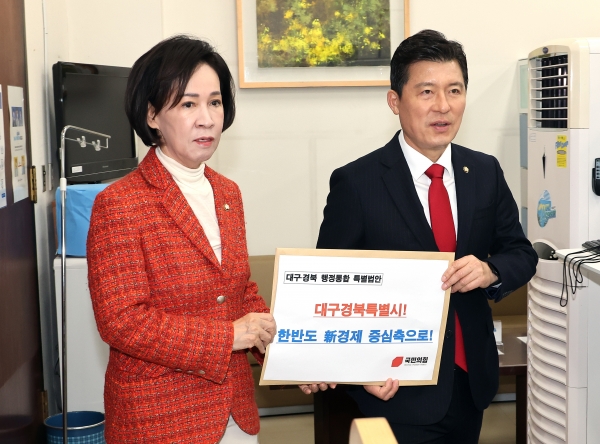
Green Economy News and labor experts report that while the 2023 Regional Balanced Investment Promotion Act was less severe in its infringement on labor rights compared to the current Daegu-Gyeongbuk integration special law, it’s noteworthy that this attempt to weaken crucial labor laws under the guise of regional development had bipartisan support at the time.
In November 2023, the National Assembly’s Industry, Trade, and Energy Committee approved the Special Law for Regional Balanced Investment Promotion. The bill combined proposals from 11 lawmakers, including Kim Seong-won, and 108 members of the People Power Party led by Kim Sang-hoon. After amendments, it passed unanimously in a full committee meeting with backing from both the People Power Party and the Democratic Party.
Article 14 of the Act allowed special districts to bypass many labor standards and minimum wage laws, with limited exceptions. This meant that these districts could potentially implement differential minimum wages, ban labor unions, and enforce extended working hours beyond the standard workweek, as long as they adhered to certain aspects of legal working hours, break times, and safety management criteria.
Green Economy News’s investigation into committee meeting records and footage revealed that members neither opposed these provisions nor engaged in thorough discussions about the bill.
The bill, which has faced renewed scrutiny in the 22nd National Assembly, had its controversial Article 14 modified and remained pending until the April 2025 temporary session.
Legal experts argue that the recent “Slave Special City” controversy surrounding the Daegu-Gyeongbuk integration law didn’t emerge in isolation. They point out that the 2023 bill, despite not passing the plenary session, set a precedent for subsequent legislation attempting to circumvent labor laws.
These experts express significant concern over how the original bill received unanimous committee support.
Labor law specialists criticize lawmakers for “copy-pasting” bills that undermine labor protections ahead of local elections, while noting that the Ministry of Interior and Safety has pledged to reject attempts to exempt regions from the Minimum Wage Act and Labor Standards Act.
Labor experts have voiced serious concerns about the bill’s content. A labor attorney collaborating with Green Economy News stated, “We’re seeing ongoing attempts to weaken labor laws under the pretext of administrative integration or regional development, both now and in previous assemblies.” They emphasized that the push for local labor reform is particularly evident in the previous Regional Balanced Investment Promotion Act and the proposed economic special zones in the Daegu-Gyeongbuk Special City plan.
Another labor attorney observed, “With local elections approaching, legislators are fixating on administrative integration while neglecting the details of the special law, leading to the recycling of previous bills.” They questioned the accountability of lawmakers during this pre-election period, identifying the 2024 Regional Balanced Investment Promotion Act as the root of the problem.
In response, the Ministry of Interior and Safety announced its rejection of 90 out of 335 provisions in the Daegu-Gyeongbuk Administrative Integration Special Law. These rejected provisions include exemptions from the Minimum Wage Act and Labor Standards Act, as well as various special allowances for establishing special zones.
The Daegu-Gyeongbuk integration promotion team is also reconsidering provisions related to the Minimum Wage Act and Labor Standards Act. An official from the team stated, “While we aim to propose all provisions in the special law, we are also reviewing potential content revisions and the removal of certain clauses.”












Most Commented