
Electric Vehicle Adoption in Asia: 75% Show Interest, But What’s Holding Them Back?
Daniel Kim Views
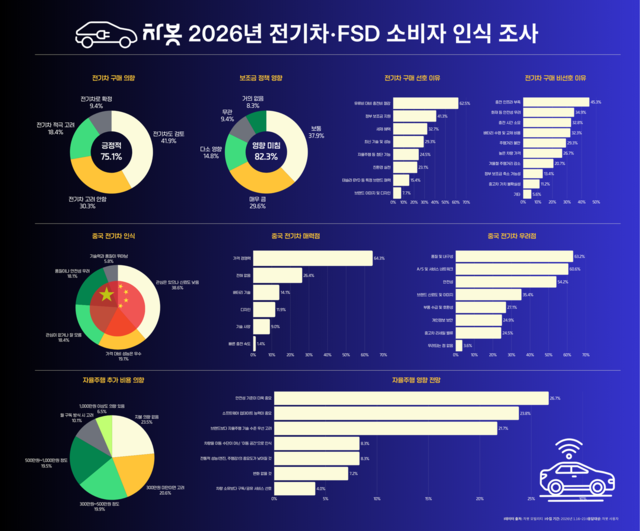
Chabot Mobility, a leading mobility concierge platform provider, released findings on March 10 from its survey of 450 prospective new car buyers for 2026. The results indicate that while electric vehicles (EVs) and autonomous driving technology are becoming mainstream, consumers still prioritize reliability and safety in their purchasing decisions.
The survey revealed a strong inclination towards EVs, with 75.1% of respondents expressing interest in purchasing an electric vehicle. Breaking down the numbers, 41.9% said they would consider an EV, 18.4% are actively exploring EV options, and 9.4% have already decided to buy an electric vehicle. Only 30.3% of respondents stated they were not considering an EV.
Acceptance rates varied significantly across age groups. Millennials and Gen Z showed the highest enthusiasm, with 100% of respondents in their 20s and 85.4% of those in their 30s expressing interest in EVs. In contrast, baby boomers and older generations displayed lower interest levels, highlighting a generational divide in EV adoption.
Economic factors emerged as the primary drivers for EV consideration. The top reasons cited were lower charging costs compared to fuel expenses (62.5%), government incentives (41.3%), and tax benefits (32.7%).
However, several factors continue to deter potential EV buyers. The main concerns included insufficient charging infrastructure (45.3%), safety issues such as fire risks (34.9%), lengthy charging times (32.8%), battery longevity and replacement costs (32.3%), range anxiety (29.3%), and high vehicle prices (26.7%).
Perceptions of Chinese EV brands revealed a mix of curiosity and caution. While 38.6% of respondents expressed interest, they also admitted to low confidence in these brands. This suggests that while awareness is growing, Chinese EV makers still face challenges in building consumer trust.
The survey found that 18.4% of respondents had no interest or knowledge of Chinese EV brands, while 18.1% voiced concerns about quality and safety. Only 5.8% rated Chinese EVs as technologically advanced and high-quality, indicating that skepticism about these brands’ capabilities remains prevalent among American consumers.
Price competitiveness emerged as the most attractive feature of Chinese EV brands, with 64.3% of respondents citing it as the top factor. Other appealing aspects included battery technology and range (14.1%), design aesthetics (11.9%), cutting-edge tech features (9.0%), and fast charging capabilities (7.6%).
Consumer concerns about Chinese EV brands centered on fundamental issues of trust, quality, and after-sales support. The top worries were quality and durability (63.2%), inadequate service networks (60.6%), and safety concerns, particularly regarding battery fire risks (54.2%).
Additional concerns included lack of brand credibility (35.4%), parts availability and compatibility issues (27.1%), data privacy concerns (24.9%), and potential depreciation of resale value (24.5%). Notably, only 3.6% of respondents reported having no concerns, indicating that the vast majority of consumers perceive some level of risk associated with Chinese EV brands.
By Kim Sang-wook, Automotive News correspondent













Most Commented