
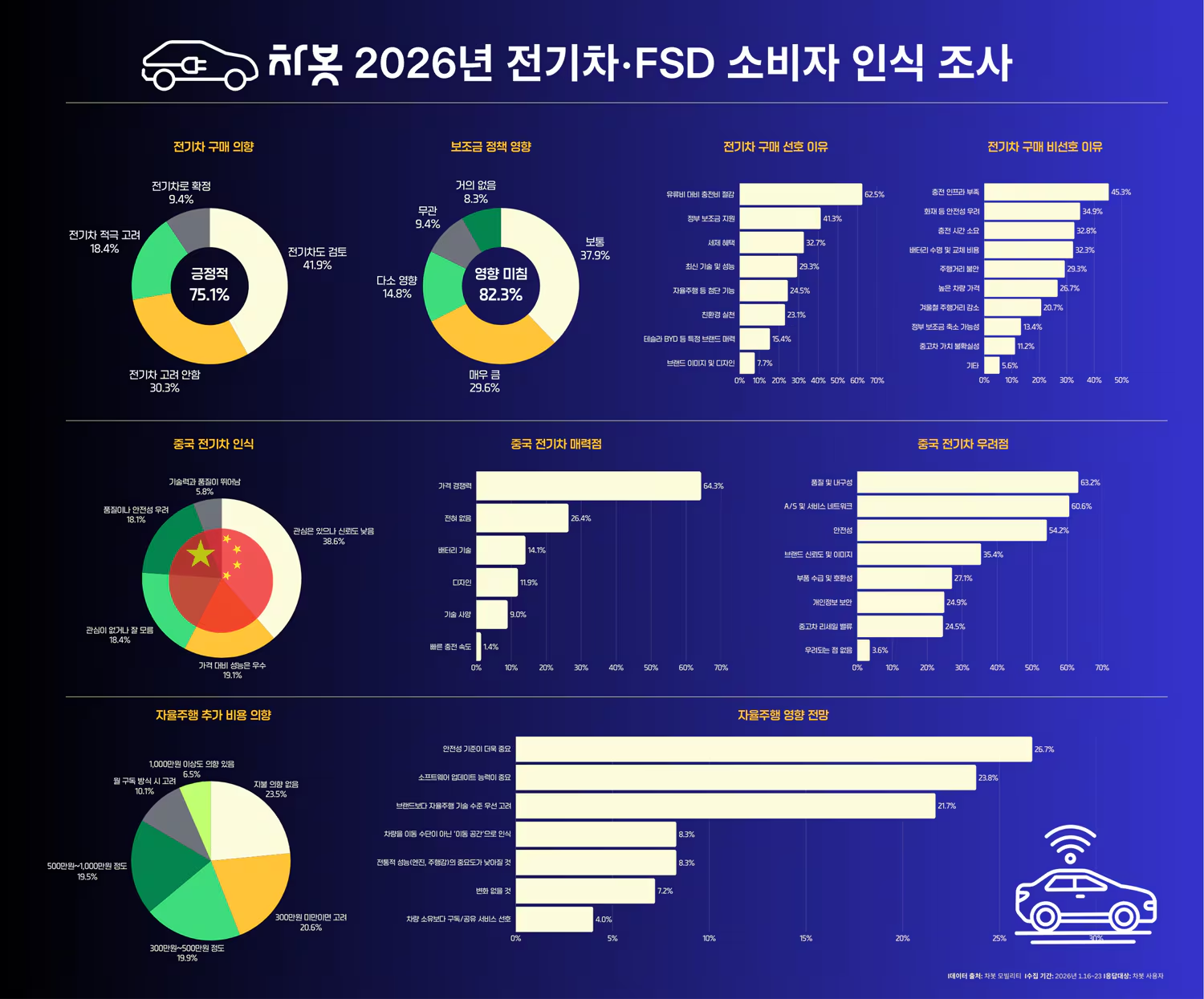
The survey found that 75.1% of respondents expressed interest in purchasing an EV. Breaking this down, 41.9% said they were considering an EV, 18.4% were actively looking into EVs, and 9.4% had already decided to buy one. Only 30.3% of respondents ruled out EVs entirely.
Age played a significant role in EV preferences. Remarkably, 100% of respondents in their 20s showed interest in EVs, while 85.4% of those in their 30s responded positively. However, acceptance rates were notably lower among respondents in their 50s and 60s, highlighting a clear generational divide.
Cost savings emerged as the primary motivator for EV consideration, with 62.5% citing lower charging costs compared to fuel expenses. Government incentives also played a role, with 41.3% mentioning subsidies and 32.7% noting tax benefits. Interestingly, factors like cutting-edge technology (29.3%), advanced features including self-driving capabilities (24.5%), and environmental concerns (23.1%) were less influential.
The survey also identified key barriers to EV adoption. Topping the list was inadequate charging infrastructure (45.3%), followed by safety concerns such as fire risks (34.9%), lengthy charging times (32.8%), battery lifespan and replacement costs (32.3%), range anxiety (29.3%), and high upfront costs (26.7%). These findings suggest that practical concerns continue to hinder widespread EV adoption.
Government EV subsidies proved to be a significant factor in purchase decisions. Approximately 67% of respondents considered subsidies important, with 37.9% saying they had some impact and 29.6% indicating a major influence.
Attitudes toward Chinese EV brands were mixed. While 38.6% expressed interest but low trust, 19.1% acknowledged their strong price-to-performance ratio. Only 5.8% rated Chinese EVs as technologically superior.
Price competitiveness was the main draw for Chinese brands, cited by 64.3% of respondents. However, concerns about quality and durability (63.2%), limited after-sales service and support networks (60.6%), and safety issues including battery fire risks (54.2%) were significant deterrents. These findings underscore the importance of building trust for successful market entry.
Regarding willingness to pay for self-driving features, 23.5% of respondents were unwilling to pay extra. However, 76.5% were open to additional costs, with the most popular price range being 3 million to 5 million KRW (2,250 to 3,750 USD). Only 6.5% were willing to pay over 10 million KRW (7,500 USD) for such features.
A Carbot Mobility spokesperson commented, “The EV market is rapidly evolving beyond its eco-friendly image to become a mainstream choice, driven by lower maintenance costs and total ownership expenses. For both Chinese EV brands and self-driving technology, success will hinge not just on competitive pricing, but on convincing consumers of their reliability and safety.”











Most Commented