Quick access to main page (top) Direct access to main contents Quick access to main page (bottom)

China’s Military Secretly Sought NVIDIA AI Chips Despite U.S. Bans

Daniel Kim Views  

Translation result

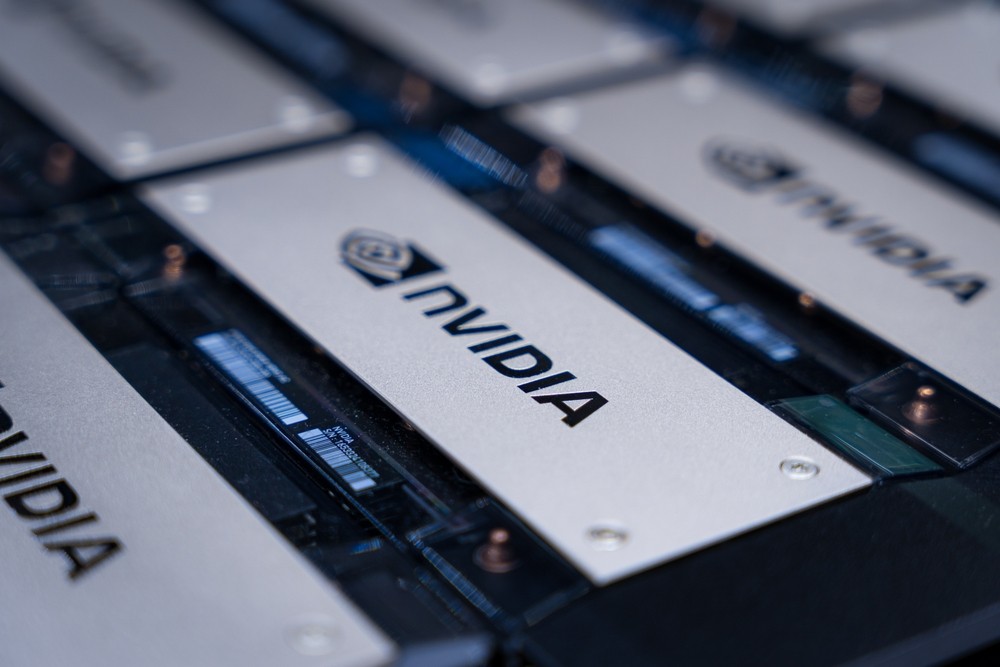
(사진=셔터스톡)
(Photo=Shutterstock)

A new analysis of Chinese military procurement records shows the People’s Liberation Army (PLA) actively sought NVIDIA’s high‑performance AI chips for years. The findings run counter to NVIDIA CEO Jensen Huang’s assertion that “the Chinese military does not depend on NVIDIA chips” and are likely to provoke debate in Washington.

On June 1, the New York Times reported that WireScreen, a Chinese corporate data‑analysis platform, reviewed procurement records spanning 2019–2025 and found the Chinese military continued trying to acquire NVIDIA AI chips even after U.S. export controls took effect.

WireScreen analysts examined 3,800 procurement documents tied to high‑performance semiconductors and computing. They identified more than 500 instances in which the military explicitly requested NVIDIA chips by product name or technical specification. The requests named flagship accelerators including the A100, A800, H100 and H800.

Those requests were not limited to a single unit. Records show demands for NVIDIA AI chips from organizations running nuclear blast simulations, from offensive cyber operations units, and from teams conducting military wargames—spanning nearly every operational area where advanced AI computing could be applied.

John Costello, an analyst at WireScreen and author of the report, said the procurement records “provide a direct and undeniable demonstration that U.S. technology is being used to strengthen the Chinese military’s capabilities.”

The report, however, stops short of proving delivery. Investigators confirmed cases where suppliers agreed to delivery terms, but they did not produce evidence that the chips were ultimately handed over to the military.

NVIDIA disputed characterizations that the Chinese military depends on a small number of its chips. Company spokesman John Rizzo noted that advanced AI systems typically operate on very large clusters that link more than 100,000 chips, and said the quantities shown in the procurement records fall far short of that scale.

Rizzo also pointed out China’s growing domestic semiconductor industry and said the PLA is already using Huawei’s AI chips. Procurement files do show Chinese firms deploying Huawei AI processors have won contracts in some cases.

Still, the public documents make clear the PLA continued seeking NVIDIA products after U.S. controls were imposed. WireScreen identified China’s Cyberspace Force—its military cyberwarfare arm—as one of the largest demanders of U.S.‑made AI technologies.

As one example, a January 2024 request from Beijing’s military cybersecurity department specified 4 AI servers equipped with NVIDIA A100 chips and required support for the password‑cracking tool Hashcat. Experts say such systems could be used for password cracking and hacking research or to develop AI‑based offensive techniques.

The report also lays out how the PLA adapted to U.S. export rules. Early on, some procurement efforts failed or were rebid, but investigators found that within roughly a year the military had developed new workarounds.

Among the tactics, the PLA eased certain technical requirements and broadened its pool of suppliers to include civilian tech firms and paper companies. Investigators also documented a rise in leasing compute resources at commercial data centers to obtain remote access to AI‑chip processing power.

The study arrived as the U.S. government and Congress reassess export policy for AI semiconductors bound for China. Lawmakers are considering measures such as mandatory government certification to prevent advanced chips from reaching military end users and legislation like the “AI OVERWATCH” bill, which would give Congress authority to block exports.

John Mullenar, chair of the House China Subcommittee, said the findings show China is attempting to acquire U.S. technology for military use and argued that export controls are needed “to preserve America’s AI advantage and to avoid arming China.”

Industry officials counter that overly broad restrictions could accelerate China’s push for technological self‑sufficiency.

Huawei has said it achieved a technical breakthrough that could allow it to secure advanced chip production capacity within five years, and the company thanked the U.S. for creating conditions that helped China’s semiconductor ecosystem grow.

Reporter Chan Park cpark@aitimes.com

Daniel Kim
content@tenbizt.com

Comments0

300

Comments0

[Military] Latest Stories

  • 30 of 33 Iran Missile Bases Still Active: Intelligence Defies Trump Claims
    30 of 33 Iran Missile Bases Still Active: Intelligence Defies Trump Claims
  • US Javelin Missiles Deployed in Taiwan’s High-Stakes Live-Fire Drill
    US Javelin Missiles Deployed in Taiwan's High-Stakes Live-Fire Drill
  • North Korea’s 10-Year Nuclear Threat: Is a Limited Strike Imminent?
    North Korea's 10-Year Nuclear Threat: Is a Limited Strike Imminent?
  • AI vs. Video Compression: How RMX is Redefining Tactical Edge Tech
    AI vs. Video Compression: How RMX is Redefining Tactical Edge Tech
  • US-South Korea Security Meeting Sparks Tension Over Military Control
    US-South Korea Security Meeting Sparks Tension Over Military Control
  • Iran Claims Missile Strikes on U.S. Military Bases: Did They Hit?
    Iran Claims Missile Strikes on U.S. Military Bases: Did They Hit?

Weekly Best Articles

  • Choi Dong-seok’s Family Bond: How a Simple Engraving Reveals Deep Love for His Children
  • Kwak Sun-hee’s Stunning Wedding Photos: A Celebration of Love and Courage
  • Is ‘I Am a Natural Person’ Just a Big Lie? Comedian Yoon-taek Reveals Shocking Secrets!
  • Health Scare: Why Fans Are Worried About Go Ji Yong’s Dramatic Weight Loss
  • Discover the Winter Gongju Chestnut Festival: A Taste of Korea at H-Mart in the USA!
  • 2026 Spring Wildfire Prevention: How Gyeryong City is Cutting Response Time to 30 Minutes!

You May Also Like

  • 1
    Trump Slashes AI Review Window to 30 Days Amid National Security Debate

    Politics 

    Trump Slashes AI Review Window to 30 Days Amid National Security Debate
  • 2
    Ukraine’s EU Bid Surges as Hungary Drops Opposition Amid Russian Attacks

    Politics 

    Ukraine’s EU Bid Surges as Hungary Drops Opposition Amid Russian Attacks
  • 3
    Trump Backs Colombia's 'El Tigre' — What It Means for U.S. Relations

    Politics 

    Trump Backs Colombia’s ‘El Tigre’ — What It Means for U.S. Relations
  • 4
    Trump Backs Colombia's Far-Right Outsider—What's at Stake?

    Politics 

    Trump Backs Colombia’s Far-Right Outsider—What’s at Stake?
  • 5
    12.5% Tariff Hit: South Korea Faces New U.S. Trade Penalties

    Politics 

    12.5% Tariff Hit: South Korea Faces New U.S. Trade Penalties

Popular Now

  • 1
    12.5% Tariff Alert: Why the U.S. Is Targeting South Korean Imports

    Politics 

  • 2
    Marta Kostyuk Makes History at French Open Amid Ukraine Crisis

    Politics 

  • 3
    37 Years in Exile: The Tiananmen Leader Who Just Wants to Go Home

    Politics 

  • 4
    South Korea's Cheongju Airport Faces Crisis as Passenger Numbers Explode

    Politics 

  • 5
    Nuclear Submarine Race: South Korea's High-Stakes Bid for U.S. Fuel

    Politics 

Weekly Best Articles

  • Choi Dong-seok’s Family Bond: How a Simple Engraving Reveals Deep Love for His Children
  • Kwak Sun-hee’s Stunning Wedding Photos: A Celebration of Love and Courage
  • Is ‘I Am a Natural Person’ Just a Big Lie? Comedian Yoon-taek Reveals Shocking Secrets!
  • Health Scare: Why Fans Are Worried About Go Ji Yong’s Dramatic Weight Loss
  • Discover the Winter Gongju Chestnut Festival: A Taste of Korea at H-Mart in the USA!
  • 2026 Spring Wildfire Prevention: How Gyeryong City is Cutting Response Time to 30 Minutes!

Must-Reads

  • 1
    Trump Slashes AI Review Window to 30 Days Amid National Security Debate

    Politics 

    Trump Slashes AI Review Window to 30 Days Amid National Security Debate
  • 2
    Ukraine’s EU Bid Surges as Hungary Drops Opposition Amid Russian Attacks

    Politics 

    Ukraine’s EU Bid Surges as Hungary Drops Opposition Amid Russian Attacks
  • 3
    Trump Backs Colombia's 'El Tigre' — What It Means for U.S. Relations

    Politics 

    Trump Backs Colombia’s ‘El Tigre’ — What It Means for U.S. Relations
  • 4
    Trump Backs Colombia's Far-Right Outsider—What's at Stake?

    Politics 

    Trump Backs Colombia’s Far-Right Outsider—What’s at Stake?
  • 5
    12.5% Tariff Hit: South Korea Faces New U.S. Trade Penalties

    Politics 

    12.5% Tariff Hit: South Korea Faces New U.S. Trade Penalties

Popular Now

  • 1
    12.5% Tariff Alert: Why the U.S. Is Targeting South Korean Imports

    Politics 

  • 2
    Marta Kostyuk Makes History at French Open Amid Ukraine Crisis

    Politics 

  • 3
    37 Years in Exile: The Tiananmen Leader Who Just Wants to Go Home

    Politics 

  • 4
    South Korea's Cheongju Airport Faces Crisis as Passenger Numbers Explode

    Politics 

  • 5
    Nuclear Submarine Race: South Korea's High-Stakes Bid for U.S. Fuel

    Politics 

Share it on...