Quick access to main page (top) Direct access to main contents Quick access to main page (bottom)

14 P-8A Poseidons: How Australia Just Tightened the Net on China

Daniel Kim Views  

Translation result

class=wp-image-75082

Fourteen P-8As complete Australia’s maritime surveillance network

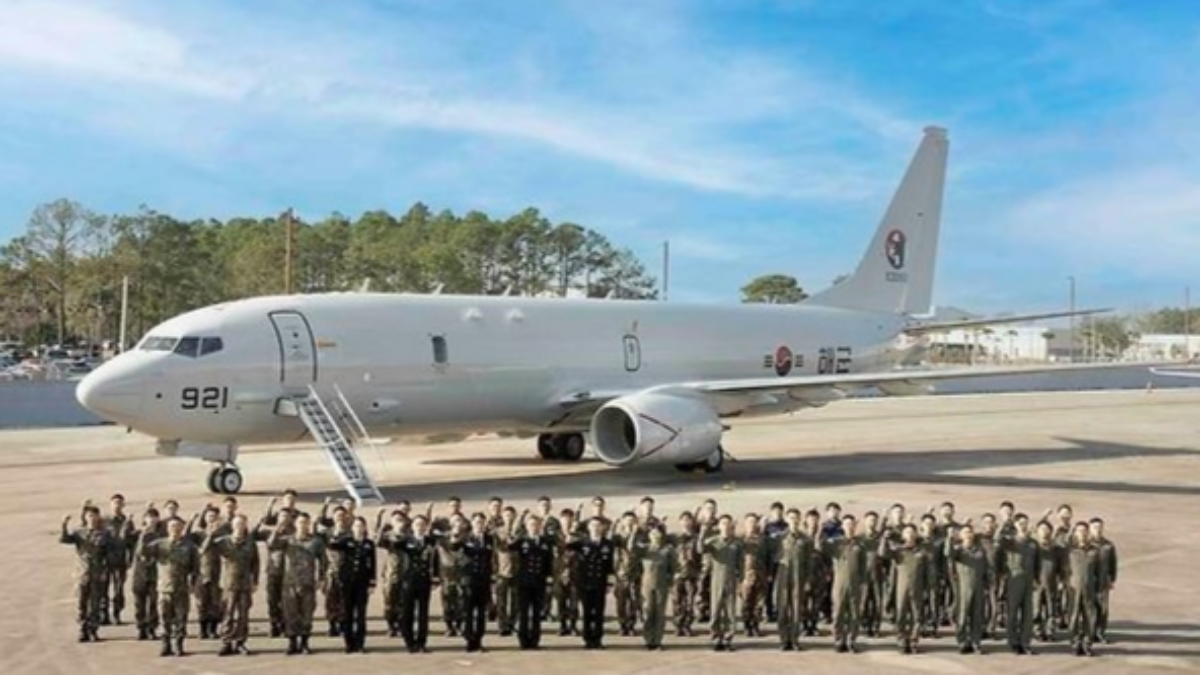
The 14th P-8A Poseidon, delivered on May 27, is more than an incremental addition — it fills the final slot in the maritime patrol structure Australia set out to build.
With this aircraft in service, Australia can rotate maintenance, training, and operational sorties without creating surveillance gaps. That gives Canberra the capacity to monitor the South China Sea, the Indian Ocean and the Pacific simultaneously.
Critically, the added platform substantially lowers the chance that prolonged tensions or conflict would interrupt surveillance because of too few patrol aircraft.

Why China is sensitive: one platform eyes subs, surface ships and aircraft

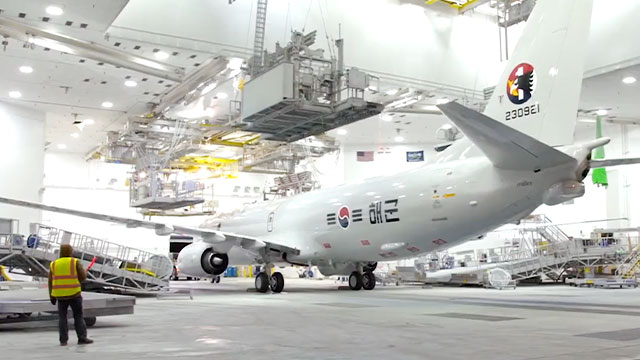
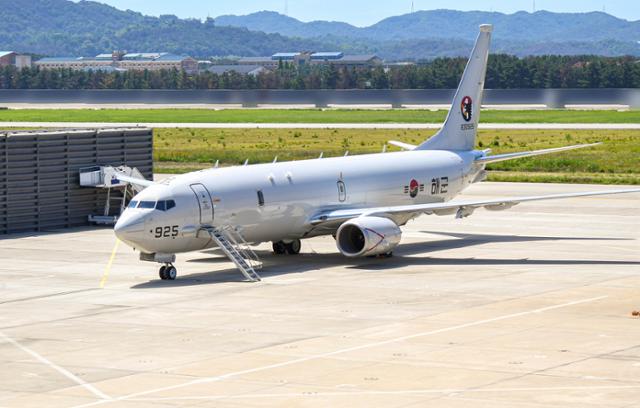
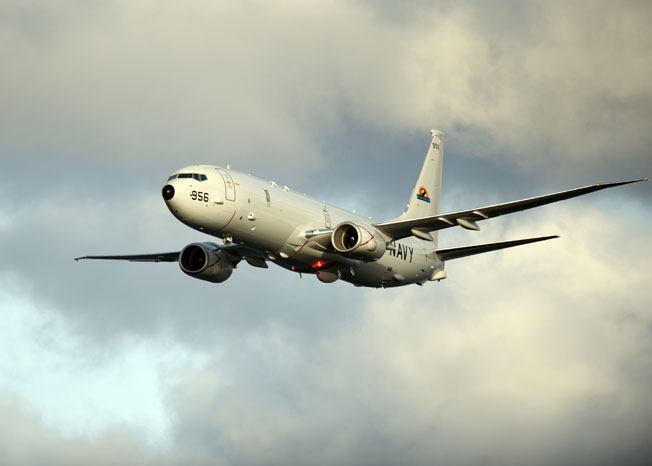
Though the P-8A is based on the Boeing 737 airframe, its mission systems make it effectively a flying anti-submarine warfare command center.
It can deploy large numbers of sonobuoys to analyze underwater acoustic signatures, while long-range maritime radar, ELINT suites and optical sensors let crews track surface vessels and low-flying aircraft simultaneously. It can detect contacts at ranges exceeding 400 km.
From Beijing’s perspective, submarine transits into the South China Sea and Indian Ocean, carrier and destroyer movements, and the trajectories of bombers and naval aircraft all get added to the Poseidon’s databases — increasing the risk that operational patterns and vulnerabilities will be revealed over time.
잠수함

Trained crews and alliance networks matter more than raw numbers

Possessing 14 Poseidons doesn’t automatically equate to a proportional jump in combat capability.
Interpreting sonobuoy fields, applying anti-submarine tactics and fusing multiple sensors into coherent operational pictures all depend on well-trained aircrews and robust maintenance and logistics systems to be effective.
Australia already shares Poseidon operating experience and training data with partners including the U.S., U.K., New Zealand and India. That alliance-level information sharing creates a network effect that multiplies the platform’s value — a development Beijing must take seriously.
해군,

AUKUS ties create a ‘China-surveillance triangle’

The Poseidon is a key node within the U.S.-U.K.-Australia (AUKUS) architecture.
The U.S. and U.K. contribute intelligence, satellite support and submarine technology, while Australia will provide persistent regional awareness across the South Pacific and Indian Ocean using Poseidons and, in the future, nuclear-powered submarines.
That arrangement means every time the People’s Liberation Army Navy pushes beyond the South China Sea into the Indian Ocean or the broader Pacific, its tracks and activity patterns will be visible across the U.S.-U.K.-Australia network.
P-8A 무기의세계>

The key point: observe China without permanently deploying surface combatants

The Poseidon’s advantage is that it can provide near–real-time situational awareness across distant seas without having to keep costly surface ships and submarines constantly forward-deployed.
As China expands facilities in the South China Sea and increases long-range exercises and submarine operations, Australia will naturally tighten Poseidon flight paths and patrol timing.
For Canberra, that creates strategic space: “we monitor and record from a distance and, when necessary, respond with allies.” For Beijing, it means operating with the persistent awareness that land, sea and air activities are increasingly visible within someone else’s sensor network.

Daniel Kim
content@tenbizt.com

Comments0

300

Comments0

[Military] Latest Stories

  • 30 of 33 Iran Missile Bases Still Active: Intelligence Defies Trump Claims
    30 of 33 Iran Missile Bases Still Active: Intelligence Defies Trump Claims
  • US Javelin Missiles Deployed in Taiwan’s High-Stakes Live-Fire Drill
    US Javelin Missiles Deployed in Taiwan's High-Stakes Live-Fire Drill
  • North Korea’s 10-Year Nuclear Threat: Is a Limited Strike Imminent?
    North Korea's 10-Year Nuclear Threat: Is a Limited Strike Imminent?
  • AI vs. Video Compression: How RMX is Redefining Tactical Edge Tech
    AI vs. Video Compression: How RMX is Redefining Tactical Edge Tech
  • US-South Korea Security Meeting Sparks Tension Over Military Control
    US-South Korea Security Meeting Sparks Tension Over Military Control
  • Iran Claims Missile Strikes on U.S. Military Bases: Did They Hit?
    Iran Claims Missile Strikes on U.S. Military Bases: Did They Hit?

Weekly Best Articles

  • Choi Dong-seok’s Family Bond: How a Simple Engraving Reveals Deep Love for His Children
  • Kwak Sun-hee’s Stunning Wedding Photos: A Celebration of Love and Courage
  • Is ‘I Am a Natural Person’ Just a Big Lie? Comedian Yoon-taek Reveals Shocking Secrets!
  • Health Scare: Why Fans Are Worried About Go Ji Yong’s Dramatic Weight Loss
  • Discover the Winter Gongju Chestnut Festival: A Taste of Korea at H-Mart in the USA!
  • 2026 Spring Wildfire Prevention: How Gyeryong City is Cutting Response Time to 30 Minutes!

You May Also Like

  • 1
    Trump Slashes AI Review Window to 30 Days Amid National Security Debate

    Politics 

    Trump Slashes AI Review Window to 30 Days Amid National Security Debate
  • 2
    Ukraine’s EU Bid Surges as Hungary Drops Opposition Amid Russian Attacks

    Politics 

    Ukraine’s EU Bid Surges as Hungary Drops Opposition Amid Russian Attacks
  • 3
    Trump Backs Colombia's 'El Tigre' — What It Means for U.S. Relations

    Politics 

    Trump Backs Colombia’s ‘El Tigre’ — What It Means for U.S. Relations
  • 4
    Trump Backs Colombia's Far-Right Outsider—What's at Stake?

    Politics 

    Trump Backs Colombia’s Far-Right Outsider—What’s at Stake?
  • 5
    12.5% Tariff Hit: South Korea Faces New U.S. Trade Penalties

    Politics 

    12.5% Tariff Hit: South Korea Faces New U.S. Trade Penalties

Popular Now

  • 1
    12.5% Tariff Alert: Why the U.S. Is Targeting South Korean Imports

    Politics&nbsp

  • 2
    Marta Kostyuk Makes History at French Open Amid Ukraine Crisis

    Politics&nbsp

  • 3
    37 Years in Exile: The Tiananmen Leader Who Just Wants to Go Home

    Politics&nbsp

  • 4
    South Korea's Cheongju Airport Faces Crisis as Passenger Numbers Explode

    Politics&nbsp

  • 5
    Nuclear Submarine Race: South Korea's High-Stakes Bid for U.S. Fuel

    Politics&nbsp

Weekly Best Articles

  • Choi Dong-seok’s Family Bond: How a Simple Engraving Reveals Deep Love for His Children
  • Kwak Sun-hee’s Stunning Wedding Photos: A Celebration of Love and Courage
  • Is ‘I Am a Natural Person’ Just a Big Lie? Comedian Yoon-taek Reveals Shocking Secrets!
  • Health Scare: Why Fans Are Worried About Go Ji Yong’s Dramatic Weight Loss
  • Discover the Winter Gongju Chestnut Festival: A Taste of Korea at H-Mart in the USA!
  • 2026 Spring Wildfire Prevention: How Gyeryong City is Cutting Response Time to 30 Minutes!

Must-Reads

  • 1
    Trump Slashes AI Review Window to 30 Days Amid National Security Debate

    Politics 

    Trump Slashes AI Review Window to 30 Days Amid National Security Debate
  • 2
    Ukraine’s EU Bid Surges as Hungary Drops Opposition Amid Russian Attacks

    Politics 

    Ukraine’s EU Bid Surges as Hungary Drops Opposition Amid Russian Attacks
  • 3
    Trump Backs Colombia's 'El Tigre' — What It Means for U.S. Relations

    Politics 

    Trump Backs Colombia’s ‘El Tigre’ — What It Means for U.S. Relations
  • 4
    Trump Backs Colombia's Far-Right Outsider—What's at Stake?

    Politics 

    Trump Backs Colombia’s Far-Right Outsider—What’s at Stake?
  • 5
    12.5% Tariff Hit: South Korea Faces New U.S. Trade Penalties

    Politics 

    12.5% Tariff Hit: South Korea Faces New U.S. Trade Penalties

Popular Now

  • 1
    12.5% Tariff Alert: Why the U.S. Is Targeting South Korean Imports

    Politics 

  • 2
    Marta Kostyuk Makes History at French Open Amid Ukraine Crisis

    Politics 

  • 3
    37 Years in Exile: The Tiananmen Leader Who Just Wants to Go Home

    Politics 

  • 4
    South Korea's Cheongju Airport Faces Crisis as Passenger Numbers Explode

    Politics 

  • 5
    Nuclear Submarine Race: South Korea's High-Stakes Bid for U.S. Fuel

    Politics