
Translation result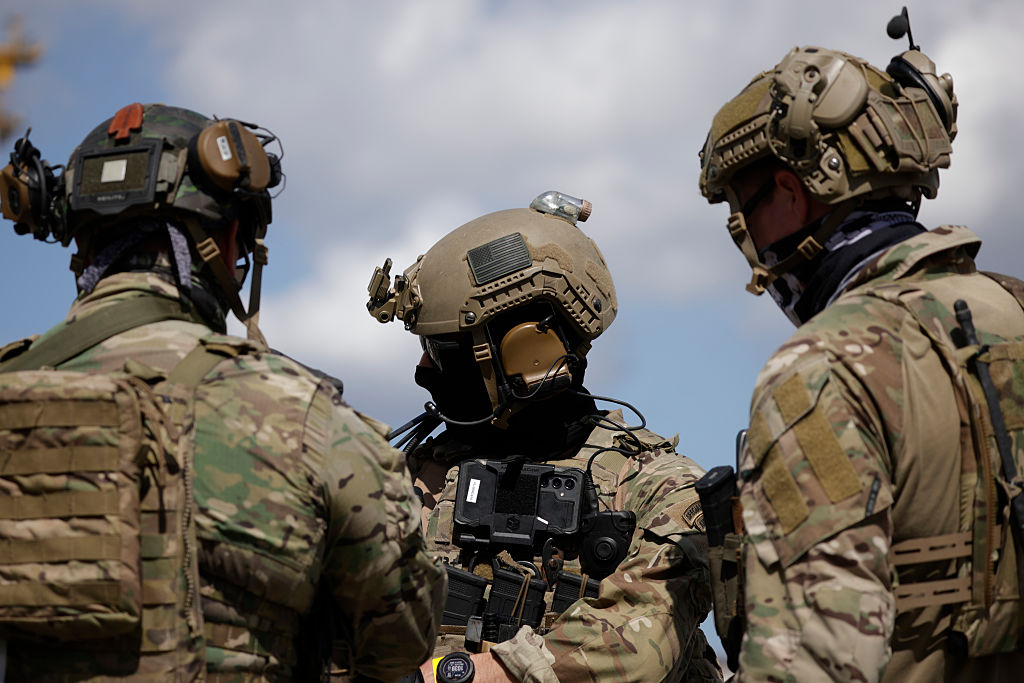 [Herald Economy = Reporter Doh Hyun-jung] The draft of the U.S. National Defense Authorization Act (NDAA) for fiscal year 2027 (October 2026–September 2027) includes provisions that reinforce maintaining the current size of U.S. Forces Korea (USFK).
House Armed Services Committee Chairman Mike Rogers (R–Alabama) released a Chairman’s Mark that extends into FY2027 an existing FY2026 restriction on using funds tied to oversight of U.S. posture on the Korean Peninsula.
The FY2026 NDAA bars obligating or expending funds with the purpose of reducing USFK below its current level of 28,500 troops. In practical terms, that provision aims to keep the U.S. troop presence in South Korea at 28,500, and carrying the prohibition into FY2027 signals an intent to preserve the force size.
The FY2027 draft tightens that language further by broadening the range of budget authorities that cannot be used to cut USFK below 28,500.
Under current law, Congress already blocks the use of NDAA funds for a USFK drawdown. The new draft goes a step further by prohibiting the use of any amounts provided under other statutes that apply to FY2026 and FY2027 to reduce troop levels. In short, the measure would explicitly bar not only NDAA funds but also monies allocated under other laws from funding a reduction of U.S. forces in Korea.
The House draft also includes similar checks aimed at preventing the president from unilaterally ordering reductions or relocations of U.S. forces in Europe without congressional oversight. Still, limits on cutting USFK have largely functioned as advisory constraints under the current NDAA; that practical limitation is likely to remain in the FY2027 bill.
The existing NDAA does allow a waiver: if the administration submits to the relevant committees a justification that a reduction is in U.S. national security interests or that it was coordinated with South Korea, Japan, and United Nations Command member states, the prohibition lifts after 60 days. The FY2027 draft is expected to include a similar clause.
The NDAA must pass both chambers of Congress. Even if the House approves its version, the Senate may revise language during negotiations. As the annual statute that authorizes Defense Department spending and policy, the NDAA takes effect only after both the House and Senate pass it and the president signs it.














Most Commented