
Translation result
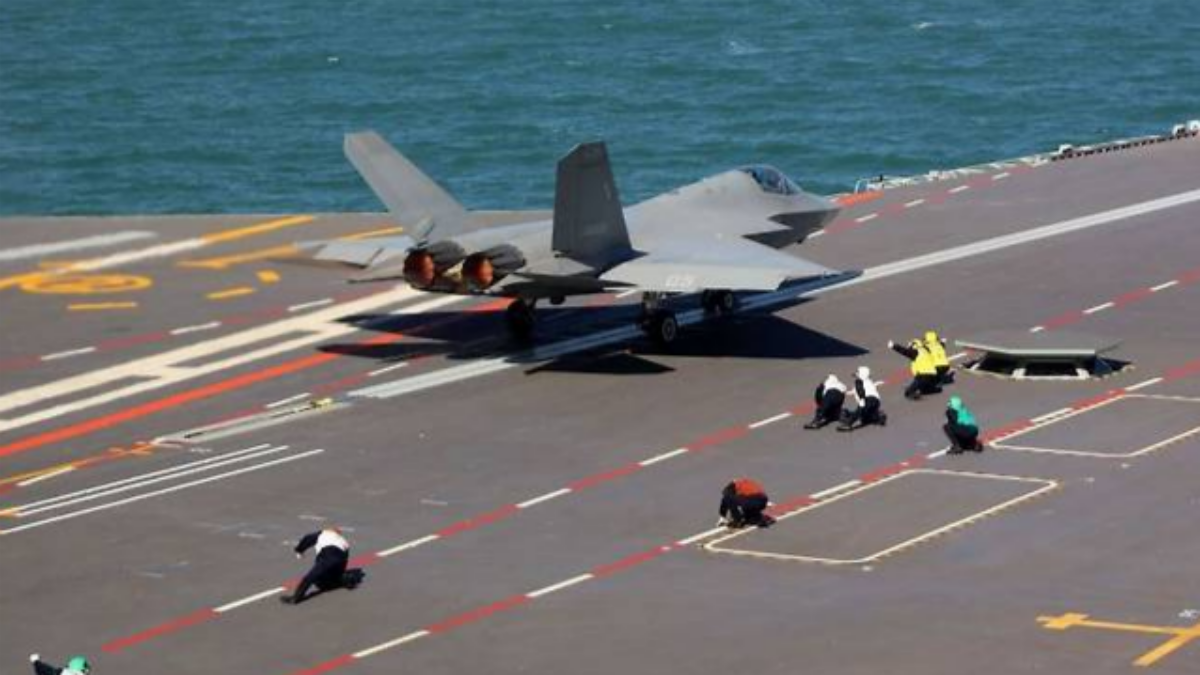
“Chinese-made fighters are a thing of the past,” state media claims after asserting 9–0 rout of Europe’s Typhoon
Chinese state outlets published a claim that the J-10CE, an export variant Beijing supplied to Pakistan, posted an overwhelming 9–0 record against the Eurofighter Typhoon in simulated air combat.
Officials framed the report not as a routine training note but as proof that China’s 4.5-generation fighter capabilities have matched—or in state media’s formulation—overtaken Europe’s newest fighters.
The item’s release just ahead of Pakistan’s prime ministerial visit to Beijing suggests the governments wanted to present the J-10CE as a tangible success of their strategic partnership.
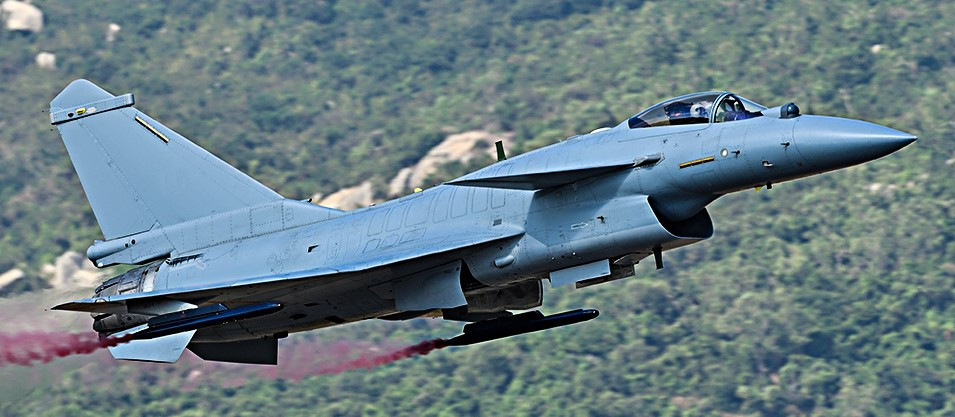
China says J-10CE went 9-for-9 against Typhoon in Qatar’s Zilzal-II drills
China Central Television (CCTV) recently reported that the J-10CE achieved a “9–0 clean sweep,” claiming it downed Eurofighter Typhoons in all nine simulated engagements during 2024.
The broadcast did not identify all exercise participants or release detailed after-action data. Pakistani outlets, however, reported the encounters took place during the joint air exercise “Zilzal-II,” held in Qatar in January 2024.
According to Pakistani coverage, the J-10CE prevailed in five short-range dogfights and four beyond-visual-range (BVR) engagements.
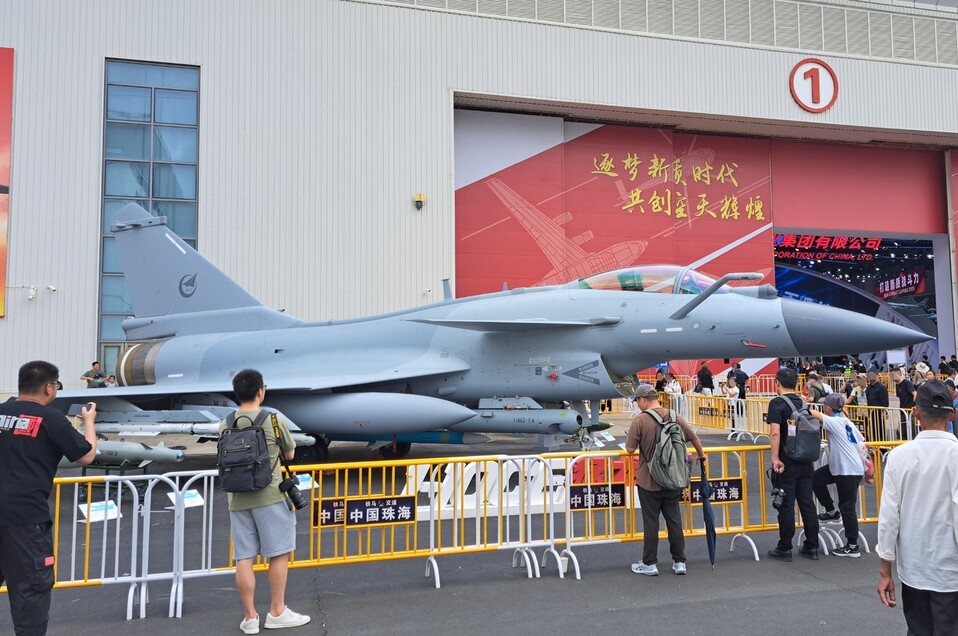
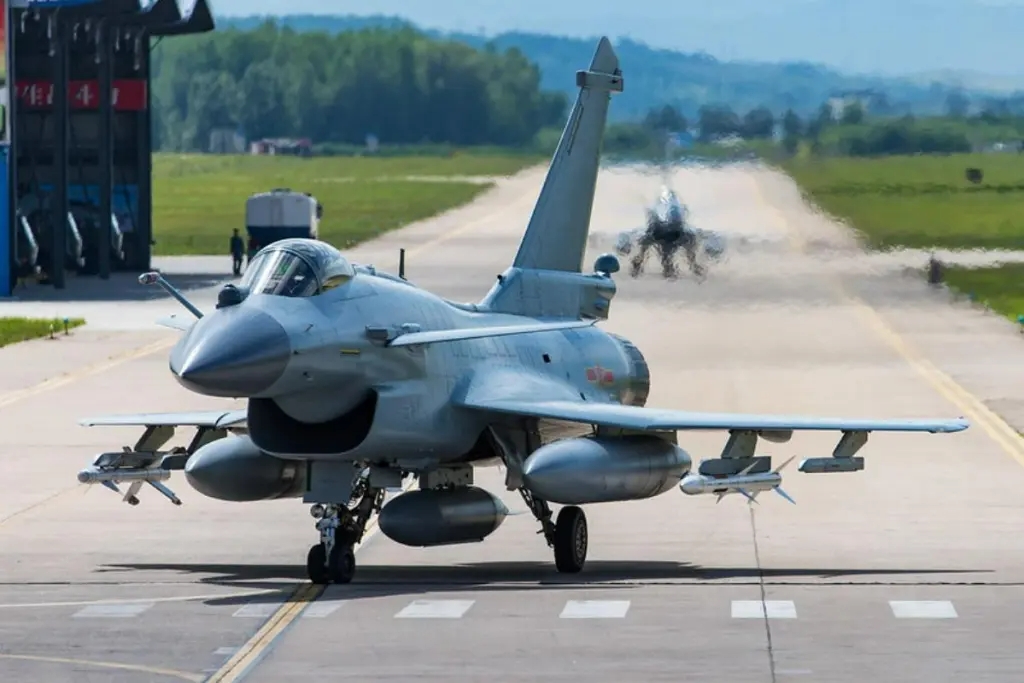
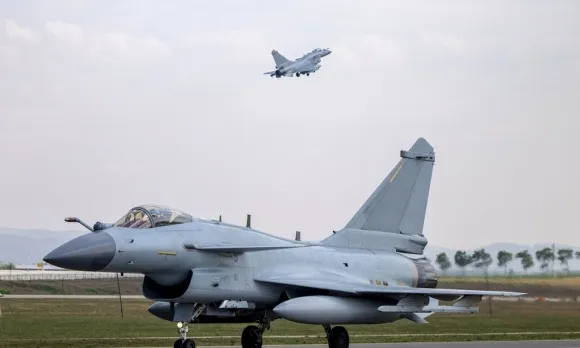
4.5-generation J-10C line: export J-10CE equipped with AESA radar, PL-10 and PL-15 missiles
The J-10 series began in the 1980s when Chengdu Aircraft developed a single-engine, third-generation multirole fighter.
When the J-10C entered service in 2017, upgrades including an AESA (active electronically scanned array) radar, a redesigned engine and PL-10 and PL-15 air-to-air missiles upgraded the design to a 4.5-generation standard.
The J-10CE is the J-10C’s export variant. Since its public unveiling in 2020, China’s defense industry has promoted the J-10CE as a flagship export fighter.
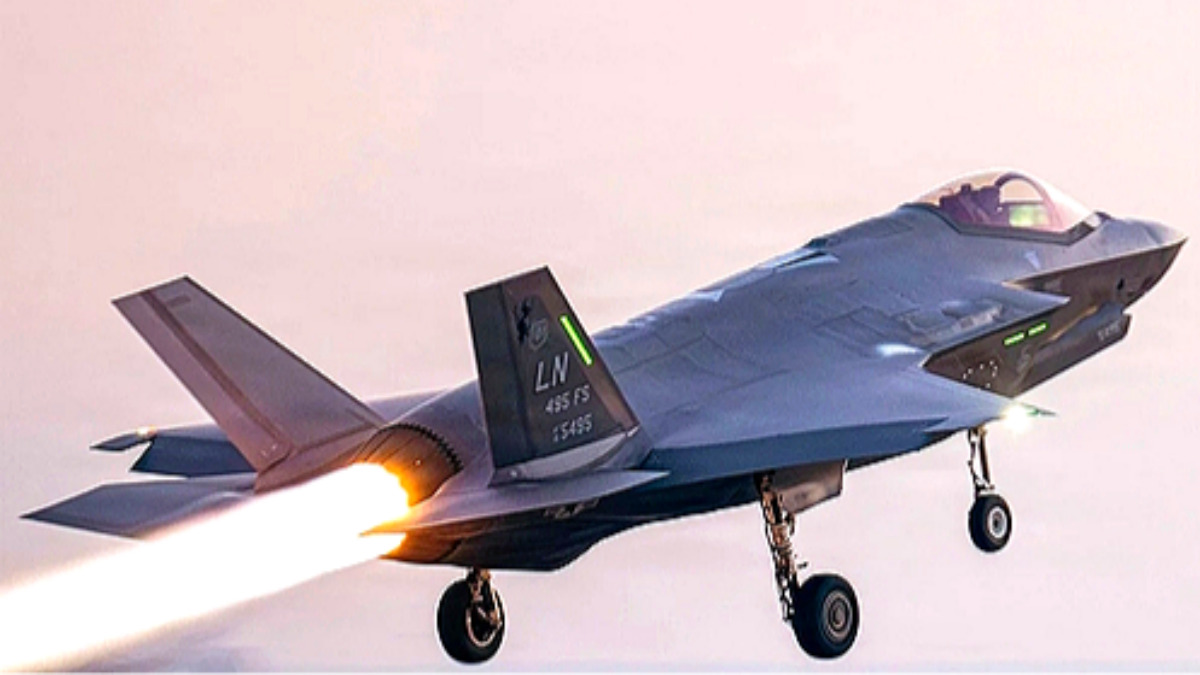
Opponent reported as Eurofighter Tranche 3A—framing the test as a match-up with Europe’s latest
The Eurofighter Typhoon, developed jointly by the UK, Germany, Italy and Spain starting in the 1980s, has been Europe’s primary 4.5-generation fighter since frontline deployments began in 2007.
Pakistani reports identified the Qatar-flown aircraft as a more advanced Tranche 3A variant.
By highlighting a victory over that variant, Chinese coverage appears aimed at a political and public-relations payoff: not merely beating an older model, but demonstrating competitive performance against Europe’s newer Typhoon configuration.
Pakistan claims it even downed a Rafale, framing a first combat kill for a Chinese-made fighter
The mock-combat results were publicized about a year after Pakistan reported a real-world air-to-air engagement involving the J-10CE.
In May 2024, Pakistan claimed its J-10CE shot down Indian Air Force aircraft and said at least one of the losses was a French Rafale.
Islamabad presented the incident as the first air-to-air kill credited to a Chinese-made fighter and as the Rafale’s first combat loss—an account Beijing and Pakistan have used for strategic messaging.
36 J-10CEs and roughly 250 PL-15s: Pakistani skies increasingly populated by Chinese systems
To date, only China and Pakistan operate aircraft from the J-10 family.
Pakistan has acquired 36 J-10CEs since 2020; open-source reporting indicates about 20 are now operationally deployed.
Alongside those aircraft, Pakistan reportedly imported roughly 250 long-range PL-15 air-to-air missiles—an inventory analysts say could alter air-combat dynamics along the western front with India.
Strategic PR push timed for 75th anniversary of ties and prime minister’s China visit
Observers noted the conspicuous timing of CCTV’s decision to re-run a two-year-old training result.
China’s foreign ministry announced that Pakistani Prime Minister Shehbaz Sharif will visit China from the 23rd to the 26th at the invitation of Premier Li Qiang, and that Sharif will meet separately with President Xi Jinping and Premier Li.
In a year marking the 75th anniversary of diplomatic ties, analysts say Beijing and Islamabad likely aimed to amplify a “success story” around a Chinese-made fighter to underscore strategic cooperation and burnish China’s defense-technology credentials.















Most Commented