
Translation result
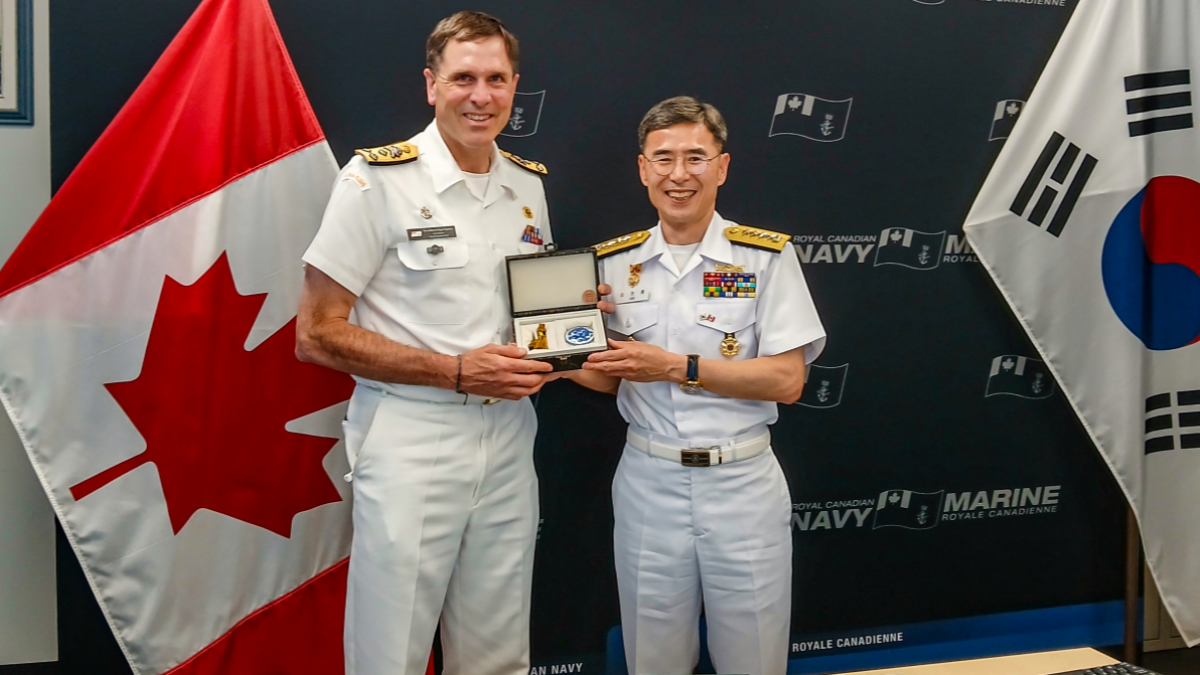
I thought they came to sell a 60 trillion KRW submarine — the real purpose revealed in Canadian waters (≈ 60 trillion KRW ≈ $45 billion USD)
South Korea sent its first 3,000-ton-class submarine, the Dosan Ahn Chang-ho, across the Pacific to compete for Canada’s next submarine procurement. At face value, the deployment resembled a defense-marketing tour intended to showcase a domestically built submarine. But in Canada, officials and analysts treated the visit as, effectively, the first operational-style exercise to align wartime procedures and interoperability between the two navies.
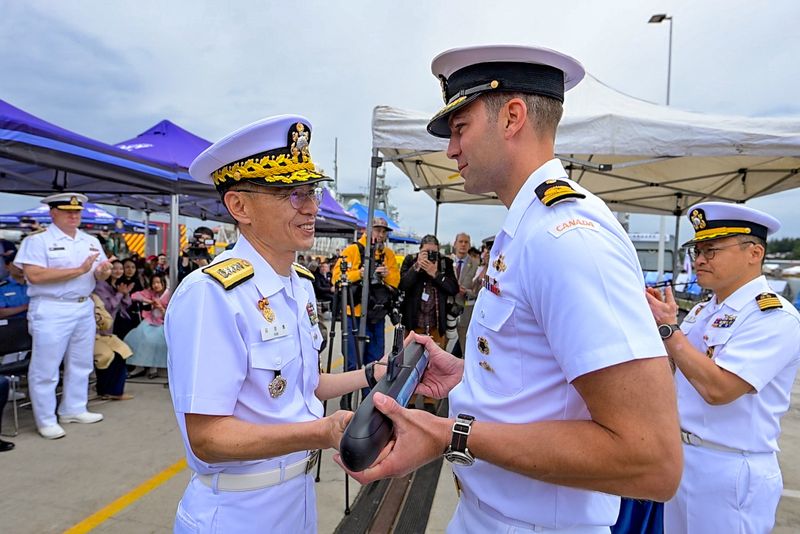
Canadian media called it a historic joint maritime exercise
CTV News reported on the 25th (local time) that South Korea and Canada launched a historic joint maritime exercise as Ottawa pushes ahead with plans to acquire new submarines. The Dosan Ahn Chang-ho docked at Esquimalt Naval Base near Victoria, British Columbia, and immediately began training with the Royal Canadian Navy. Ottawa is pursuing the purchase of 12 next‑generation diesel‑electric submarines in a program priced at roughly 37 trillion KRW (approximately $27.75 billion USD). With long-term maintenance and sustainment included, the total program could approach roughly 60 trillion KRW (approximately $45 billion USD).
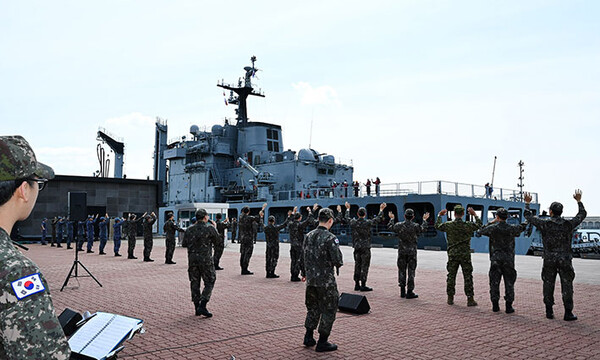
Canada wasn’t just inspecting the submarine — it tested whether Korea could join the same operational network
The exercise combined frigates, submarines and air assets to simulate a wartime environment. CTV described it as the first standalone joint maritime exercise and emphasized that Canada was not merely comparing technical specifications. Observers say Ottawa used the event to assess whether, in a crisis, the Republic of Korea Navy could seamlessly integrate into Canadian command-and-control, communications networks and allied operational structures.
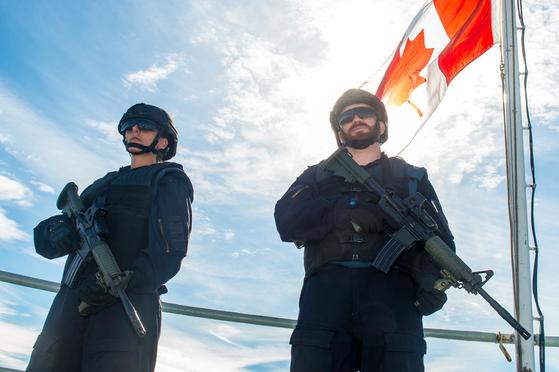
KSS-III crossed the Pacific — Seoul is selling an operational, in‑service platform
The Dosan Ahn Chang-ho’s deployment underscored the KSS‑III class’s long‑range transit and sustained submerged operations. The KSS‑III is a domestically designed and built 3,000‑ton submarine equipped with an air‑independent propulsion (AIP) system, enabling extended submerged endurance and blue‑water capability. Hanwha Ocean is marketing the platform for Canada’s Patrol Submarine Project (CPSP), and instead of relying solely on spec sheets, it sent a functioning, in‑service boat to Canadian waters to demonstrate real-world performance.
“We’re already here” — Korea’s upgraded approach versus TKMS
The competition also includes a Germany‑Norway joint proposal led by TKMS. Where TKMS leans on European defense networks and NATO operational experience, South Korea is demonstrating long‑range transit, communications interoperability and joint‑training capability in theater. When asked whether the KSS‑III outperforms TKMS’s Type 212CD, Navy Chief of Staff Kim Kyung‑ryul replied, “Simply put, the KSS‑III is in service and it’s here,” implicitly contrasting a fielded platform with competitors that lack an operating example.
![포토]](https://cdn-union.tenbizt.com/contents/crawler-dev/image/2026/05/CP-2025-0103/image-fa3be39b-4250-4e32-9e85-73ac6fda0e75.webp)
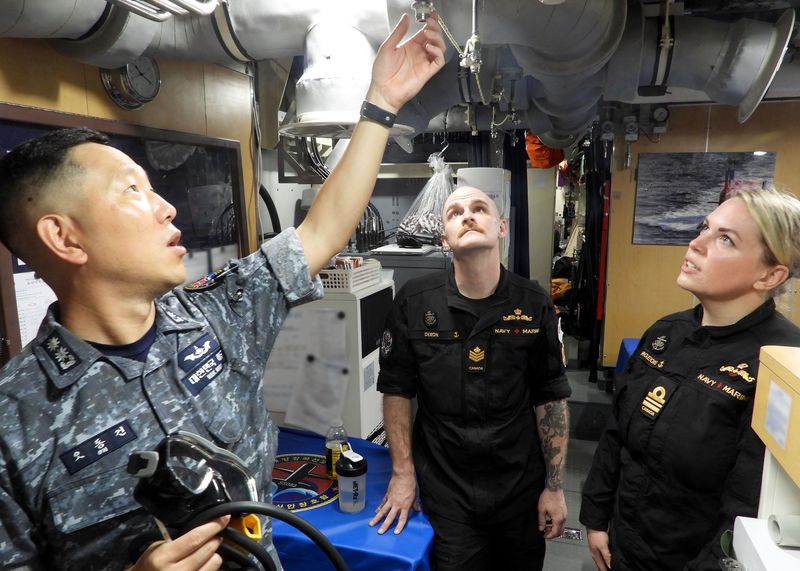
Training on the same networks as the Canadian fleet — “ready to fight together when needed”
The ROK Navy announced earlier this month that the Dosan Ahn Chang-ho successfully communicated with the Royal Canadian Navy Pacific Fleet using its own communications systems. Canadian sailors boarded the submarine in Hawaii and sailed with it to Victoria to gain hands‑on experience operating the platform. Rear Admiral David Patchell, commander of Canada’s Pacific Fleet, told the arrival ceremony that Canada and Korea are “both democratic Pacific maritime nations,” and stressed that allies must communicate, operate together and understand one another’s capabilities to be ready to fight together when necessary. His remarks underscore that the visit was as much a real‑world interoperability assessment as it was a procurement pitch.
A test of long‑term security partnership that evoked Korean War solidarity
The diplomatic side of the procurement fight continued in Victoria. Ambassador Im Gi‑mo hosted a luncheon for political, economic and defense leaders to mark the Dosan Ahn Chang‑ho’s Pacific transit and to discuss deeper Indo‑Pacific cooperation and defense ties. South Korean sailors also paid respects at a British Columbia war memorial to 516 Canadian service members who died in the Korean War, recalling shared history such as the Battle of Gapyeong. Taken together, the submarine’s Pacific deployment functioned less as a simple sales trip and more as a de facto military exercise and confidence‑building measure — a test of whether Canada will treat Korea as a long‑term security partner capable of operating within NATO and Indo‑Pacific frameworks.









Most Commented