
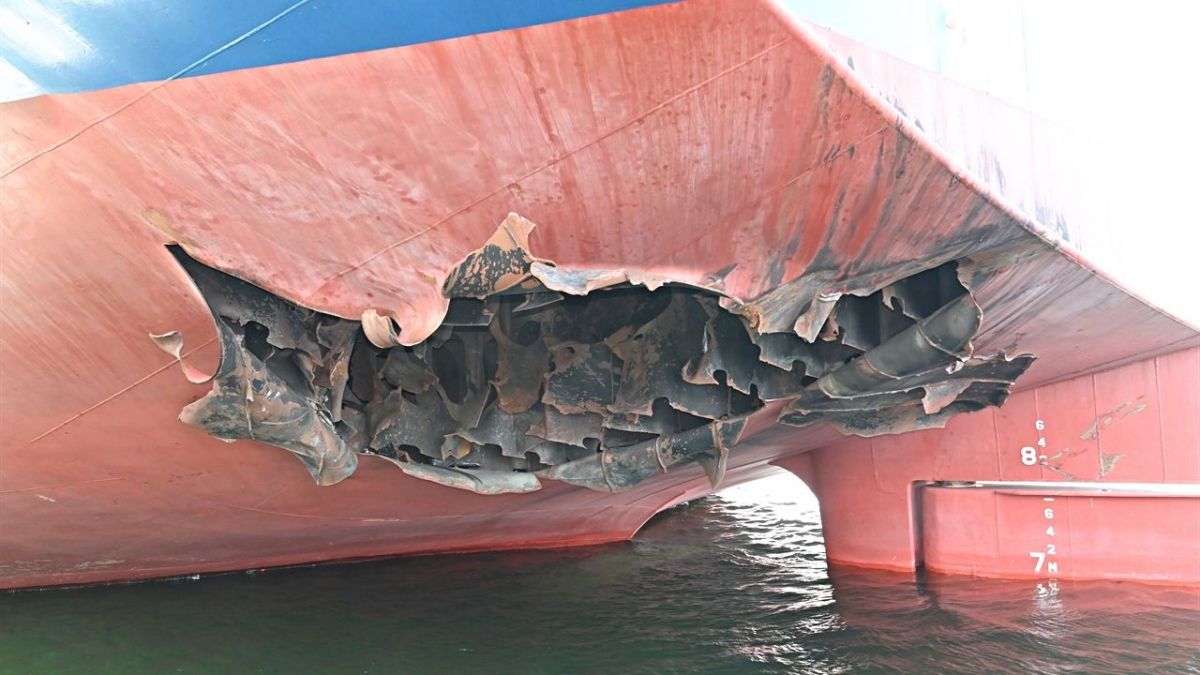
Investigators have provisionally concluded that the aerial object that struck the HMM container ship NAMU, anchored near the Strait of Hormuz, was an Iranian-made missile.
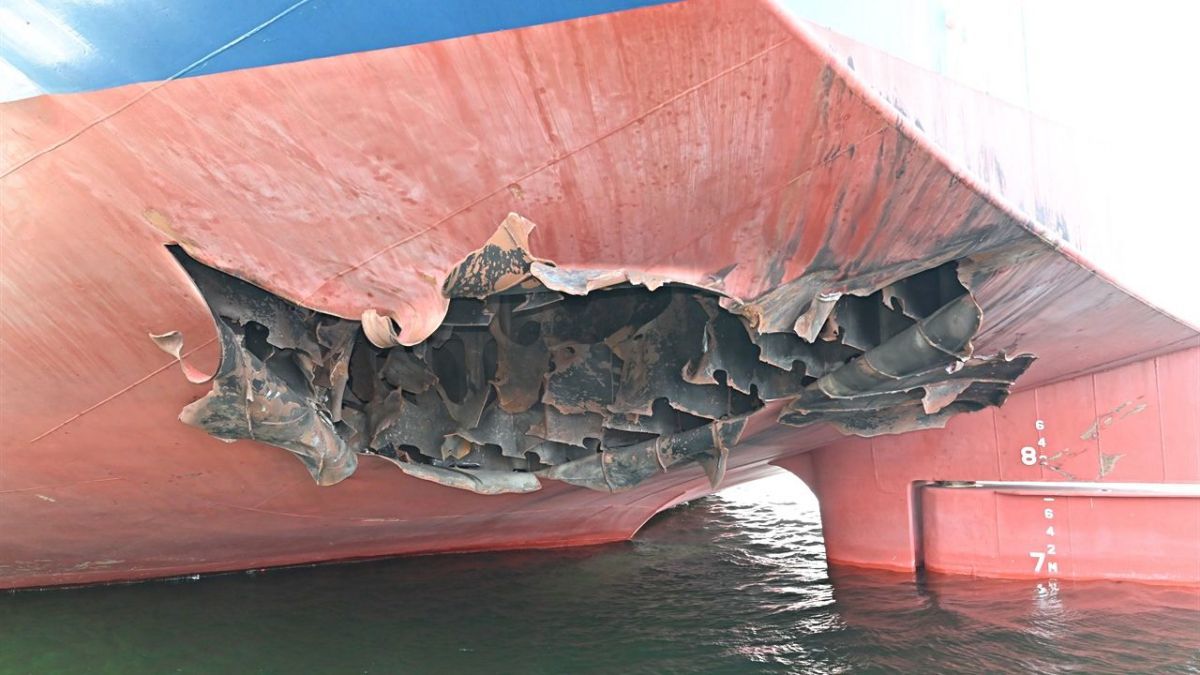
On May 27 at the Seoul Government Complex annex, First Vice Foreign Minister Park Yoon-ju held a briefing on the investigation and said that the NAMU was struck twice by unidentified aerial objects. The first warhead failed to detonate; the second exploded.
He added that the engine resembled an Iranian-made turbojet and that investigators found markings on components that appear to be from an Iranian manufacturer. Investigators said the weapon is likely a Noor-series anti-ship missile developed by Iran.
Park said the government summoned Iran’s ambassador to Seoul to present the findings, lodge a strong protest over the attack and demand accountable measures to prevent a recurrence.
Earlier, on May 4 (local time), a fire broke out aboard the NAMU. A joint government investigation team inspected the scene on May 8. On May 10, Foreign Ministry spokesman Park Il said that, based on the on-site inspection, CCTV review and an interview with the ship’s captain, investigators concluded that at about 3:30 p.m. on May 4 two unidentified aerial objects struck the outer hull of the NAMU’s port-side stern ballast tank twice at roughly one-minute intervals. At the time, the spokesman declined to identify the attacker.
When Saeed Koojechi, Iran’s ambassador to South Korea, visited the Foreign Ministry that same day, observers speculated the government might already be attributing the attack to Iran. On May 14, a senior Foreign Ministry official told reporters he did not think it likely that any actor other than Iran carried this out, noting there were no pirates in the area — comments that effectively pointed to Iran as the probable perpetrator.















Most Commented