
Translation result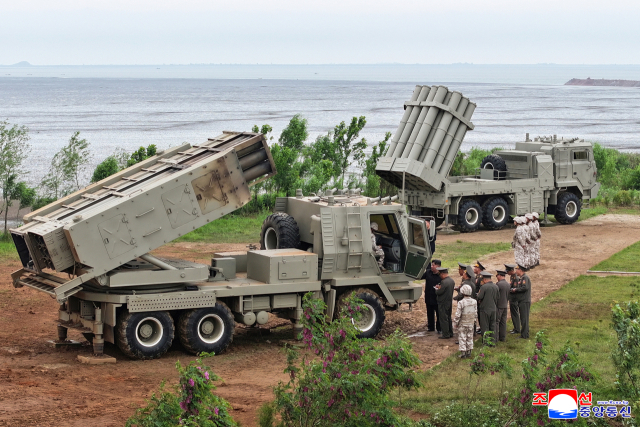
Earlier this year, a rendition operation stunned the world. U.S. special operations forces seized Venezuelan President Nicolás Maduro and his wife while they slept in the presidential palace and flew them to the United States. Maduro’s security detail, reportedly trying to defend the couple, was powerless; some guards bled from the nose or vomited blood and collapsed. Did U.S. forces employ some kind of “mind control” capability?
Shortly after the operation, former President Donald Trump revealed part of the mission. In an interview with the New York Post he mentioned a device he called a “Discombobulator.” He offered little technical detail, but it was described publicly as a system that can disable equipment. “They had Russian- and Chinese-made rockets, but they couldn’t fire a single one. When we went in, they were ready. But even when they hit the launch buttons, nothing worked,” he said.
◆From EMP (Electromagnetic Pulse weapon)
An electromagnetic pulse, or EMP, is an intense burst of electromagnetic energy produced by high-power pulse devices. Such energy can damage or disrupt the circuitry of power grids, communications networks, and electronic equipment. In effect, an EMP is an invisible shockwave that can render any electrically powered device inoperative. EMPs do not cause buildings to collapse or inflict direct physical damage, but they can plunge a modern society into a “digital Stone Age.”
One of the nations actively training to deploy EMP-type capabilities is North Korea. South Korean forces and defense officials are well aware of the threat. Seoul lawmakers have repeatedly warned that North Korean capabilities could disable key national infrastructure. The bigger issue, analysts say, is day-to-day preparedness: many critical agencies — police, fire departments, the power grid, and data centers — remain effectively exposed to an EMP attack.

On May 26, People Power Party lawmaker Yoo Yong-won, a proportional representative on the National Assembly’s Defense Committee, issued a press release assessing EMP readiness across major state agencies, including the National Police Agency. Yoo said the police’s general computer network and communications equipment lack dedicated shielding. He noted, however, that the communications gear linking the national command to the government’s command network is housed in EMP-shielded racks.
In short, command-and-control communications would likely survive an external electromagnetic shock, but systems tied to everyday services — like public record queries and other civilian-facing IT functions — could be knocked offline. The National Fire Agency also lacks documented EMP countermeasures for many of its internal networks and electronic communications systems.
◆New weapons, new tactical playbooks
Recent conflicts — including the Iran-related strikes and the Russia-Ukraine war — have showcased new weapons and novel tactics. The New York Times reported May 26 that a shared pattern is emerging for future conflicts. Although the Russia-Ukraine war, driven primarily by ground combat, and Iran’s air-and-strike campaigns look different, both illustrate a modern form of warfare that pairs advanced technology with asymmetric tactics.
Experts note both campaigns emphasize attacking an opponent’s vulnerabilities rather than seeking decisive, head-on battles. Iran’s approach is a case in point: instead of pitched battles between regular forces, Tehran has used drones and missiles to strike military bases and energy infrastructure in U.S. partner states such as Saudi Arabia and the United Arab Emirates. It has also used mines, armed fast boats, and so-called “mosquito fleets” to threaten and control maritime chokepoints like the Strait of Hormuz.
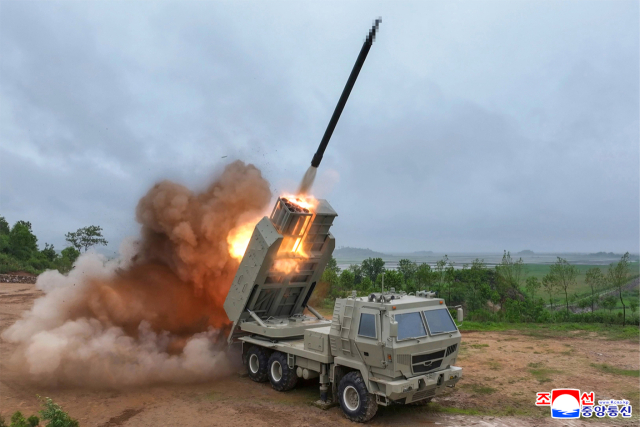
North Korea’s weapons tests on May 26 also reflected a shift from conventional tactics. The Korean Central News Agency said Pyongyang analyzed and evaluated the performance of tactical ballistic missiles, tactical cruise missiles, and 240mm guided rocket artillery. State media said these systems will be augmented and deployed near the Demilitarized Zone under leader Kim Jong Un’s orders to “fortify the southern border.”
Previously deployed long-range artillery in North Korea had limited accuracy and lacked rapid-response features such as automated fire-control systems, leaving those systems at a disadvantage against South Korean forces. The systems Pyongyang now vows to field are different. In particular, the 240mm multiple-rocket launcher is a prominent long-range weapon often cited in North Korea’s threat to turn “Seoul into a sea of fire.” That system has also seen combat in the Russia-Ukraine war, where it underwent operational testing.















Most Commented