
Translation result.
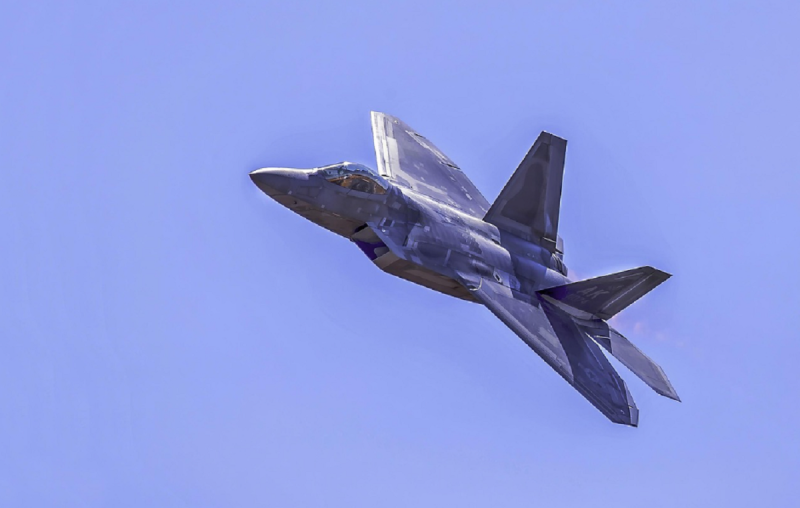
As the global defense industry moves into an upswing, South Korean companies are likely to see stronger order momentum in the second half of the year, a shift that could drive valuation re-ratings.
Jeong-hwan Choi, a research analyst at Daishin Securities, said, “Geopolitical risk has expanded worldwide since the Russia‑Ukraine war. Urgent demand for defense supplies and national efforts to rebuild regional defense industries have continued to lift defense contractors’ valuations.”
Choi added, “Korean firms are responding to the formation of defense industry blocs not just by exporting equipment but by investing in local production facilities and forging overseas partnerships. Those strategic differences will lead to valuation divergence across companies.”
Choi expects Hanwha Aerospace to broaden exports to NATO members by leveraging local production sites in Poland, Australia, Romania and North America. “The company plans to bid on self‑propelled howitzer programs in Spain and the U.S.,” he said, “and through cooperation with Spain’s state defense firm Indra, it is positioned to enter South American markets.”
On new business lines, Choi said Hanwha is expanding in aerospace and aviation. “In aviation, the company will begin production of low‑thrust engines at about 5,500 lbf and aims to develop engines up to 15,000 lbf to meet rising demand for unmanned aircraft,” he explained.
On space, Choi noted that Hanwha Group’s SpaceHub assigns Hanwha to handle launch vehicles. “With experience from the Nuri rocket and plans to be a next‑generation launch vehicle systems integrator, the company aims to lead Korea’s space sector as demand for military satellites grows.”
Regarding Hyundai Rotem, Choi said he expects contracts this year in Peru and Iraq, and next year in Poland and Romania.
“Iraq’s programs have been delayed by tensions with Iran and by delays in forming a cabinet. If security in the Middle East improves, those projects could accelerate rapidly,” he added.
Choi said Hanwha Systems is shifting from a subsystems supplier to a full systems integrator with its laser air‑defense system Cheonggwang and microsatellite capabilities. “Demand for laser‑based weapons is rising for counter‑drone systems and defenses against hypersonic threats. Domestic Block‑1 production is already underway,” he said.
He expects new government contracts to cluster in the second half of the year and said, “Order momentum should strengthen.”
Choi also noted that structural growth at defense firms should support stronger shareholder returns and dividend growth.
Hanwha Aerospace plans proactive investments to expand market share as the defense sector grows structurally.
From 2025 to 2028 the company plans overseas investments of 6.3 trillion KRW (≈ $4.725 billion), R&D spending of 1.6 trillion KRW (≈ $1.2 billion), ground‑defense infrastructure investment of 2.3 trillion KRW (≈ $1.725 billion), and aerospace infrastructure investment of 1.0 trillion KRW (≈ $750 million), totaling more than 11.0 trillion KRW (≈ $8.25 billion).
Through those investments, Hanwha aims to reach 70 trillion KRW (≈ $52.5 billion) in revenue and 10 trillion KRW (≈ $7.5 billion) in operating profit by 2035, realizing its vision of becoming a global top‑tier integrated defense contractor.
Hyundai Rotem has raised its payout ratio sharply to about 8.0% from 4.3%. Beyond dividends, it plans to invest more than 1.8 trillion KRW (≈ $1.35 billion) in R&D, facilities and future initiatives from 2026 to 2028.
Hanwha Systems projects a consolidated revenue compound annual growth rate of 16% and an ROE above 10% for 2025–2030.










Most Commented