
Translation result

New unit armed with AI: science and technology soldiers
South Korea’s Defense Ministry has formalized a specialist enlistment program to recruit majors in advanced fields — AI, big data, cyber, and robotics — and put them straight into military research and development.
These recruits are not being funneled into routine administrative work or basic combat support. The plan is to use them immediately as defense science-and-technology personnel upon enlistment.
Built on the premise that algorithms and data will shape future warfare, the program aims to bring promising young talent into the military early so they can gain operational experience inside its labs and units.
Put simply, this is a new type of service member equipped with code and algorithms instead of a rifle.
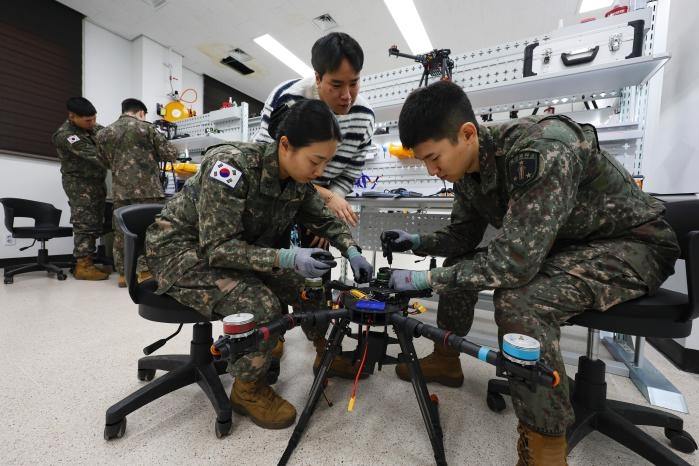
Army, Navy and Air Force will each recruit ‘AI specialists’
Recruiting starts in the fourth week of May, with each service using a different title.
The Army will call the program \”Military Science and Technology Soldiers,\” the Navy \”AI Development Specialists,\” and the Air Force \”AI and Data Development Soldiers.\”
Applicants must have majors and hands-on experience in AI, data analysis, software engineering, robotics/control, or cybersecurity.
In short, the services are seeking people who can perform development and research work — not just basic computer users.
Placements will be each branch’s ‘future warfare labs’
Selected recruits will be assigned not to conventional units but to each service’s dedicated future-warfare organizations.
Primary work sites include the Army’s Future Innovation Research Center, the Navy’s Future Innovation Research Group and Intelligent Information Systems Unit, and the Air Force’s Intelligent Information Systems Management Unit.
There they will be placed on operational projects in command-and-control (C2), intelligence analysis, autonomous unmanned systems, and cyber defense.
Although they will hold soldier status on paper, their daily roles will resemble those of junior researchers at defense labs.
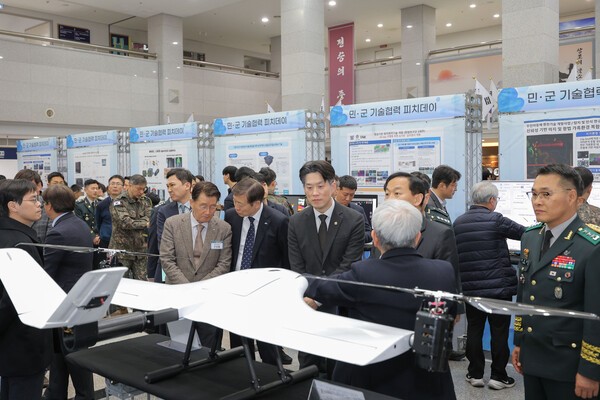
Military service as a pathway into the defense industry
The Defense Ministry says it intends for service in these tracks to open post-discharge career paths in defense, IT, and AI sectors.
Recruits will be assigned tasks aligned with their majors and skills so they perform real R&D during their service, and the ministry plans to have that experience recognized by civilian employers and startups.
The model echoes, in miniature, how U.S. agencies such as DARPA and Cyber Command have supplied talent to big tech and defense firms.
The message to recruits is straightforward: your military service should not interrupt your career — it should add a meaningful line to it.
Why now, and why a ‘secret corps’?
Conflicts in Ukraine and the Middle East have demonstrated how drone swarms, satellite and communications jamming, and cyber operations can reshape battlefields.
South Korea faces simultaneous threats from North Korean missiles, unmanned systems, and cyberattacks, so it sees an urgent need to reorient personnel toward science and technology roles.
Relying on officers and NCOs alone makes it hard to keep pace with rapidly evolving tech.
That has led to a decision to bring developers and researchers in their 20s — those who work with the cutting edge — directly into the force as future-warfare specialist soldiers.
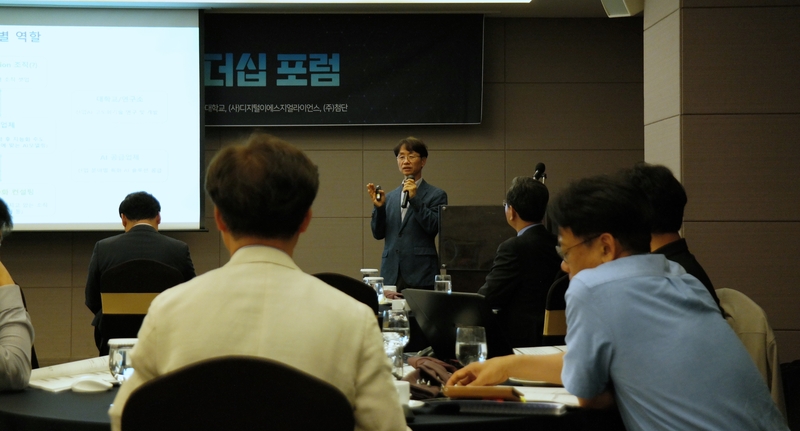
It could become a testbed for the next 100 years of warfare
If the program works, South Korea’s military could establish a steady pipeline of high-level science and technology talent within a conscription system.
That capability could let the services develop and operate core systems for the next century of warfare: AI-driven combat command, autonomous unmanned systems, cyber and electronic warfare, and big-data operational analysis.
If it fails, recruits risk being saddled with administrative chores while their technical skills go unused, leaving only an ambiguous line on a resume.
Ultimately, success will hinge on whether the military truly commits to letting these soldiers develop and conduct research — and whether it backs that commitment with the necessary environment and funding.












Most Commented