
Translation result.
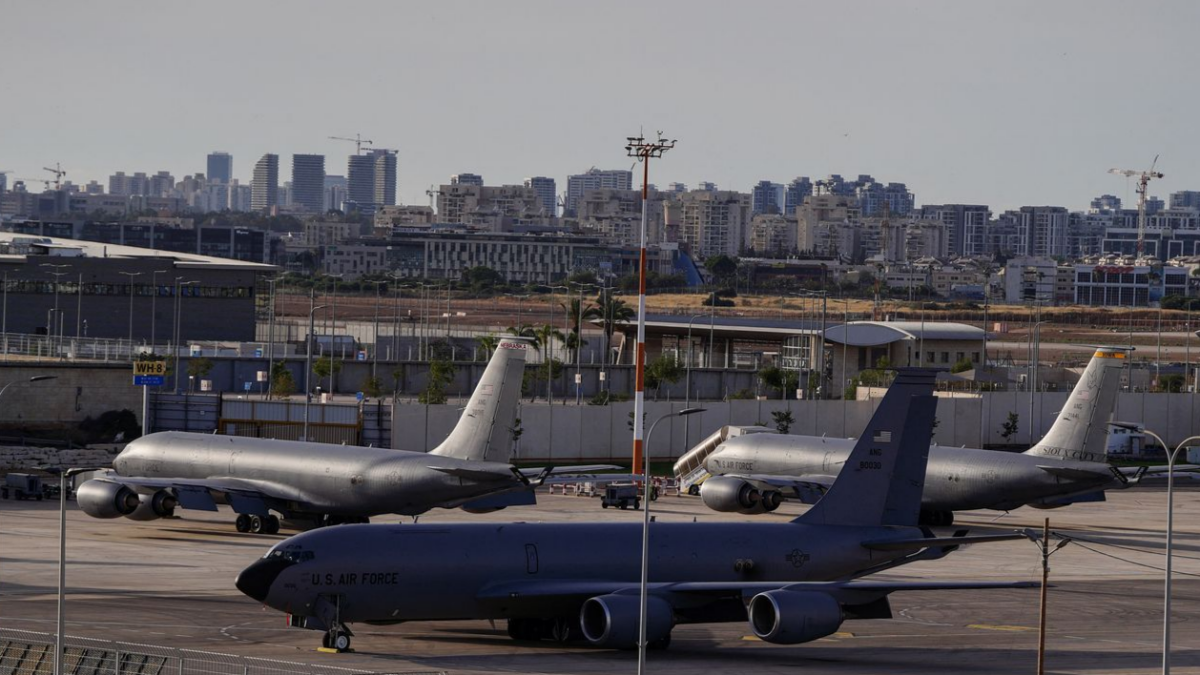
52 U.S. Aerial Refueling Tankers Gather at Ben Gurion Airport
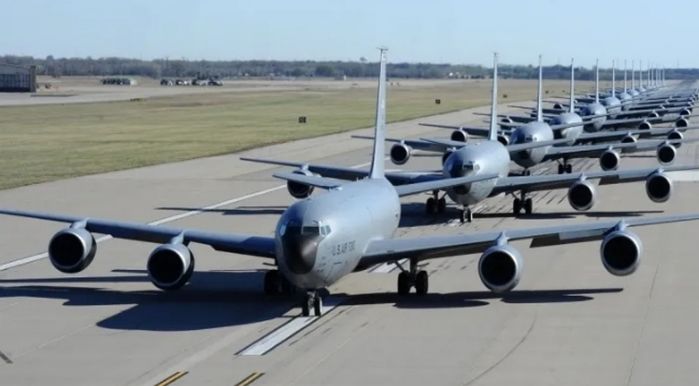
Recent satellite imagery analysis shows more than 50 U.S. Air Force aerial refueling tankers parked at Ben Gurion Airport, just outside Tel Aviv.
What numbered roughly 36 tankers in early March rose to about 47 at the start of April when a truce went into effect, and has climbed to 52 this week.
Gray KC-135s and KC-46s now occupy large sections of the airport apron, making them visible to commercial travelers and nearby residents.
An Israeli aviation official told reporters Ben Gurion now \”looks essentially like a U.S. military base.\”
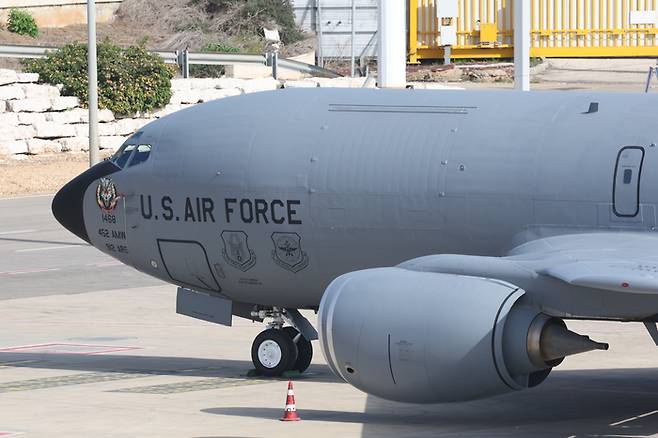
Aerial Tankers: The Key to Long-Range Strikes on Iran
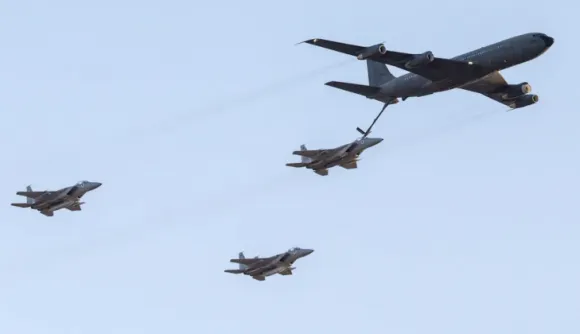
Aerial refueling tankers are a critical enabler for fighters and bombers conducting long-range strike missions. They extend aircraft range and on-station time, allowing multiple passes or deep strikes without forward basing.
The United States has a history of deploying KC-135s, KC-10s and, more recently, KC-46s across the Middle East to support strike and interception operations targeting Iran.
Concentrating dozens of tankers at a single airport is uncommon. That posture bolsters assessments that the U.S. is positioned to resume large-scale, long-range strikes on short notice.
Fighter and bomber packages that would fly round trips to the Iranian mainland and stage multiple strike waves would require repeated aerial refueling—making this tanker buildup effectively a prerequisite for such operations.
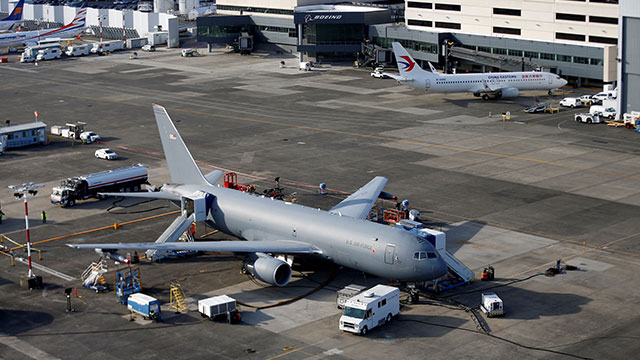
Why Numbers Rose Even During a Truce
The tanker count has climbed steadily since late February, when clashes with Iran reached their peak.
Ironically, the buildup accelerated even after a truce and end-of-hostilities talks began in early April.
While diplomatic negotiations over nuclear issues and sanctions relief continue, the Trump administration has reiterated that it is not abandoning military options.
That posture suggests the U.S. has staged these assets as a form of insurance—ready to resume strikes immediately if talks fail or if Iran undertakes new provocations.
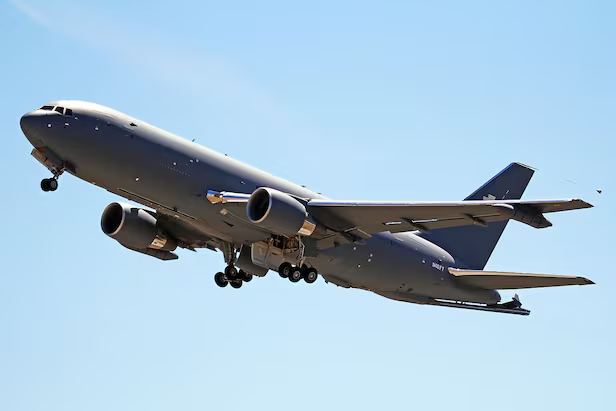
Israel’s Largest Civilian Airport Is Effectively a U.S. Forward Base
Ben Gurion is Israel’s primary civilian hub, normally dominated by commercial air traffic.
But with dozens of U.S. tankers and military transports parked there, apron space available to commercial carriers has tightened.
Some civil flights reportedly have been diverted to other domestic or international airports and are awaiting departure, fueling complaints and concern inside Israel.
Israel’s civil aviation chief said Ben Gurion is effectively operating like a U.S. military base because of the American aircraft.
Iran Vows to ‘Resist to the End’ — Tensions Persist
Iran has issued hardline rhetoric in response to U.S. tanker and force movements, saying it will \”resist to the last drop of blood.\”
At the same time, nuclear talks in Geneva and other venues are grappling with issues including enriched uranium stocks, sanctions relief and shipping through the Strait of Hormuz.
Diplomacy is active on one track, while tankers, reconnaissance drones and strategic assets consolidate near Iran on another.
Analysts warn the situation resembles not a stable cease-fire but a prolonged pause that could reignite at any moment.
Why This Matters to East Asia
The more U.S. airpower and tanker assets are tied up in the Middle East, the less surge capacity the U.S. has to reinforce the Korean Peninsula, the Taiwan Strait or the East China Sea.
Analysts note interceptor stocks and missile-defense inventories—systems like THAAD and the SM-3—were already drawn down rapidly during the Iran crisis, raising concern in Seoul and Tokyo.
With tankers committed to the Middle East on a large scale, questions grow about how quickly the U.S. could surge airpower to East Asia in a regional contingency.
As tension on the Israel–Iran front rises, allies including South Korea will need to consider more robust diplomatic and military options to ensure their defense priorities are not deprioritized.















Most Commented