
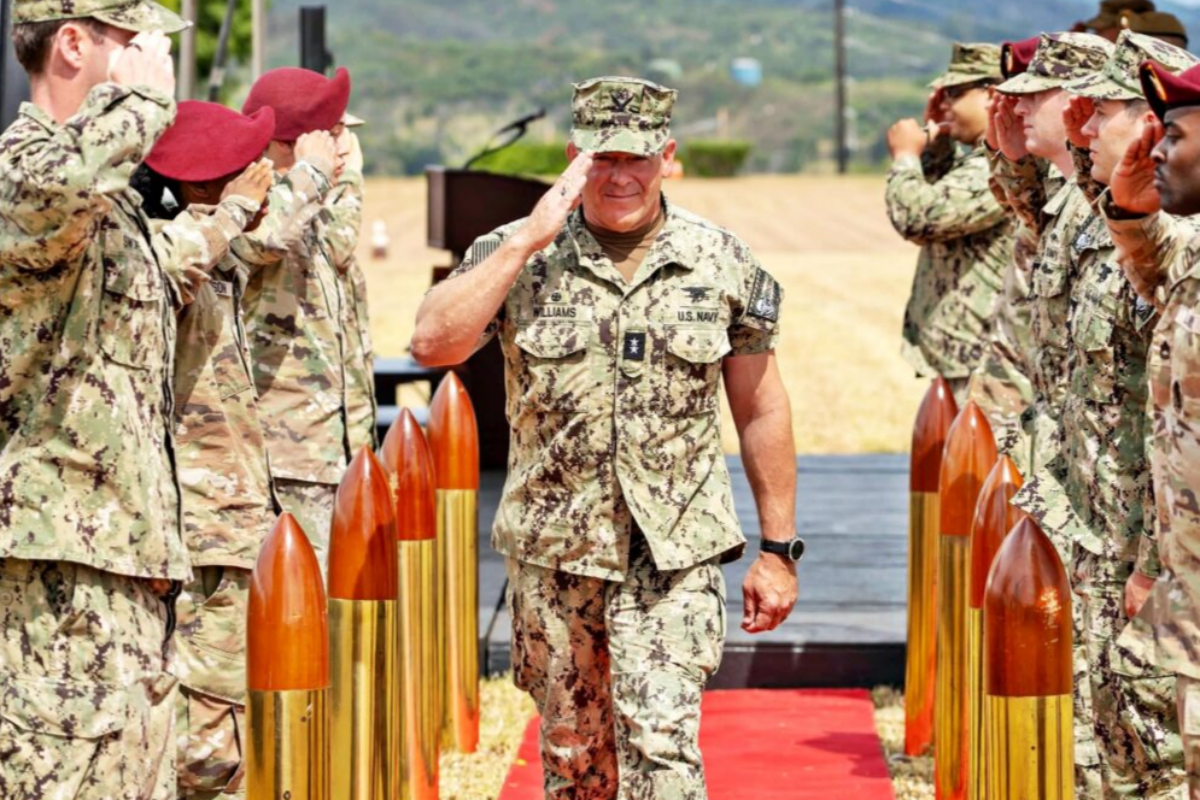
Wagner, Who Mocked “What’s Delta Force?”, Paid a Brutal Price in Four Hours
On the night of Feb. 7, 2018, roughly 500 fighters from Syrian pro-government forces and the Russian private military company Wagner moved against a base held by U.S. forces and the Syrian Democratic Forces (SDF) near the Hasham and Conoco gas fields outside Deir ez-Zor. After Islamic State’s defeat, the area remained a strategic prize contested by Syrian government units, the Kurdish SDF and U.S. forces. The Conoco fields were a lucrative asset, generating hundreds of millions to about $1 billion in annual revenue.
Analysts say Wagner launched the assault after reportedly striking a deal with the Assad regime to receive a share of production revenues if the facilities were retaken. U.S. defenders at the site numbered roughly 40 and included special operations personnel, artillery elements and air-control teams embedded with the SDF.
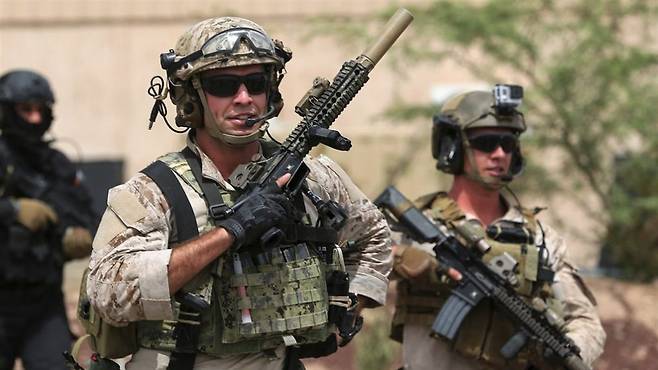
“Not Our Troops,” Russia Said — Then the Sky Opened
Just before the clash, U.S. commanders used the deconfliction hotline with Moscow to confirm whether the approaching fighters were Russian regulars. Russian officials replied, “They’re not our troops.” That response led U.S. leaders to treat the assault as an attack by irregular forces rather than a direct confrontation with the Russian military, removing legal and operational restraints on their response.
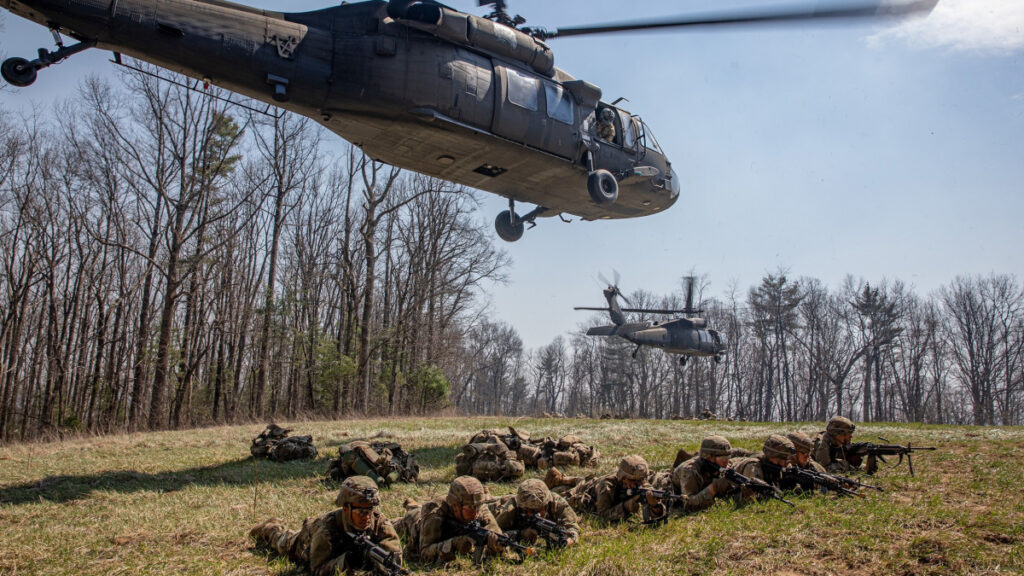
Over the following hours, Marine artillery and a sequence of Air Force and Army platforms were brought to bear: F-22s and F-15Es, AH-64 Apaches, AC-130 gunships, B-52 bombers and MQ-9 Reaper drones. Then–Defense Secretary James Mattis told a Senate hearing that, after senior Russian commanders confirmed “they’re not our forces,” he instructed the chairman of the Joint Chiefs that “the force must be annihilated” — and U.S. forces proceeded accordingly.
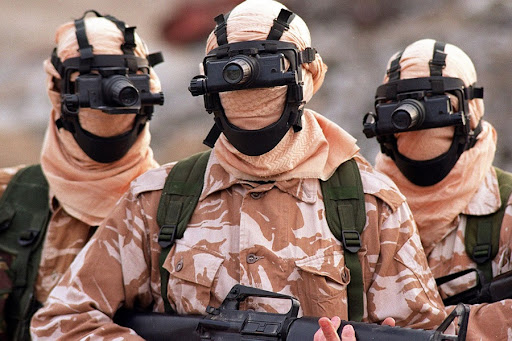
Wagner Crumples Under Airpower; Casualty Figures Remain Disputed
The engagement lasted about three to four hours. U.S. forces reported they repelled the assault without suffering fatalities. U.S. officials and several Western outlets reported that Wagner and allied Syrian forces suffered casualties in the hundreds; then–CIA Director Mike Pompeo said U.S. actions killed “several hundred” Russians.
Later, Russian investigative reporters and some Wagner commanders challenged that figure, saying the death toll was in the dozens — roughly 20–30 — and that reports of hundreds killed were exaggerated. The exact toll remains contested. Still, both U.S. and Russian sources agree Syrian government units, mercenaries and equipment — T-72 tanks, self-propelled guns and trucks — took significant damage.
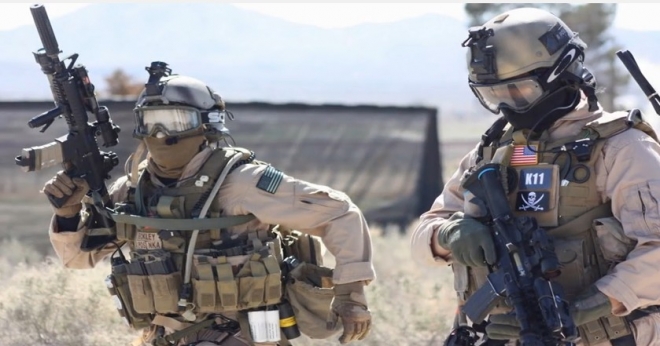
“A Carousel of Death”: How 40 Defenders Stopped 500 Attackers
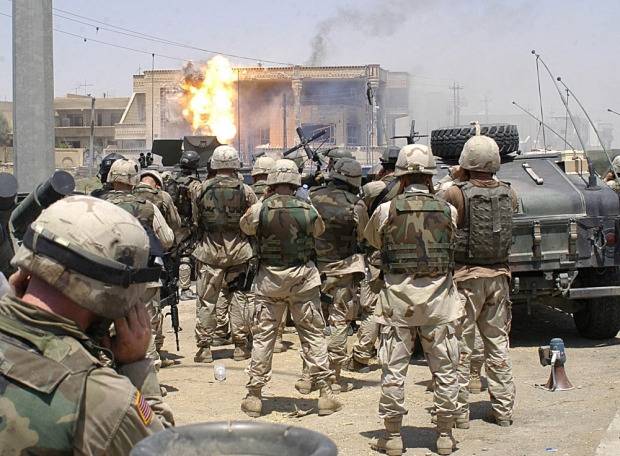
U.S. special operators — including Delta Force, Army Rangers and Air Force combat controllers (CCTs) — were on the ground directing strikes. U.S. forces first disrupted the advancing units with long-range artillery and air attacks, then prioritized and destroyed T-72 tanks, self-propelled guns and infantry one target at a time.
Officials say infrared and thermal sensors fixed enemy positions at night, while Reaper drones and AC-130s streamed real-time imagery that fused into a networked targeting picture. Ground and air fires were synchronized to devastating effect. Special operators later described the scene as “a carousel of death” — from their positions it felt like the sky and the earth were shredding the enemy simultaneously.
Wagner’s Miscalculation and Russia’s Distance — Seeds of Rebellion
The fight had political as well as military consequences. Wagner reportedly expected air and air-defense support from the Russian military, but regular Russian forces largely avoided direct involvement to prevent a clash with U.S. units. Wagner personnel and others in Russia later accused the state of abandoning them — grievances analysts cite as one factor that helped fuel Yevgeny Prigozhin’s 2023 mutiny and march toward Moscow.
Moscow promptly denied any losses among its regular troops and provided no clear accounting of PMC casualties. Critics say the response highlighted a structural contradiction in the Putin system: heavy dependence on deniable private military companies.
First Direct U.S.-Russian Clash Since the Cold War — A Brush with the Nuclear Threshold
The Khasham (Conoco) engagement is recorded as the first instance since the Cold War in which U.S. and Russian combatants openly clashed on the same battlefield. The U.S. characterized its actions as self-defense against irregular forces, and Russia’s rejection of regular troop involvement helped both sides avoid wider escalation.
Former and current U.S. officials have said that, had Russia acknowledged the attack as a regular military operation, tensions might have escalated to a far more dangerous level. For that reason, the Khasham fight is viewed as a case that stopped short of becoming a direct confrontation between nuclear powers and as a stark example of the risks inherent in using PMCs for deniable operations.
“What’s Delta Force?” — The Takeaways for the Special Operations Era
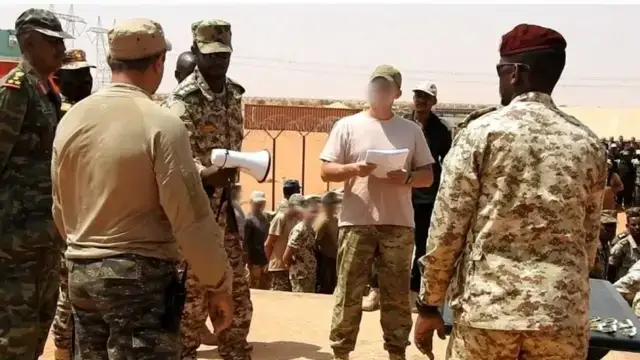
The Khasham engagement exposed the limits of Wagner’s claim to be the “world’s most powerful mercenary force.” Without the command, communications and integrated joint fires of a regular military, the unit was vulnerable in a special-operations environment. By contrast, a roughly 40-person defensive force tied airpower, artillery, drones and intelligence into a cohesive fight and defeated a much larger attacker — a textbook example of future joint warfare.
Observers note the stark contrast between the side that scoffed, “What’s Delta Force?” and the side that declined to advertise its units. After the incident, Russia adjusted how it employed PMCs, and the U.S. refined concepts for linking special operations with airpower. The four hours at Khasham remain a frequently cited case study in military strategy courses.















Most Commented