
Translation result.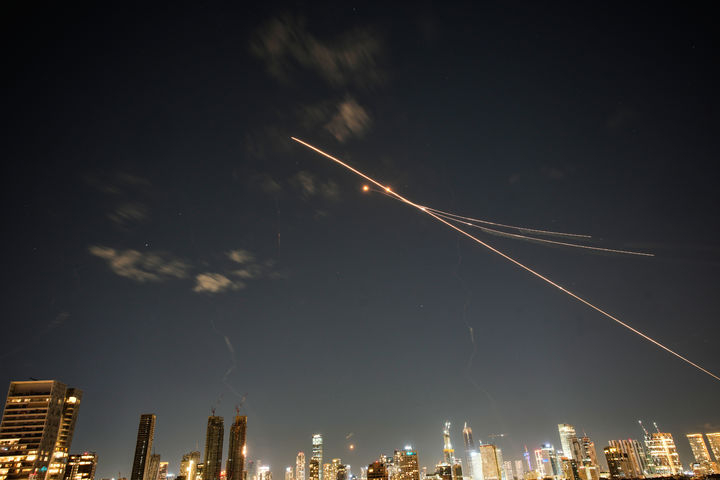 The United States reportedly expended roughly half of its entire inventory of Terminal High Altitude Area Defense (THAAD) interceptor missiles to defend Israel during the conflict with Iran. The large drawdown of air-defense munitions has raised security concerns among U.S. allies in Asia—particularly South Korea—which face threats from North Korea and China.
On the 23rd, foreign outlets reported that the Washington Post, citing an internal Pentagon assessment, said the U.S. launched more than 200 THAAD interceptors to protect Israel. That figure amounts to nearly half of the U.S. military’s global THAAD stockpile.
Separately, U.S. forces fired more than 100 SM-3 and SM-6 interceptors from ships in the eastern Mediterranean near Israel. By contrast, Israel used roughly 100 Arrow interceptors and about 90 David’s Sling interceptors.
Kelly Grico, a senior researcher at the Stimson Center, called the numbers “shocking,” saying the U.S. took on most of the missile-defense mission while Israel conserved its own ammunition. She warned that even if the deployments made tactical sense, the U.S. is now left with about 200 THAAD missiles and production lines cannot keep up with demand. That shortfall, she said, could force the U.S. to pay the price on other battlefields, including in Asia.
The Washington Post reported that the depletion has unnerved allies in Asia, singling out South Korea and Japan—both heavily reliant on U.S. extended deterrence against North Korea and China—as directly affected. As the U.S.-Iran conflict shows signs of dragging on, the U.S. government has reportedly already moved, or plans to move, some THAAD assets deployed at the U.S. base in Seongju, North Gyeongsang Province, to the Middle East, heightening concerns about a security gap on the Korean Peninsula.
The coverage also detected strains between Washington and Jerusalem. While officials publicly emphasize strong cooperation and Israel’s multilayered air defenses, the Pentagon assessment exposes a “serious imbalance” in the defense burden, the Post said.
With cease-fire talks between the U.S. and Iran stalled, Israel—dissatisfied with the proposals under discussion—has urged a resumption of military operations. U.S. officials, already grappling with dwindling munitions, have reportedly pushed back against that pressure.
A U.S. government official told the Post, “Israel cannot conduct or win this war on its own, but no one knows that—because they don’t see what’s happening behind the scenes: the U.S.’s full support.”















Most Commented