
Translation result.
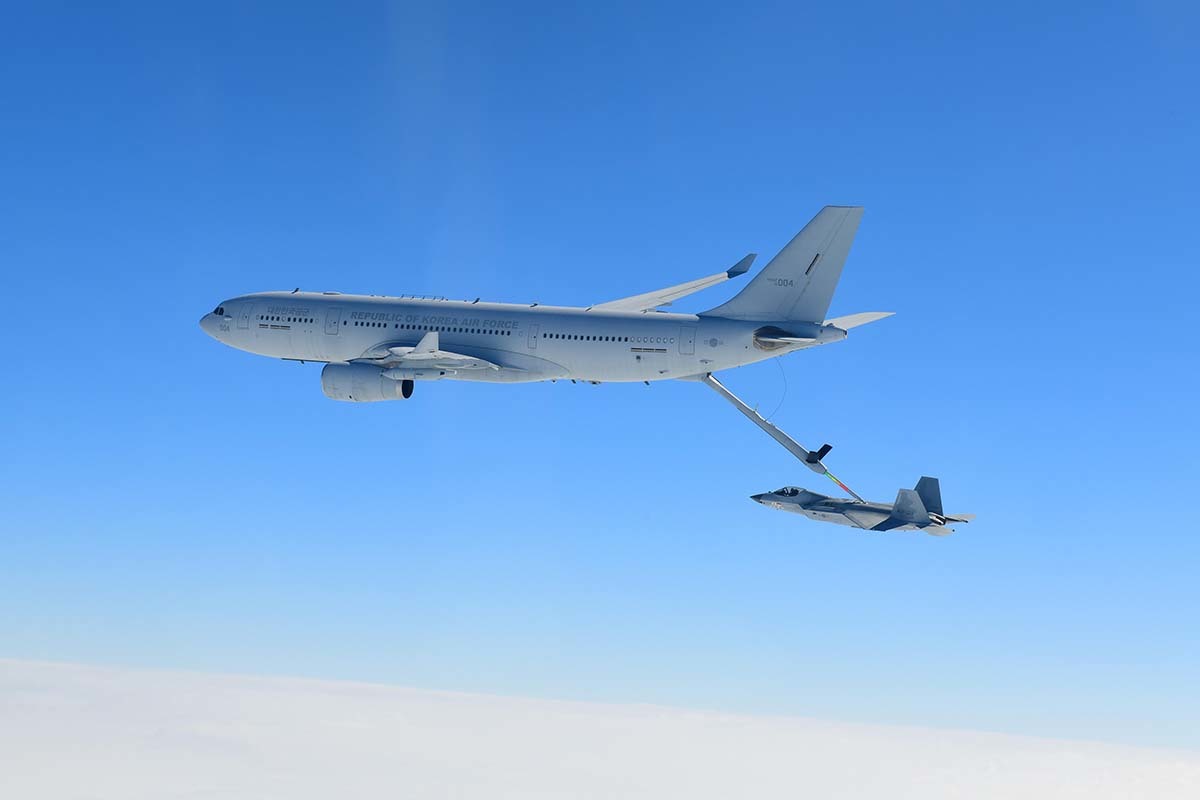
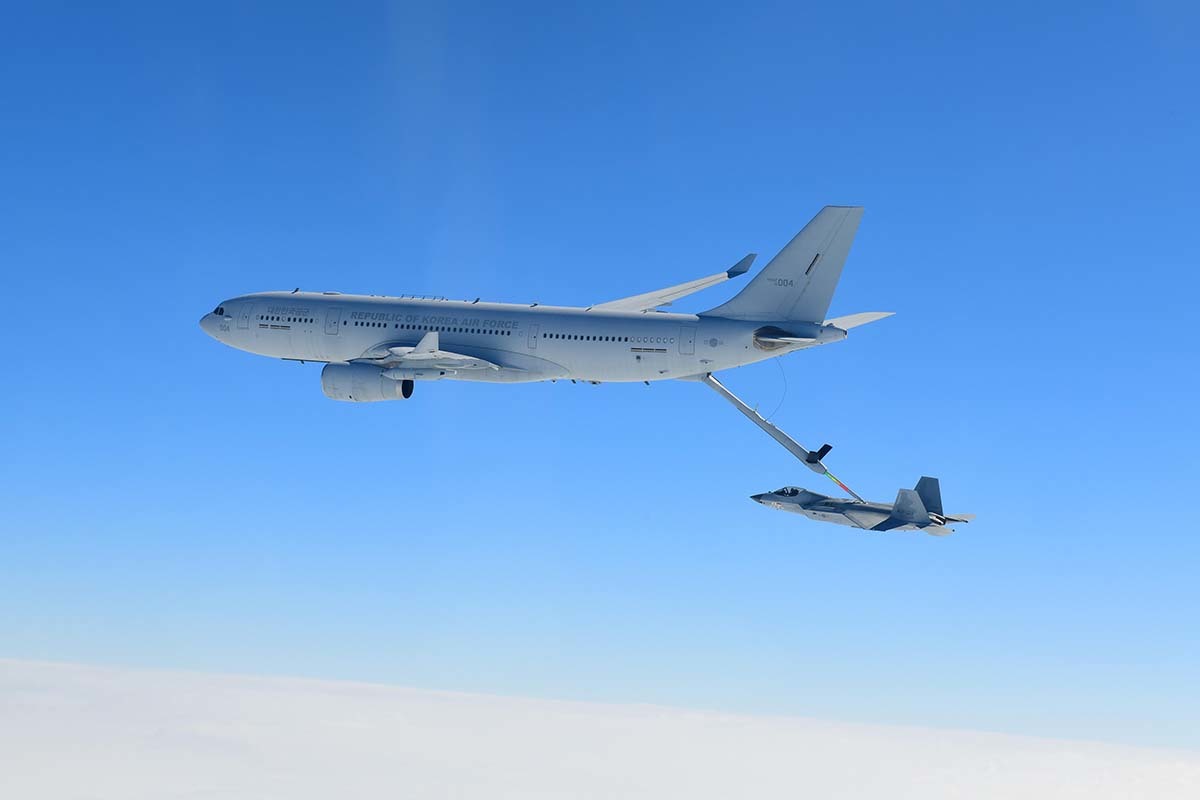
U.S. forces have deployed more than 50 aerial refueling tankers to Ben Gurion Airport near Tel Aviv, officials confirmed. The Financial Times reported on the 22nd (local time) that satellite-image analysis shows the tanker buildup began before U.S.-Israeli strikes on Iran and has not eased even after the fighting subsided.
FT’s imagery indicates the number of tankers at the airport rose from about 36 in early March to 47 during the early-April truce and to 52 this month. The increase after the cease-fire has prompted cautious speculation that Washington may be preserving the option for additional operations aimed at Iran.
Aerial refueling tankers extend the range and endurance of fighters and bombers, allowing them to strike deep inside enemy territory from distant bases. The U.S. has deployed two models to the region: the KC-46A Pegasus and the KC-135R Stratotanker. The KC-135R can carry roughly 90,700 kg of fuel, cruises at about 850 km/h, and has a range exceeding 2,400 km.
Israel’s Channel 12 reported that U.S. officials are discussing plans to keep the tankers at Ben Gurion at least through the end of 2027. With talks trending toward a long-term presence rather than a short-term deployment, analysts say the posture appears designed to enable immediate U.S. response if needed.
The U.S. presence was initially kept quiet. Israeli media reported an airport employee was disciplined after posting tanker photos to a WhatsApp group. But as the apron filled, the aircraft became visible to the public. Ramon Airport near Eilat has also been used for military parking; observers reported more than 10 tankers there after the early-April truce.
Even after Ben Gurion resumed civilian flights, Israeli carriers say they cannot return their full fleets because U.S. tankers occupy parking stands. Uri Sirkis, CEO of low-cost carrier Israir, told the Knesset Economic Committee that “because of U.S. military aircraft, we can park only four planes overnight at Ben Gurion instead of the 17 we normally have in Israel.” He warned that off-site parking raises operating costs and limits flight frequency, a concern ahead of the peak summer travel season when reduced capacity could push fares higher.
An El Al pilot said airlines must coordinate schedules and takeoff-and-landing procedures with military authorities, forcing staff to work with both civilian air-traffic controllers and military officials. “The risk is serious. It’s not just missiles—we also face congestion,” he said. Ben Gurion has been targeted in the past by Iran and its proxies.
Shmuel Zakai, a former Israeli general who leads the Civil Aviation Authority, reportedly told the government that Ben Gurion is effectively being converted into a U.S. military airbase. Marco Milanovic, a professor of international law at the University of Reading, warned that turning parts of the airport into a de facto military airfield raises the risk of it becoming a renewed target. Under the Geneva Conventions, he said, Israel is obligated to take all feasible precautions to avoid placing military objectives within or near densely populated areas.















Most Commented