
US Sanctions Iran’s Shadow Financial Network: What It Means for Global Oil Trade in 2026
Daniel Kim Views
Translation result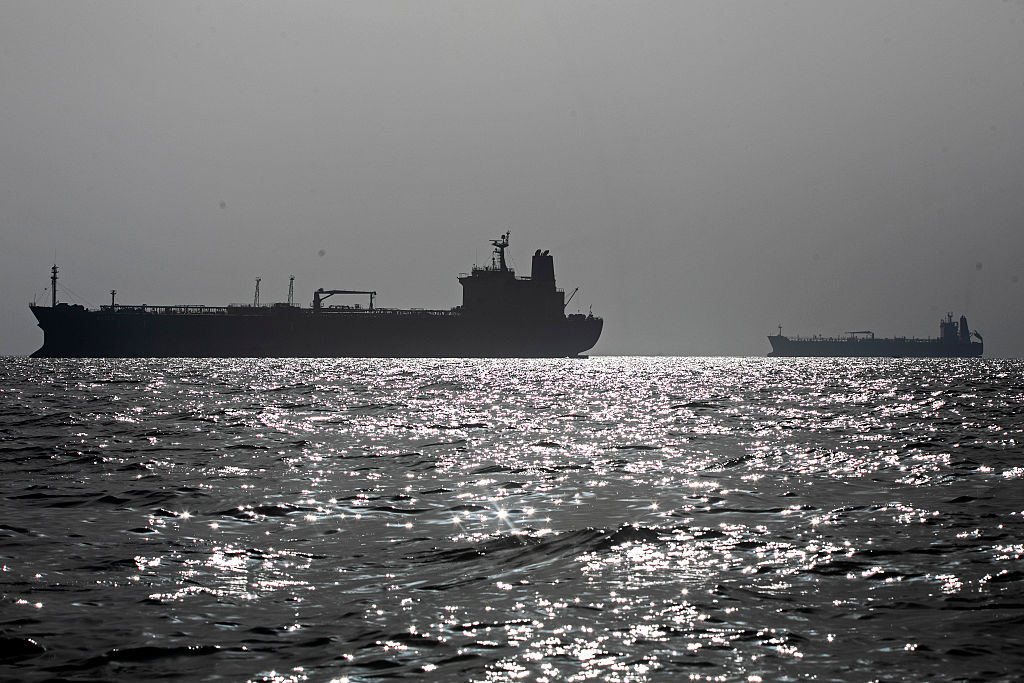 [Herald Economy=Reporter Seo Ji-yeon] The Trump administration, while temporarily postponing a resumption of military strikes on Iran, launched a broad new round of sanctions aimed at Iran’s shadow financial network — a covert system used to evade sanctions — as well as oil carriers and pro-Iran groups. The U.S. has also stepped up maritime pressure by seizing additional Iran-linked tankers in the Indian Ocean.
On May 19 (local time), Reuters and the Wall Street Journal reported that the U.S. Treasury Department’s Office of Foreign Assets Control (OFAC) designated the Iran-based currency exchanger Amin Exchange and several related shell companies for sanctions. The firm has also operated under the name Ebrahimi & Associates Partnership Company.
The Treasury said the firm ran an extensive network of shell companies across the United Arab Emirates, Türkiye and Hong Kong, and processed hundreds of millions of dollars in transactions on behalf of sanctioned Iranian banks.
The U.S. also added 19 vessels involved in transporting Iranian crude oil and petrochemical products to its sanctions list. Targets include the Barbados-flagged LPG carrier Great Sail, the Palau-flagged tanker Ocean Wave and the Panama-flagged chemical and crude carrier Swift Falcon. Vessels that covertly trade sanctioned Iranian oil are commonly called “shadow” or “ghost” ships.
The Treasury noted that Iran’s currency exchangers handle tens of billions of dollars in foreign-exchange transactions each year, helping Tehran evade sanctions and maintain access to the international financial system.
Treasury Secretary Scott Bessent said in a statement that Iran’s shadow financial system “facilitates illegal transfers of funds for terrorist purposes.” He added that under an operation dubbed “Economic Fury,” the Treasury will systematically dismantle Iran’s shadow financial system and its shadow fleet.
Bessent also warned international financial institutions to be vigilant against methods the Iranian regime uses to manipulate and disrupt the global financial system.
The U.S. announced additional sanctions the same day targeting networks that support the Palestinian armed group Hamas. OFAC sanctioned organizers of Gaza-bound flotillas, members of a Muslim Brotherhood network linked to Hamas, and organizers tied to the Popular Front for the Liberation of Palestine (PFLP).
State Department spokesperson Tommy Pigott said Hamas uses diaspora organizations, religious institutions and civil-society groups to raise funds and expand influence. “It cloaks its activities in humanitarian rhetoric while supporting terrorism,” he said.
Separately, U.S. forces seized another sanctioned tanker suspected of transporting Iranian crude in the Indian Ocean.
According to the Wall Street Journal, the tanker known as Skywave was intercepted west of Malaysia after transiting the Strait of Malacca. U.S. authorities say the vessel loaded more than 1 million barrels of crude at Iran’s export hub on Kharg Island in February.
The U.S. had designated the vessel under Iran-related sanctions in March. This marks the third known time U.S. forces have seized a shadow tanker in the Indian Ocean. Last month, they captured the stateless tankers Tiffany and Majestic X, both reportedly bound for China.
The moves came after President Trump temporarily delayed planned airstrikes against Iran. He said on social media that leaders of Gulf states requested the pause. At the White House, he told reporters that if negotiations don’t advance, the U.S. could resume strikes “in two or three days or early next week,” signaling continued pressure on Tehran.
Iran, meanwhile, has reportedly presented a new peace proposal to the U.S. that calls for a ceasefire across all fronts, including Lebanon; withdrawal of U.S. forces from areas near Iran; compensation for war damage; and the lifting of sanctions along with the return of frozen assets.















Most Commented