
Translation result
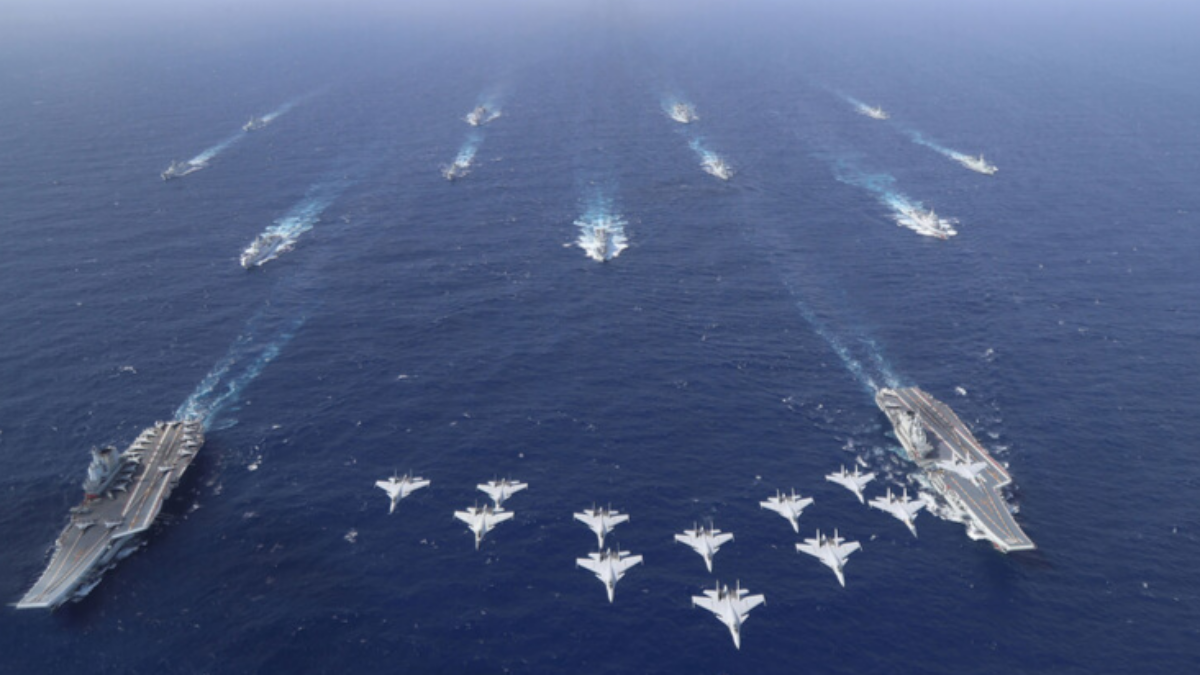
Chinese simulation confirms the gap between the J-20 and the F-22
A Chinese domestic simulation run by local programmers found that the J-20 “Wei Long,” which Beijing markets as the world’s top stealth fighter, was shot down in more than nine out of 10 engagements with the U.S. F-22 Raptor. The simulated win rate for the J-20 was under 10 percent. With F-22s based at Kadena, Japan, able to deploy to the Korean Peninsula in a crisis, the findings numerically reinforce the long-held view that Beijing regards the F-22 as its most dangerous adversary.
![사진]](https://cdn-union.tenbizt.com/contents/crawler-dev/image/2026/05/CP-2025-0103/image-26188acf-0f0c-491c-943b-af0c21250400.jpeg)
Stealth gap is stark: J-20’s RCS roughly 100 times larger
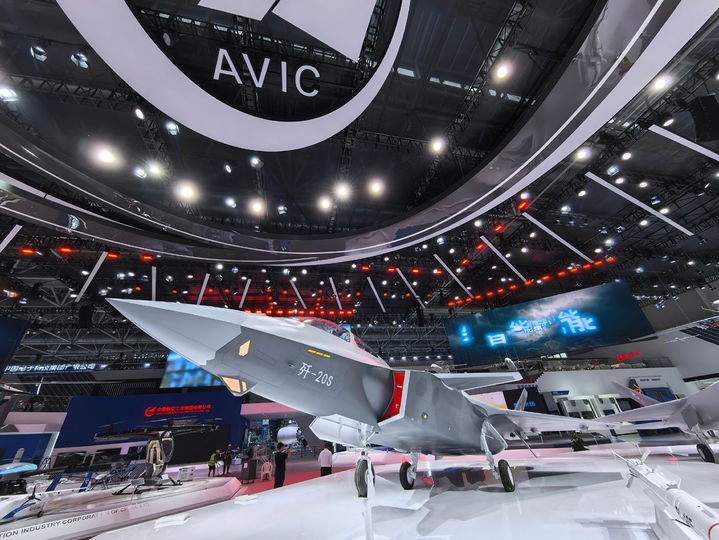
Even in Chinese internal assessments, the J-20’s radar cross-section (RCS) is estimated to be roughly 100 times larger than the F-22’s. Practically, that means radars will detect a J-20 much earlier and more easily than an F-22—an acute disadvantage in modern “detect-first, shoot-first” aerial warfare. The J-20 also carries many long-range missiles such as the PL-15 and PL-21 on external fuselage pylons, which further increases RCS when the jet is fully armed. By contrast, the F-22 houses six AIM-120 AMRAAMs and two AIM-9X missiles in internal bays, allowing it to retain stealth even with a full loadout.
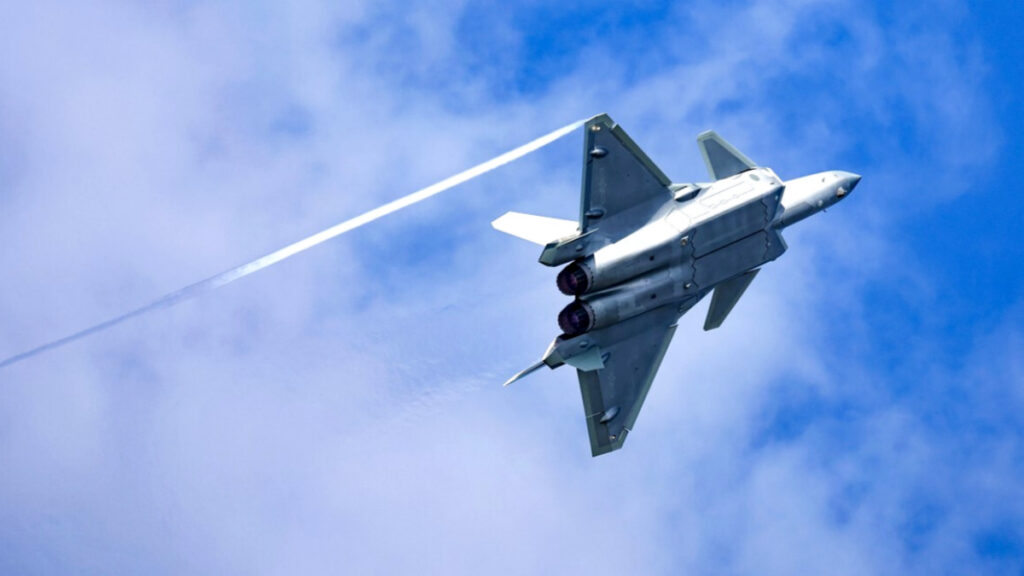
J-20 lacks an internal cannon; design signals abandonment of dogfighting
The J-20 has no internal gun, leaving it with few options in close-in dogfights. Analysts say China designed the J-20 not as a short-range dogfighter but as an interceptor built to suppress high-value support assets—AWACS, tankers and other enablers—using long-range missiles. The F-22, by contrast, benefits from Pratt & Whitney F119 thrust-vectoring engines for extreme maneuverability, can reach roughly Mach 2.25, and has amassed extensive training and operational experience across a fleet of about 176 aircraft. Given equal pilot skill, the advantage widens as engagements move into close quarters.
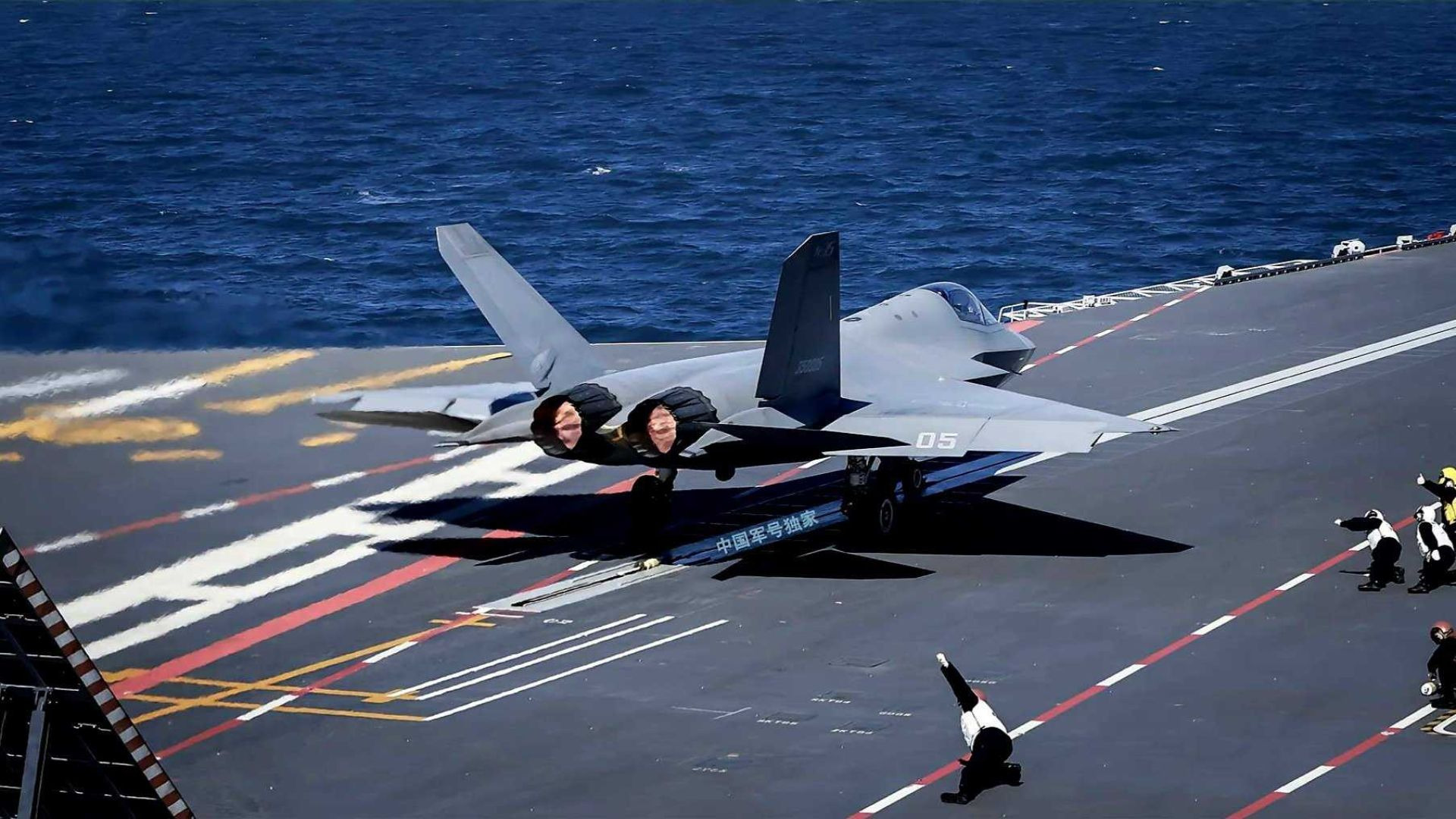
China’s claim that loyal wingmen push win rate to 95%—is it realistic?
Beijing claims the J-20’s win rate against the F-22 climbs to 95 percent when paired with two loyal-wingman unmanned combat aircraft. The argument is that two drones operating at standoff can act as remote shooters and flip the engagement. But that figure derives from a simulation run under Chinese assumptions and lacks independent verification. The U.S. has already advanced unmanned wingman prototypes into flight testing under the CCA (Collaborative Combat Aircraft) program, so many analysts say the U.S. still holds the edge in manned–unmanned teaming.
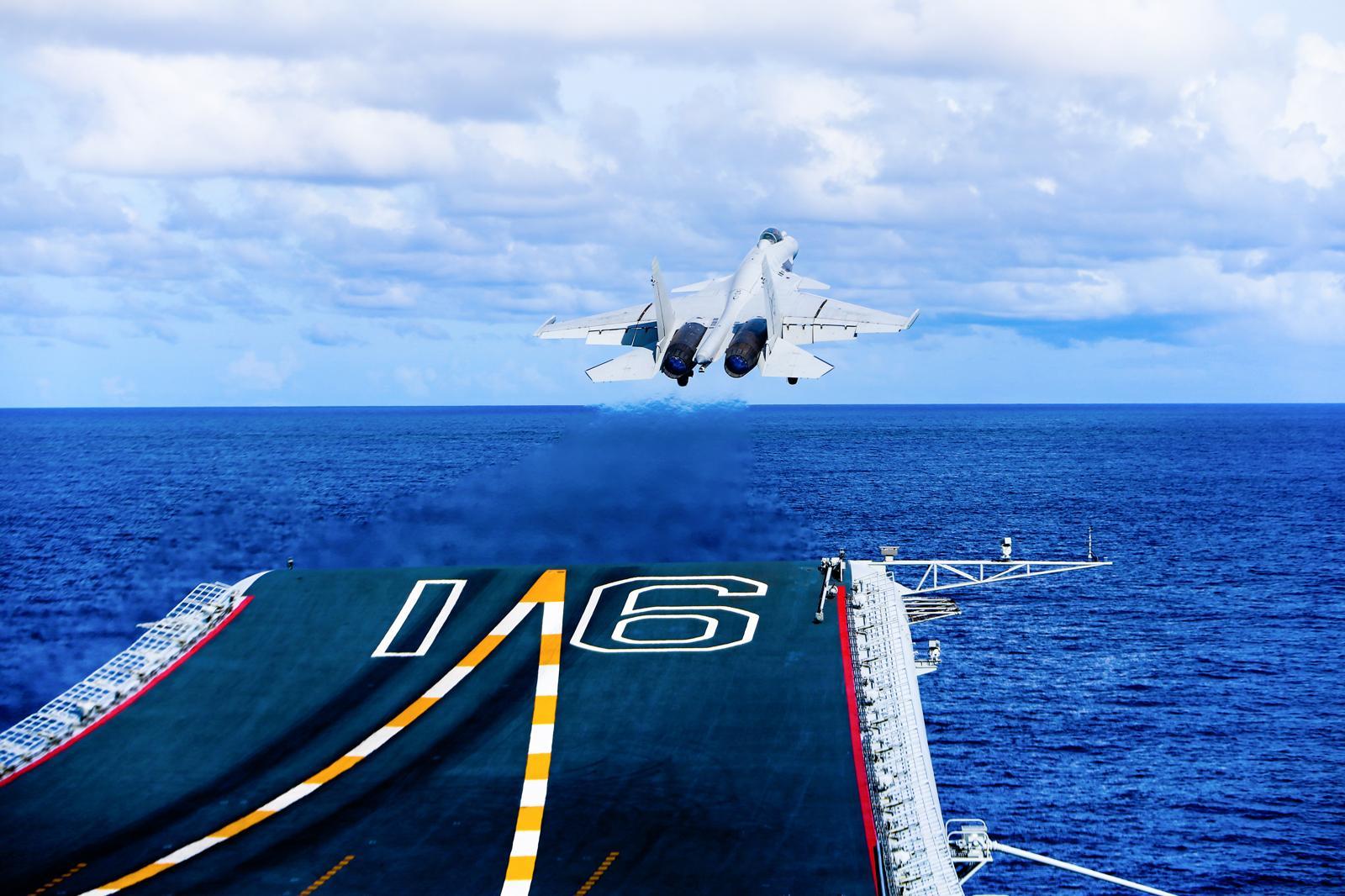
F-35 vs. J-35A: avionics lag by ‘two generations,’ analysts say
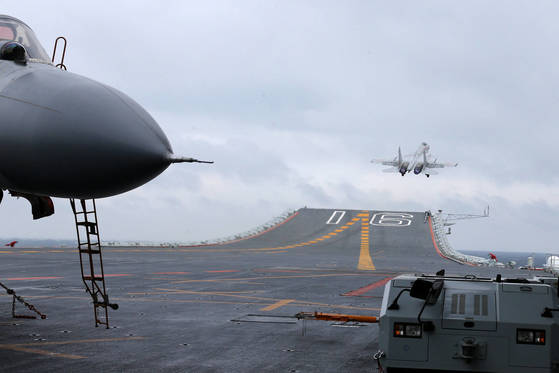
The comparison between South Korea’s F-35A and China’s carrier-capable J-35A is revealing. The J-35A appears to be a carrier stealth fighter built with the F-35 in mind, and its combat radius—around 750 miles—puts it in a similar class. But analysts judge the J-35A lags significantly in avionics: electronic warfare, radar performance and sensor fusion. The F-35 fields the AN/APG-81 AESA radar and is slated for an AN/APG-85 upgrade in Block IV. U.S. analysts have gone so far as to describe the J-35A’s avionics as roughly “two generations” behind. It is also difficult to compare a battle-proven F-35 with thousands of operational hours to a J-35 that is still in development and testing. South Korea has already fielded 40 F-35As and plans to add 20 more by 2028.
What ultimately decides the outcome is people, not the aircraft
Many experts say the decisive factor is not the platform but the experience of pilots and units. U.S. aviators have flown combat missions for decades in Iraq, Afghanistan and Syria and have refined decision-making and tactics across varied theaters, including recent strikes involving Iran. By contrast, the People’s Liberation Army has not seen large-scale combat since the 1979 Sino–Vietnamese war. Marine Corps Commandant Gen. Eric Smith summed it up: “Bluster and actually putting your life on the line are completely different.” U.S. Air Force Chief of Staff David W. Allvin has also warned that while China’s capabilities deserve respect, “the level of our pilots, NCOs and maintainers is a realm they cannot immediately reach.”
U.S. readies for the post–F-22 era; China can’t close the gap by numbers alone
The F-22 is slated to be gradually succeeded in the 2030s by a next-generation air dominance fighter (NGAD)—a concept some call the F-47. Reports indicate full-scale sixth-generation prototypes have logged milestones in undisclosed test flights. The broader point of the Chinese simulation is this: even if China fields more J-20s and brings new J-35s online, it is unlikely to overturn layered U.S. advantages in stealth, sensors, networking, unmanned teaming and combat-experienced aircrews in the near term—a reality Beijing appears to have tacitly acknowledged.
What this means for a Korean Peninsula contingency
In a Korean crisis, F-22s at Kadena, combined with South Korea’s F-35As, F-15Ks and KF-16s, form the airpower package China must weigh before intervening. No matter how loudly Beijing markets the J-20 as the “world’s strongest,” an internal simulation showing roughly nine losses out of 10 against the F-22 lowers the odds of a direct U.S.–China aerial showdown over the peninsula. From a deterrence standpoint, the more China seeks to avoid a head-on clash with the U.S. Air Force, the more likely U.S. deterrence and air superiority will hold over Korean airspace.










Most Commented