
Translation result.
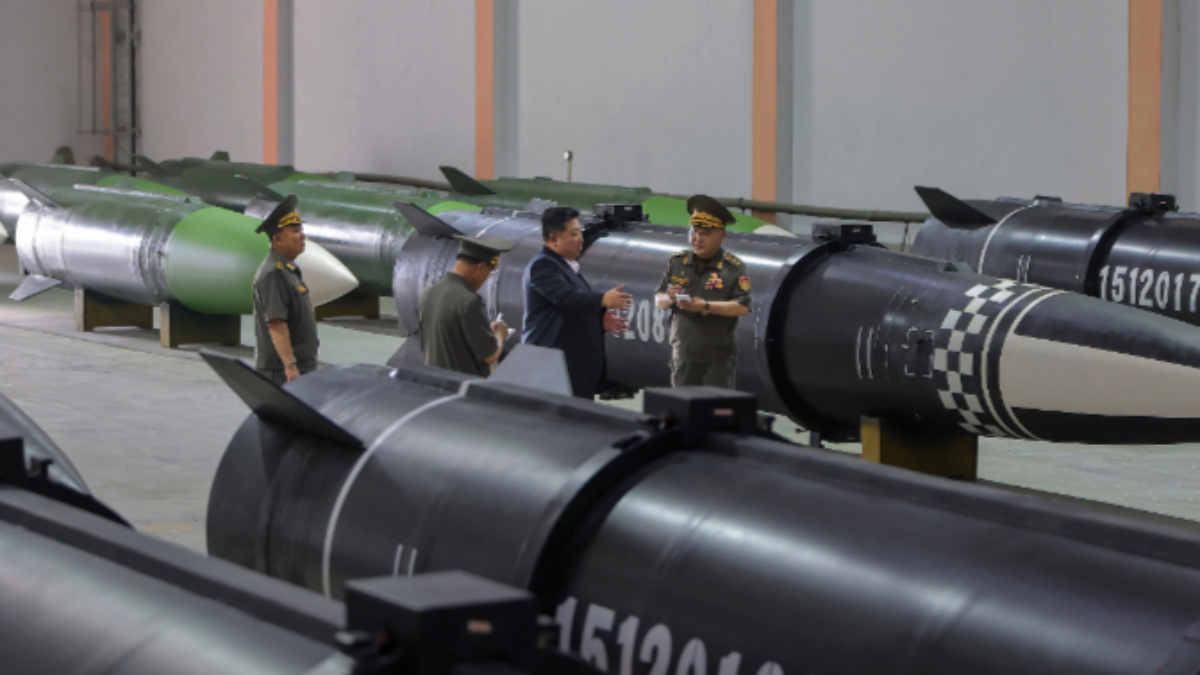
Carbon-fiber solid-fuel ICBM engine aimed at the United States
North Korea’s recent reveal was more than an engine test; it was a clear political and military signal: “We’re not Iran — we can directly threaten the United States.” U.S. and regional analysts estimate the upgraded carbon-fiber, solid-fuel ICBM motor generates roughly 2,500 kilonewtons of thrust — about a 26% increase over the 1,971 kN seen in earlier trials. That rise in thrust affects not only range but payload capacity: how many warheads a missile can carry and how large or sophisticated those warheads can be. Since Pyongyang already appears to have missiles with the range to reach the U.S. mainland, experts view this upgrade as an effort to field “more, and more complex,” payloads.
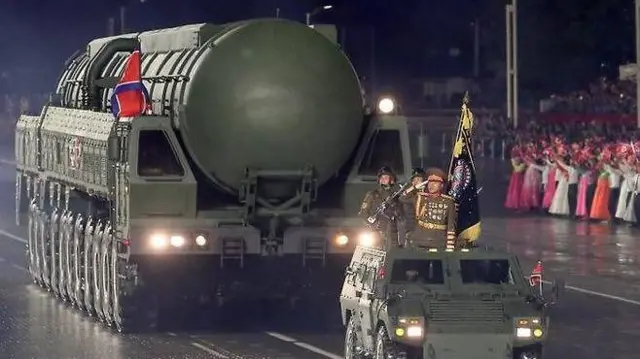
The goal: MIRVed ICBMs — a step that sharply raises interception difficulty
The real strategic implication of the thrust increase is the potential for MIRVs — multiple independently targetable reentry vehicles — or multiple warheads on a single booster. With additional thrust margin, North Korea can increase warhead count or mix in decoys, forcing missile defenses to shift from tracking a single trajectory to simultaneously tracking multiple ones. That dynamic would complicate interception and erode the effectiveness of current defensive architectures. For Pyongyang, moving beyond a single-warhead capability to a MIRV-capable force would present a new, qualitatively harder problem for U.S. and allied defenses.
![속보]북,](https://cdn-union.tenbizt.com/contents/crawler-dev/image/2026/05/CP-2025-0103/image-621a605e-10c2-49ed-b5c1-1efe4718c584.jpeg)
Next-generation ‘heart’ of the Hwasong-20
Analysts based in Seoul say the new solid motor is likely intended as the primary propulsion unit for the next-generation ICBM known as the Hwasong‑20. The Hwasong‑20 name first surfaced during the October 2025 parade and the system is still judged to be in development rather than fully fielded. Solid-fuel ICBMs offer shorter launch-preparation times and the ability to fire from mobile launchers, making them more survivable and tactically flexible than liquid-fueled designs. Coupling that mobility with a higher-output motor creates space for additional payload options — multiple warheads or highly maneuverable reentry vehicles — which supports the view that North Korea sees the Hwasong‑20 as the centerpiece of its future strategic nuclear force.
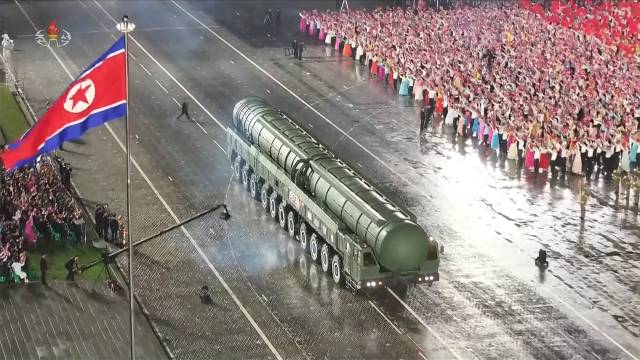
Why Pyongyang is holding back on test launches
Notably, North Korea has been keen to showcase the new motor while holding off on additional ICBM flight tests for the moment. Since the October 2024 Hwasong‑19 launch, there have been no further ICBM tests, and public rhetoric toward the United States has avoided explicitly provocative language aimed at President Trump. That pattern suggests a deliberate approach: demonstrate capability without crossing perceived red lines. With U.S. military actions against states such as Venezuela and Iran ongoing, Pyongyang appears to judge there’s little strategic benefit in triggering a direct confrontation with the United States at this time.
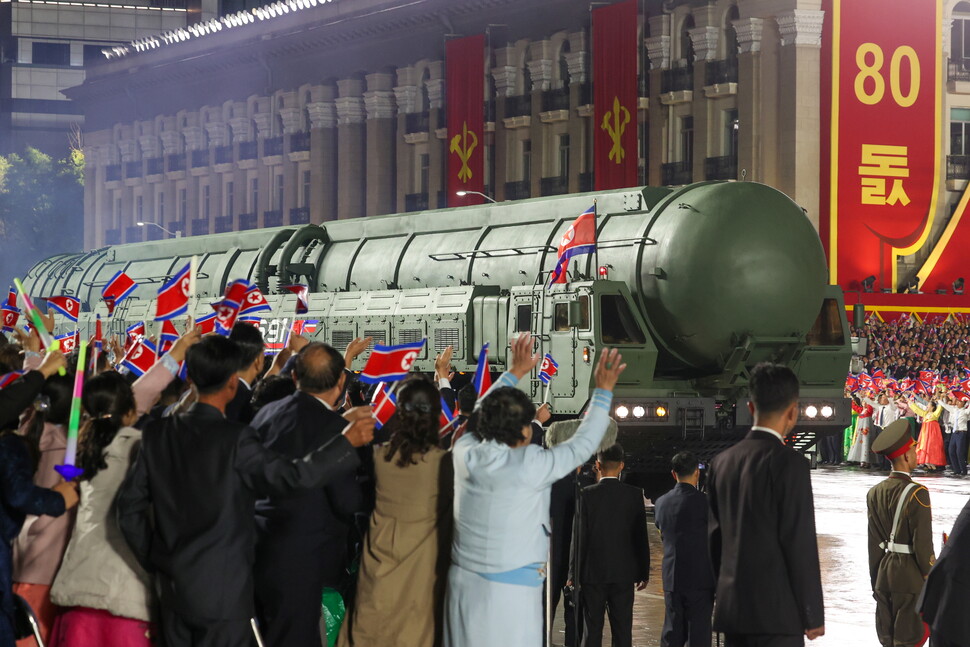
A military-propaganda package meant to distinguish North Korea from Iran
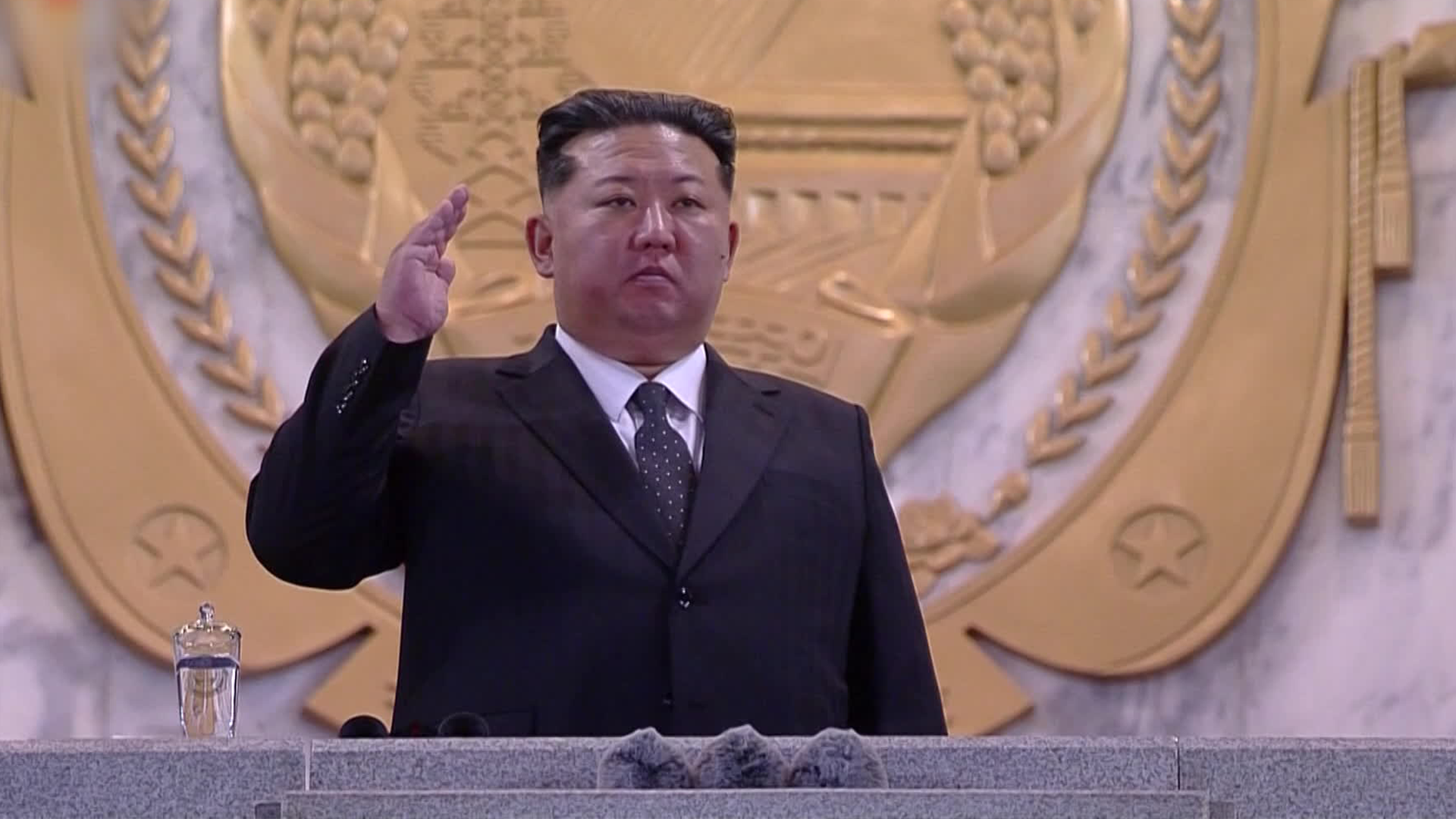
The new ICBM motor is part of a broader military-propaganda package Pyongyang has rolled out recently. The regime has also showcased suicide drones, new tanks equipped with anti-tank missiles, and intense special-forces training footage to project an image that “we are not a country that will be knocked around like Iran.” By staging these displays in the wake of heightened U.S.–Iran tensions and U.S. operations against anti-American states, North Korea seeks to position itself as a different, higher-tier adversary capable of threatening the U.S. homeland. The intent appears less about preparing for immediate war than about signaling that any conflict with North Korea would also risk serious costs to the United States — a psychological lever to strengthen its negotiating position.
A ‘simultaneous pressure’ posture that includes South Korea
While the new motor and MIRV concept are primarily aimed at the U.S. mainland, they also serve as pressure tools against South Korea and Japan. Simply possessing ICBMs capable of striking the United States imposes a political cost on any decision by Washington to intervene on the peninsula. If Pyongyang layers that strategic capability with medium-range ballistic missiles, cruise missiles, suicide drones, and special-operations forces to threaten South Korea and Japan at the same time, Seoul faces a much broader defense spectrum to cover. Ultimately, the weapons package North Korea is showcasing appears designed to unsettle both the United States and regional allies and to maximize Pyongyang’s leverage in future negotiations.











Most Commented