
Translation result
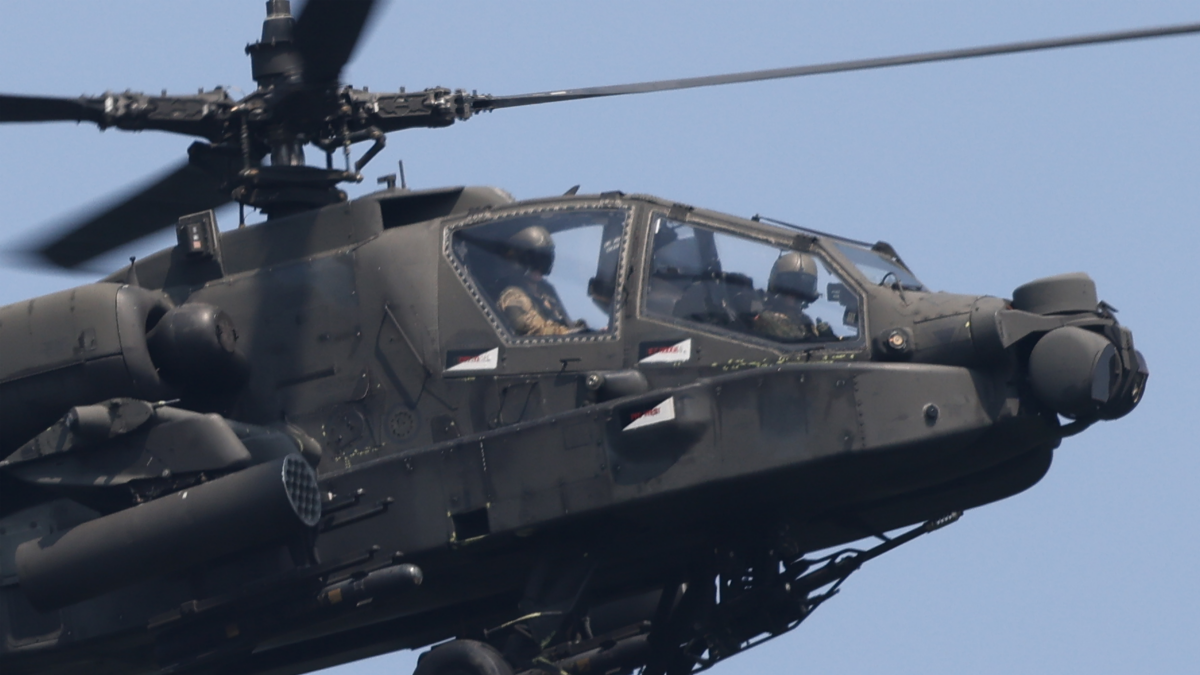
Why it landed in a rice paddy
At about 11:52 a.m. on May 15, a U.S. Forces Korea AH-64 Apache attack helicopter reported suspected engine overheating and attempted an emergency landing while flying over Hyundeok-myeon in Pyeongtaek, Gyeonggi Province, officials said. The crew avoided populated areas, roads and structures and chose the widest open area available—the center of a rice paddy—as the landing site. Both crew members exited without injury. There was no fire or secondary damage. South Korean military, police and fire units responded, secured the scene and opened an investigation into the cause.
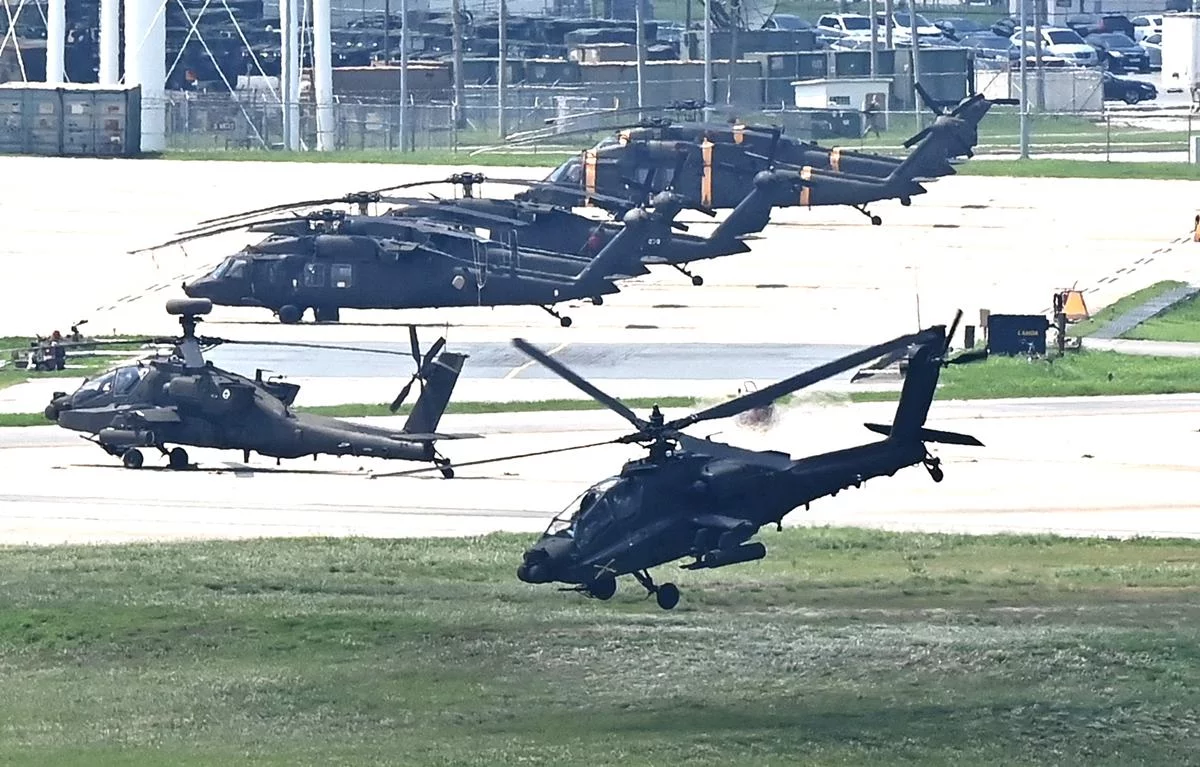
A force that can “destroy 12 enemy tanks” — why land so cautiously?
The AH-64 Apache is built for anti-armor and close air support missions. Armed with Hellfire missiles, unguided rockets and its 30mm cannon, a single aircraft can present enough firepower to engage roughly a dozen tanks, analysts say. Because of that capability, Apache crews operating over the Korean Peninsula follow a conservative rule: any abnormal indication—even a small rise in engine temperature—triggers an immediate landing at the nearest safe location for inspection rather than continued flight. Given the dense civilian population around Pyeongtaek and Osan, crews train to prioritize open areas such as rice paddies and fields as preferred touchdown sites.
How will repair and recovery proceed?
U.S. Forces Korea intends to conduct on-site repairs and then move the aircraft. Because the helicopter settled in the middle of a rice paddy, crews must first drain water so maintenance vehicles and equipment can reach the site. Including inspection and parts replacement, the work is expected to take at least two to three days. Typically in these cases,
- First, teams conduct an on-site assessment to determine whether the engine or airframe sustained structural damage
- If needed, crews perform temporary repairs and relocate the aircraft to a nearby base
- Finally, the aircraft is taken to a maintenance depot for a full teardown inspection
That is the usual sequence. The U.S. Eighth Army said there were no reports of aircraft damage or personnel injuries and that an investigation into the cause is underway.
Why similar incidents keep happening
In September of last year, an AH-64E assigned to U.S. Army units also made an emergency landing in a rice paddy in Baeksan-myeon, Buan County, North Jeolla Province. Both crewmembers exited safely and the incident ended without major damage. These occurrences are not uncommon because Apache units routinely train at night, at low altitude and in adverse weather—conditions that place added stress on aircraft systems. When crews detect any abnormal sign, commanders enforce a conservative operating principle: land at the nearest safe location immediately rather than try to continue flying.















Most Commented