
Russia’s Sarmat ICBM: The 35,000km Nuclear ‘Truck’ Capable of Hitting Multiple Targets
Daniel Kim Views
Translation result
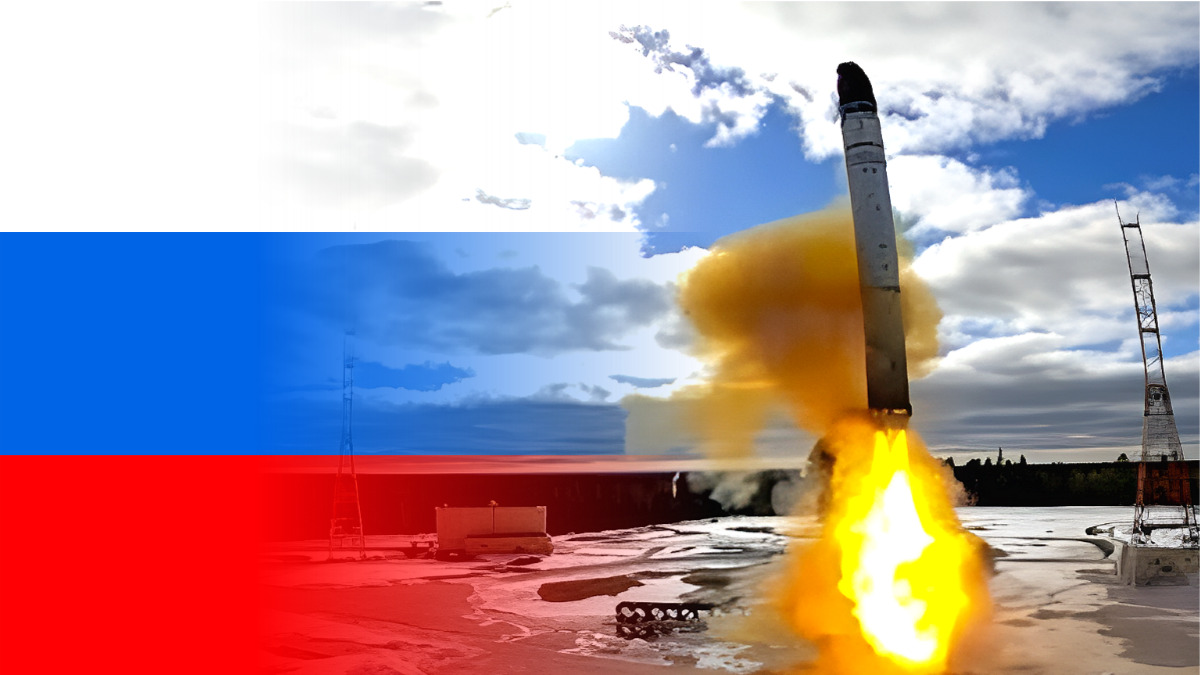
Russian President Vladimir Putin announced a year-end deployment of the new Sarmat intercontinental ballistic missile (ICBM), asserting the system can defeat any missile-defense network.
He said the missile is more than four times as powerful as comparable Western warheads and has a range beyond 35,000 km (about 21,748 miles), a claim that quickly raised alarm among international observers.
But the real concern for U.S. and allied analysts is not only the yield; it’s what the system enables operationally.
Rather than a single oversized bomb, the Sarmat is designed as a heavy delivery vehicle capable of carrying multiple warheads that can strike separate targets across the globe in one salvo.
One missile, multiple cities: a multi-warhead \”nuclear truck\”
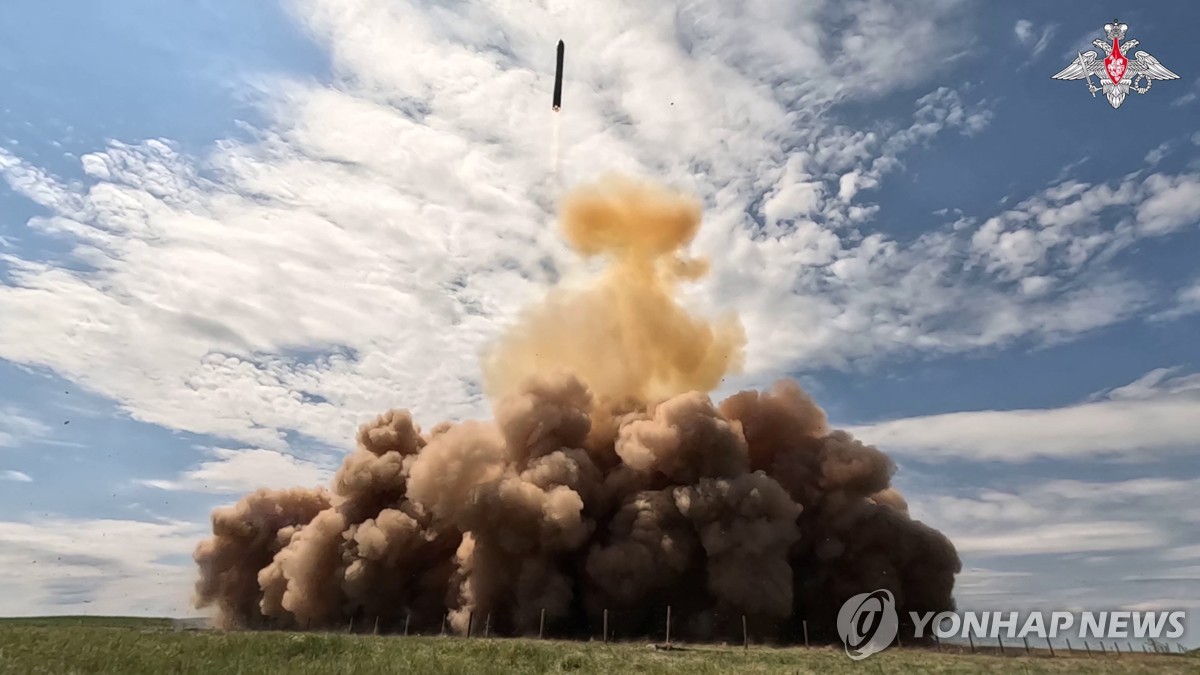
The Sarmat’s defining capability is its multiple independently targetable reentry vehicle (MIRV) configuration.
Conventional missile defenses are typically configured to intercept a single incoming warhead. The Sarmat, however, can disperse outside the atmosphere into roughly 10 to 16 independent warheads that reenter on different trajectories to strike separate cities or military bases.
Open-source analysis from the Center for Strategic and International Studies (CSIS) puts the missile’s total mass at about 208 metric tons and its payload capacity at roughly 10 metric tons, classifying it as an ultra-heavy ICBM.
Each independent warhead is comparable in yield to modern strategic nuclear warheads. If the system operates as designed, a single Sarmat could execute a distributed attack on multiple metropolitan areas and critical military nodes simultaneously.
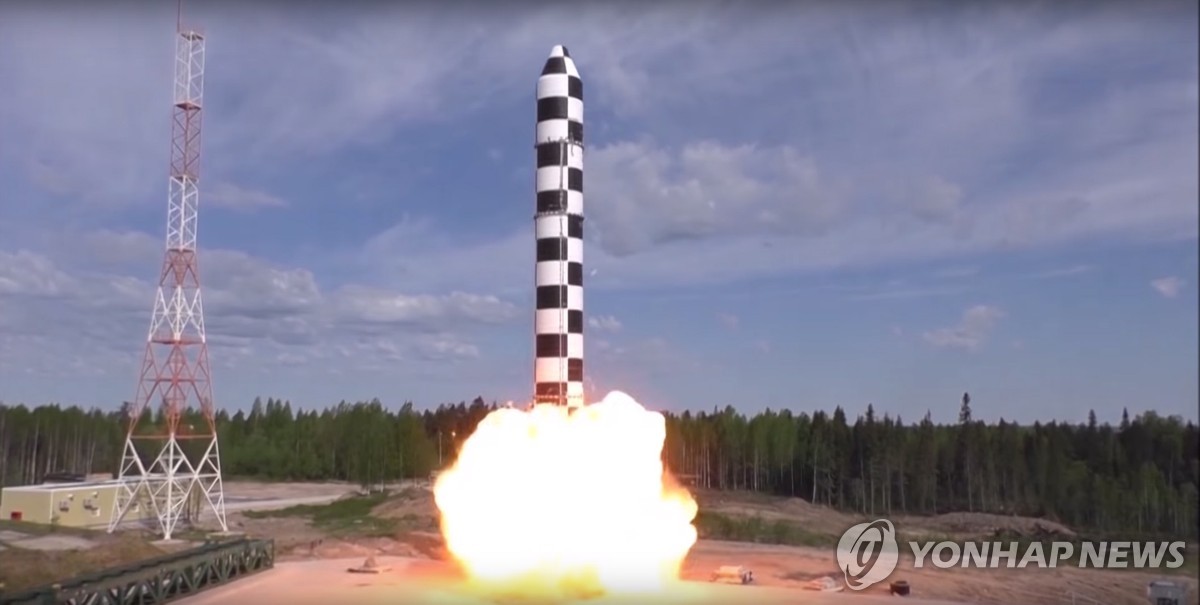
The system can also deploy decoys to confuse enemy radars and is reported to be capable of carrying hypersonic glide vehicles. Those features complicate interception and give defenders few reliable options to guarantee a successful shootdown.
The 35,000-km claim and deployment uncertainty
Putin’s emphasis on a 35,000-km (about 21,748 miles) range — a distance approaching the Earth’s circumference (about 40,000 km) — appears calculated for tactical and signaling effect.
Most Russian ICBMs take the shortest polar routes to the U.S. mainland, routes that U.S. early-warning radars and interceptors monitor closely.
Stretching the Sarmat’s range could, in theory, allow Russia to use less-monitored southern trajectories over the Antarctic region and approach targets from unexpected vectors.
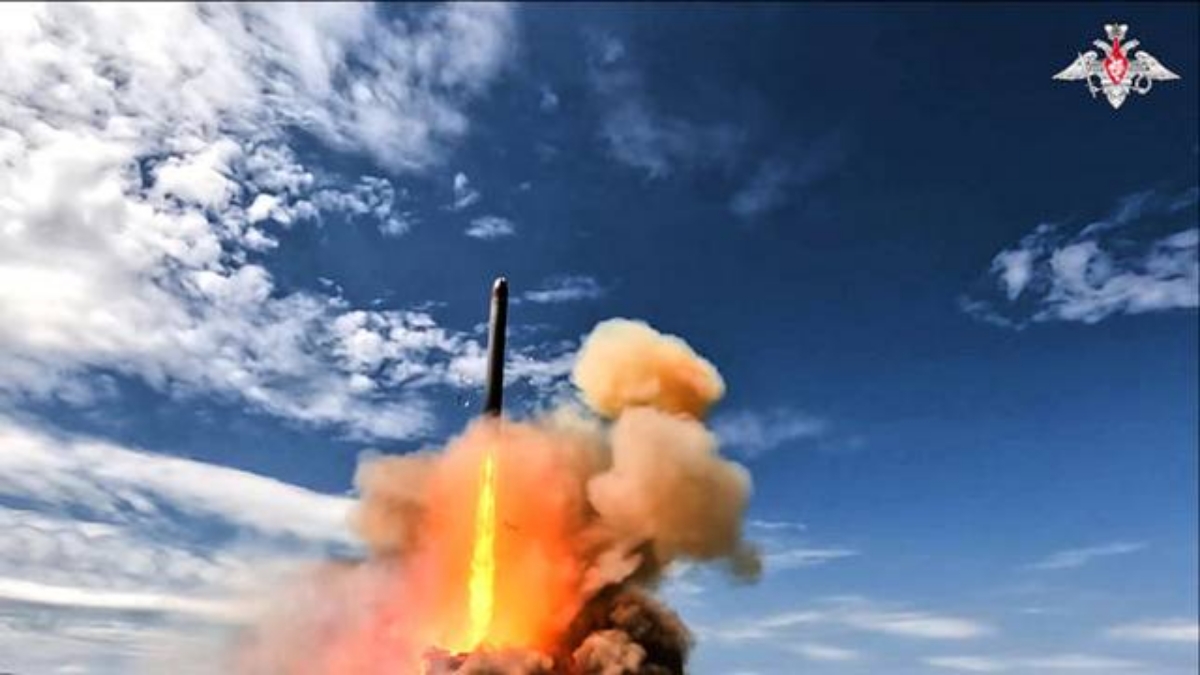
Western analysts, however, advise caution in accepting Moscow’s public figures at face value.
Open-source estimates generally place the Sarmat’s practical range closer to 18,000 km (about 11,185 miles). The 35,000-km figure likely assumes specialized flight profiles and serves a strong messaging function.
The program has also encountered technical and schedule setbacks. Since its unveiling in 2018, deployment has slipped repeatedly, and a reported failed test launch in September 2024 caused significant crater-like damage to a launch pad.
Many defense experts now interpret the year-end deployment announcement less as proof of a fully operational “game-changing” weapon and more as a political signal: a move to replace aging missiles while demonstrating Russia’s resolve to sustain a potent nuclear deterrent aimed at the West.










Most Commented