
Korean Ships in Crisis: How the Hormuz Incident Affects 160 Sailors and HMM’s Future
Daniel Kim Views
Translation result
160 Korean seafarers stranded in the area
Shipping companies’ losses mount as vessels remain immobilized
HMM declines to issue a statement, maintains a cautious posture
Damaged Namuho to be repaired at a Dubai shipyard
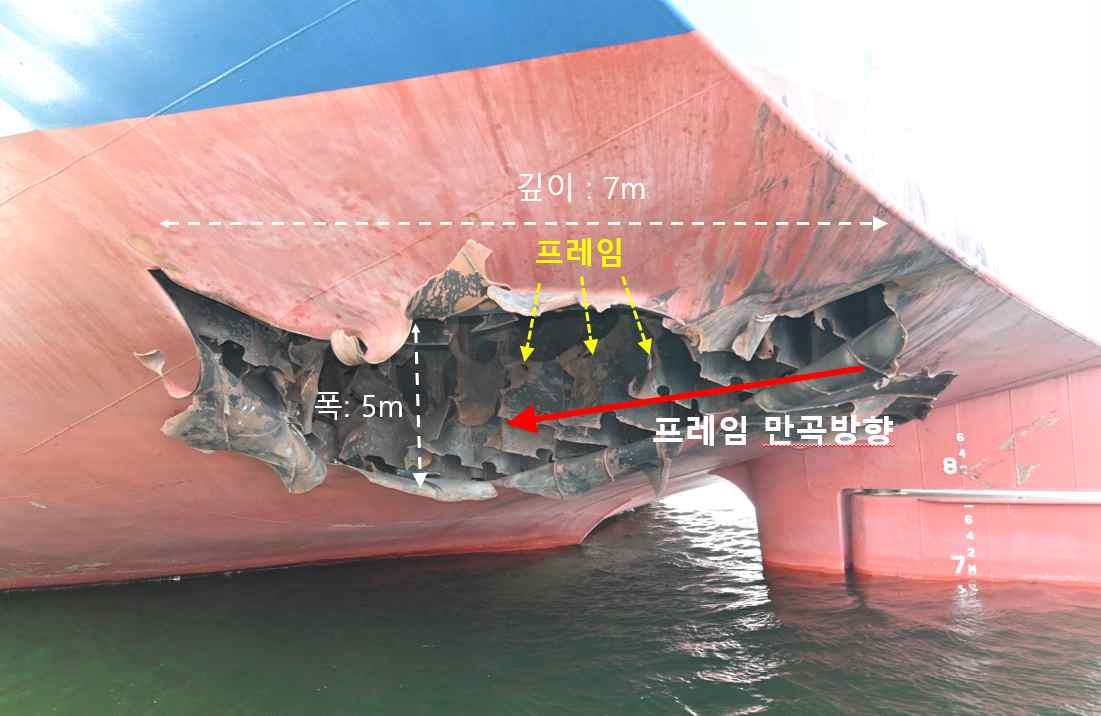 The blaze aboard a Korean vessel in the Strait of Hormuz has been attributed to an external strike, raising urgent safety concerns for 26 Korea-linked ships now trapped in the waterway. HMM, the carrier at the center of the incident, has responded cautiously and limited public comment.
On May 10, the Ministry of Oceans and Fisheries reported that 26 vessels tied to Korea remain immobilized in the Strait of Hormuz, including the multipurpose ship Namuho. Across those ships — counting Korean seafarers aboard foreign-flagged vessels — about 160 Koreans are currently on board. Six of the Namuho’s 24 crewmembers were Korean. Since the outbreak of the Middle East war, these vessels have been largely stuck for more than two months, anchored mostly off the United Arab Emirates.
The Foreign Ministry announced that the April 4 fire aboard the Namuho was caused by an impact from an unidentified aerial object. Investigators have not yet identified the launcher. Authorities say it is too soon to draw definitive conclusions and that they must keep multiple possibilities open, including involvement by the Islamic Revolutionary Guard Corps — an assessment that will likely increase carriers’ operational and insurance burdens. According to the Korea Shipowners’ Association, carriers stranded in the Strait have been incurring additional war-risk premiums, fuel and crew costs, and were losing about 490 million KRW (approximately $367,500) per day as of the end of March.
Despite the danger, Korean seafarers in the Strait have continued to carry out their duties. Namuho crew reportedly fought the fire calmly and brought it under control. A business source said, “We shouldn’t rush to judgment, but Iran’s involvement can no longer be fully ruled out. For ship operators, the risk profile has clearly risen.”
HMM has kept a guarded stance. Financial sources place daily losses for Korean carriers trapped in the Strait at roughly 500 million KRW (approximately $375,000). Although the Namuho was covered by war-risk insurance, the company may not be compensated for lost opportunity costs stemming from a prolonged inability to accept new cargoes.
An HMM spokesperson said, “We do not plan to issue a company statement regarding the Namuho being struck. The government led the investigation and has announced its findings, so there is no additional company position to offer.”
HMM has not otherwise commented on the government’s conclusion that an external strike caused the explosion and fire. The company has also cut off outside contact between the Namuho’s crew and their families.
With the government’s on-site probe — which began on May 8 — now complete, officials plan to send the Namuho to a Dubai repair yard for work. A company source said, “We will coordinate repair scheduling with the shipyard,” but added that no firm completion date has been set.
The Namuho is a multipurpose vessel with a deadweight tonnage (DWT) of 38,000. Under its war-risk endorsement, the ship could be eligible for up to 100 billion KRW (approximately $75 million) in coverage. Five domestic non-life insurers, including Hyundai Marine & Fire Insurance, jointly underwrote the war-risk policy. Whether insurers pay will hinge on whether investigators confirm the damage was caused by an external strike rather than an internal mechanical failure unrelated to wartime action; given the government’s finding, insurers are likely to process claims.
The larger concern for operators is lost revenue if repairs take an extended period and the vessel cannot return to service. The Namuho transited the Strait of Hormuz on Feb. 25 — three days before U.S. and Israeli strikes targeting Iran — unloaded cargo in Saudi Arabia, and has been immobilized there for months.
HMM currently has five vessels inside the Strait, including the Namuho: one container ship, two tankers and two bulk carriers. Apart from the Namuho, the other four vessels moved deeper into the Strait toward waters near Qatar for safety after the incident.
- When will wartime operational control transfer — 2028? 2029? Lee says “We must be prepared to operate independently” [Hyunho Lee’s Military!Talk]
- New ‘5th-generation indemnity’ cuts non-severe coverage to lower premiums — set to launch on the 6th
- Sentenced to life without parole and says “thank you”…50-year-old who killed a peer YouTuber in broad daylight [Today’s Day]
- “Taking a half-day for an hour at the hospital — a waste”…workers now splitting paid leave by the hour
- Robot umpires penalize ‘pitching skill’…walks hit a 70-year high [Park Si-jin’s Global Pick]
- “Even all top 100 Japanese firms combined don’t match Samsung?” Japan stunned — what the recent Goldman Sachs report found
- Retail investors scooped up 4.6 trillion KRW (approximately $3.45 billion) on the Kospi in a week — which stocks were favorites? [Market Signal]
- “I took it daily for brain health”…the betrayal of trusted ‘omega-3’ [Workplace Wake-up]
- “Hello” and they steal your voice…France warns of ‘silent scam calls’ that clone voices
- U.S. military outlets’ take on the KF-21: “Capable of competing for air superiority globally” [Hyunho Lee’s Military!Talk]















Most Commented