
The Untold Power of Iran’s ‘Mosquito Fleet’: How Small Boats Challenge U.S. Dominance
Daniel Kim Views
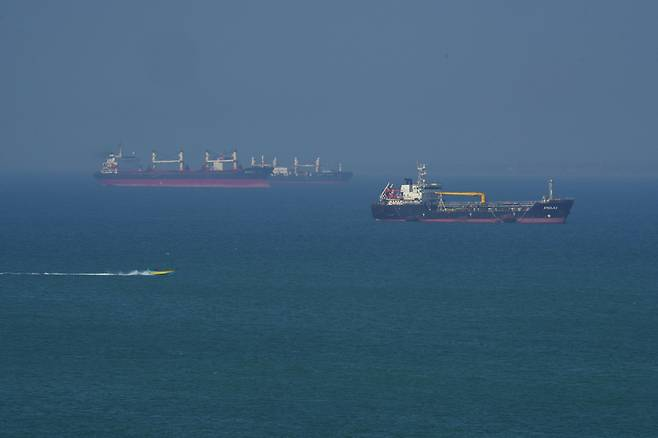 [Herald Economy = Reporter Eun-ji Choi] The Islamic Revolutionary Guard Corps’ so‑called “mosquito fleet,” dispersed in bays and caves along Iran’s southern coast, has emerged as a persistent problem for the U.S. Navy.
On the 9th (local time), the Financial Times and other outlets reported that the mosquito fleet is made up of hundreds of small, high‑speed boats. When ordered, these craft swarm into the Strait of Hormuz to demonstrate Tehran’s ability to control the waterway.
Analysts say the boats carry weapons ranging from machine guns to short‑range missiles, making them an immediate threat to modern warships and tankers.
Former President Donald Trump dismissed Iran’s speedboats as “just fast with a machine gun on the bow,” calling them “only fast.” Experts, however, warn that the assessment is shortsighted.
The mosquito fleet is a central element of Iran’s asymmetric maritime strategy. While it would likely not be able to directly sink a U.S. aircraft carrier, it is sufficiently capable of disrupting sea lines of communication and commercial shipping.
Its chief advantage is survivability through stealth. Small, fast boats hug the sea surface, making visual detection difficult and often delaying radar detection until it’s too late.
To counter them, the U.S. must keep helicopters and drones on persistent patrol. Those assets improve surveillance but cannot fully eliminate the risk of sudden Iranian sorties.
Iran’s emphasis on these asymmetric forces reflects the aging condition of its conventional navy. The Royal United Services Institute notes that Iran’s regular navy still depends on U.S.-built patrol ships and aging submarines from the Pahlavi era, leaving many vessels effectively unserviceable. In contrast, the mosquito fleet has, since the 1980s Iran‑Iraq War, carried out boarding attacks, cargo damage, and mine‑laying missions, becoming the practical backbone of Iran’s naval capability.
Current estimates put the IRGC’s inventory at roughly 500–1,000 speedboats plus more than 1,000 unmanned craft, including explosive drone boats and unmanned surface vehicles. The FT warns that if Iran were to levy de facto “tolls” on ships transiting the Strait of Hormuz after a conflict, the mosquito fleet would likely be the primary instrument of enforcement.
On the 4th, the U.S. signaled firm resolve by launching the “Liberation Project” and using Apache helicopters to destroy six Iranian speedboats on day one. Still, analysts question whether U.S. forces can sustain the costly level of control required in a prolonged campaign that leverages Iran’s geographic advantages.












Most Commented