
Translation result
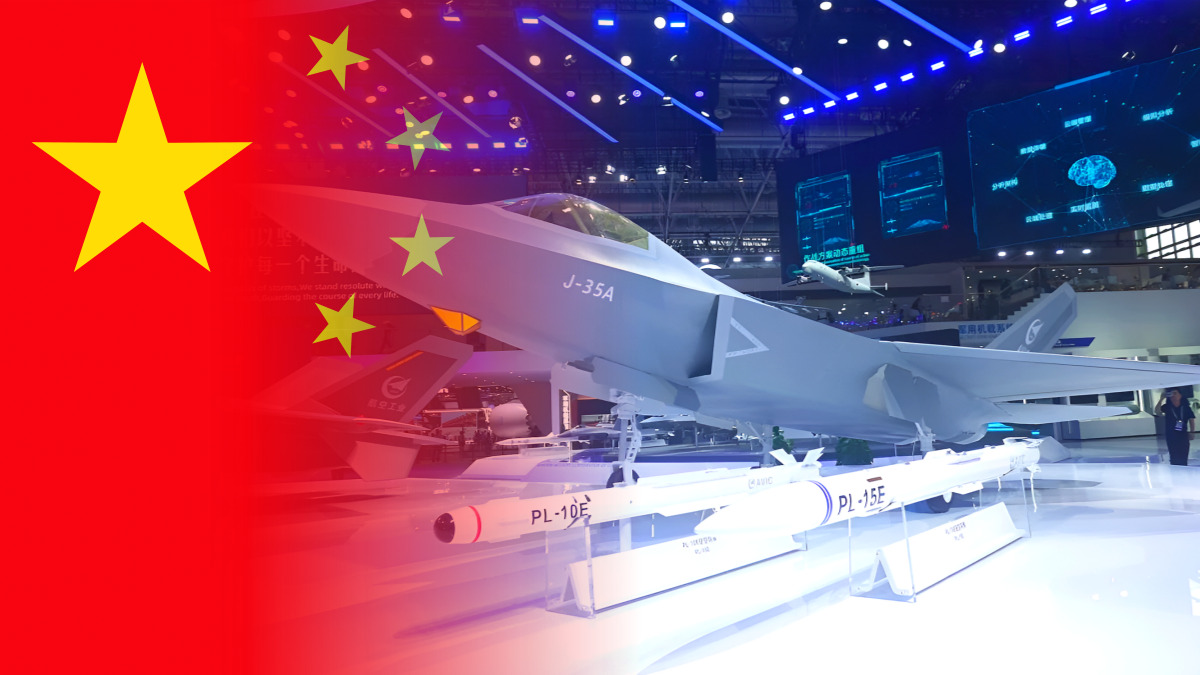
China has thrown down a challenge to the U.S. F-35’s longstanding dominance of the global fifth-generation fighter market by unveiling an export variant of its new stealth fighter — a move that could reshape the international defense landscape.
Beyond signaling competition with Washington, Beijing is offering a practical stealth alternative to countries effectively blocked from buying the F-35. That dynamic poses a direct threat to South Korea’s KF-21, one of the country’s most important defense exports.
State media and international defense outlets report Beijing publicly unveiled the J-35AE, an export derivative of its primary fifth-generation fighter, and has kicked off active global marketing efforts.
“If you won’t sell us F-35s, we’ll buy China’s” — the lure of stealth
Promotional specs and video emphasize the J-35AE’s core fifth-generation attributes.
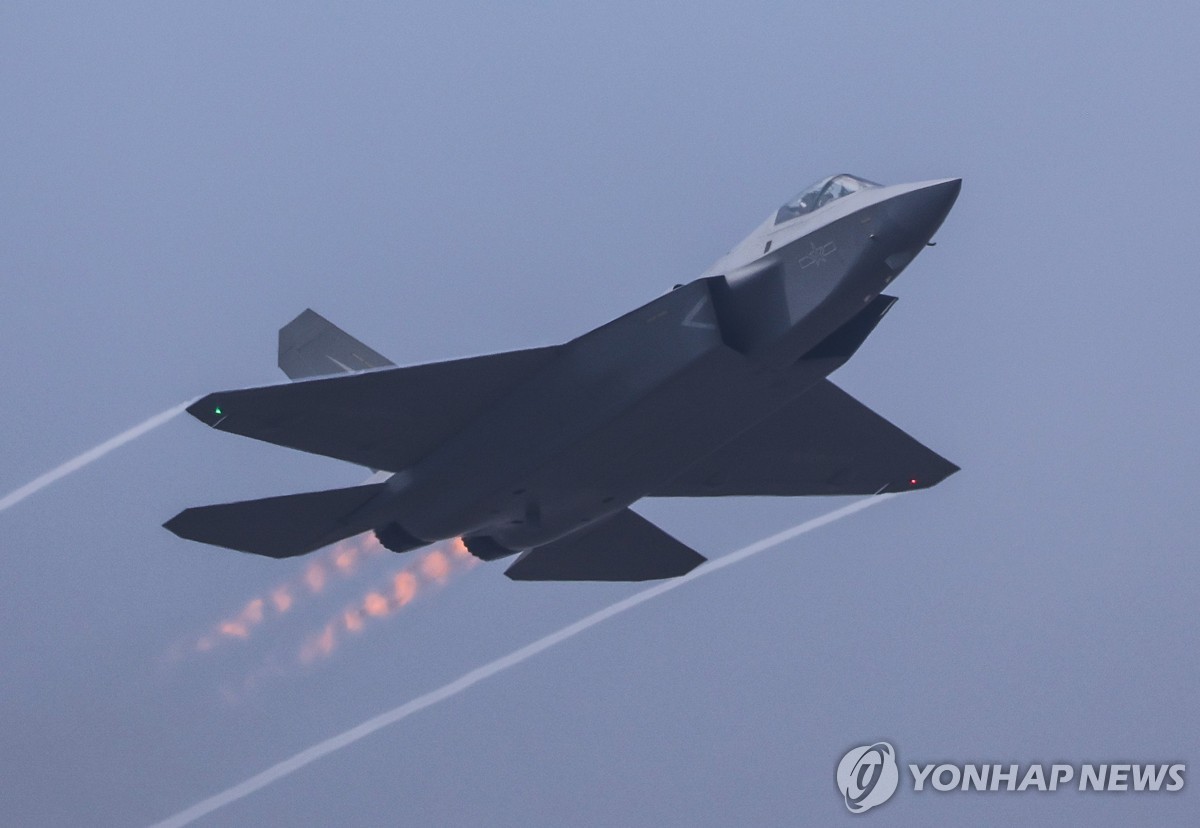
Reportedly, the aircraft pairs a high-performance AESA radar with multi-domain sensor fusion, features an internal weapons bay to preserve low observability, and is estimated to reach top speeds in the Mach 1.8–2.0 range.
The J-35AE’s potential impact on the market isn’t that it outperforms every rival on paper, but that it significantly lowers political and economic entry barriers. Its primary selling point is accessibility.
The F-35 remains available only to a small group of top-tier U.S. partners with deep political ties and cleared security arrangements.
That effectively rules out several potential buyers — including some oil-rich Gulf states, Pakistan amid tensions with India, and certain Southeast Asian nations seeking independent air capability — even if they can afford the jet.
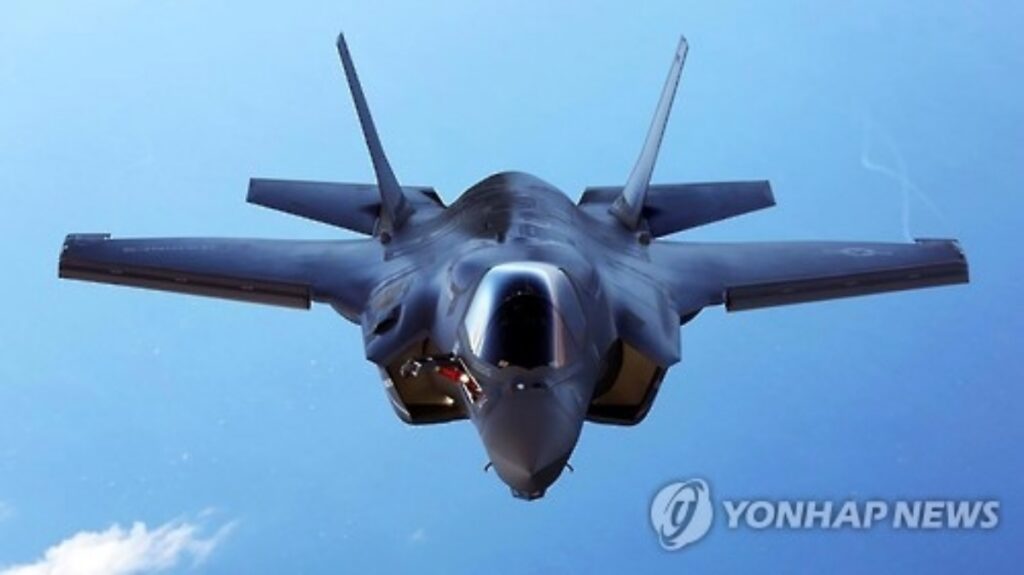
To those buyers, a Chinese fifth-generation stealth fighter with an internal weapons bay could act as a strategic force multiplier, rapidly outclassing neighboring air forces built around 4.5-generation platforms.
The promise of penetrating radar screens, launching long-range air-to-air missiles undetected, and achieving first-shot advantage is a powerful selling point that could alter traditional air-combat doctrine.
“Generation gap or reliability?” — The dilemma facing the KF-21
The J-35AE’s appearance delivers a tangible challenge for South Korea. For the KF-21, which must establish itself on export markets, the Chinese entry raises direct pressure in a specs-driven selling environment.
Target customers for the KF-21 — Indonesia, several Middle Eastern states and other emerging markets — largely overlap with Beijing’s intended customers for the J-35AE.
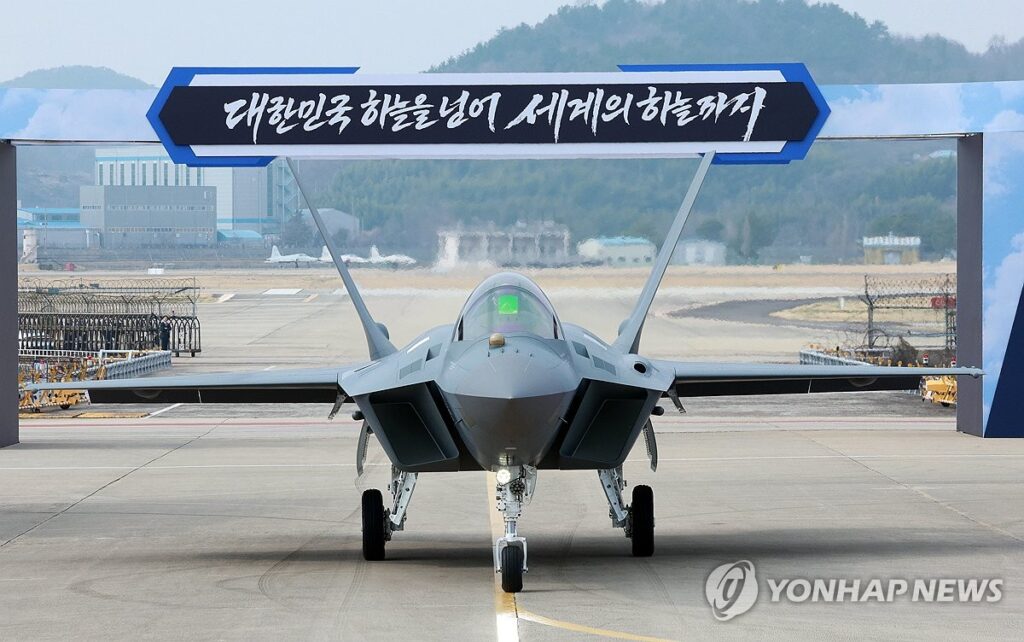
The KF-21 is entering early production and is generally classified as a 4.5-generation fighter that carries semi-recessed external stores.
Planned evolutionary upgrades (Block 2 and Block 3) aim to add an internal weapons bay and move the type closer to fifth-generation capability, but on the sales floor the narrative may be simplified to “China sells a 5th-gen jet; Korea is still at 4.5.”
That paper disadvantage does not automatically spell export defeat. Combat aircraft are ultimately judged by operational performance, sustainment and proven reliability — not just by a spec sheet.
Even if Beijing showcases stealth and an internal bay, buyers will scrutinize engine durability in operational conditions, the lifecycle costs and practicality of stealth coatings, and the maturity of sensor-fusion software.
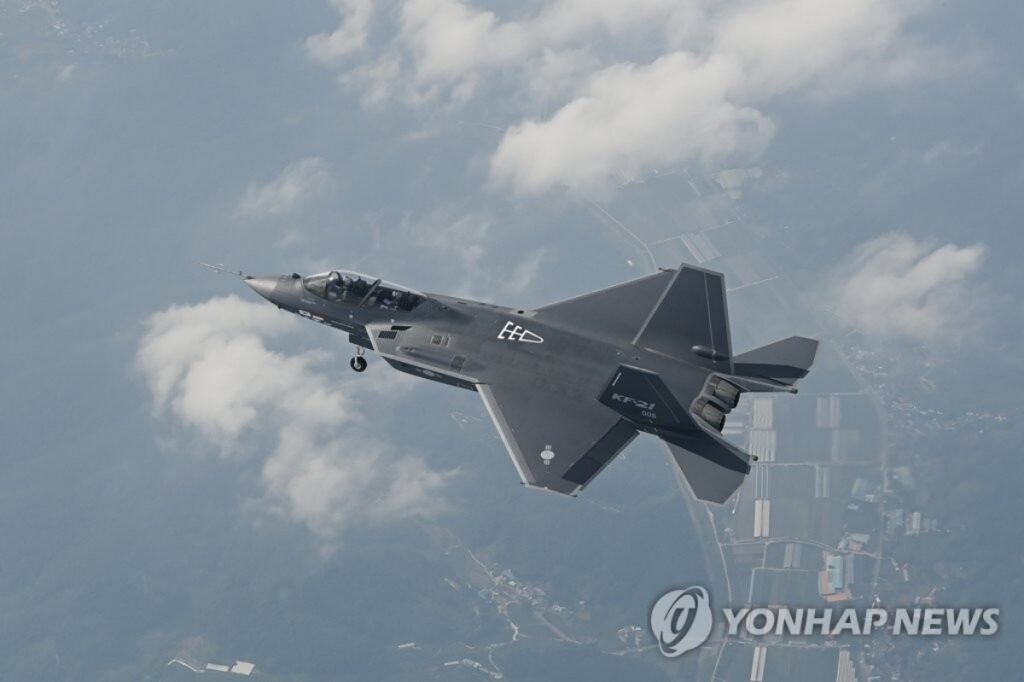
By contrast, the KF-21 is being developed for full compatibility with leading Western air-to-air weapons and avionics — including systems like the MBDA Meteor — and carries a crucial political advantage: customers avoid the risk of U.S. sanctions or disruptions to allied intelligence-sharing that can accompany Chinese procurements.
Ultimately, the global competition for fighter sales will come down to buyer priorities: the marketing appeal of “fifth-generation stealth” versus the operational reliability, sustainment costs and connectivity to the Western defense ecosystem. Which of those factors matters more will decide who wins orders on the export market.











Most Commented