
Translation result
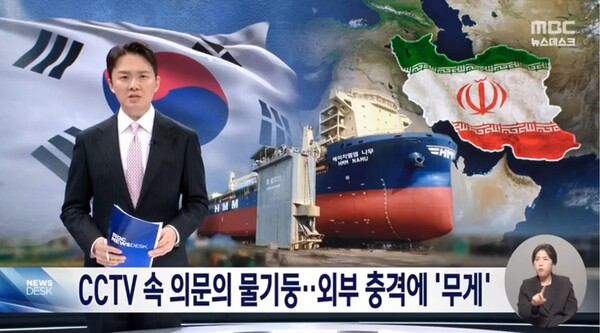
A fire erupted aboard a South Korean cargo vessel that had been immobilized in the Strait of Hormuz, prompting multiple lines of inquiry into the cause. Broadcasters and analysts have focused on two primary theories: an engine-room fire triggered by an external shock or an attack by Iran’s Islamic Revolutionary Guard Corps (IRGC). Government sources say investigators have found no obvious hull breaches, making a direct missile, mine, or drone strike appear less likely.
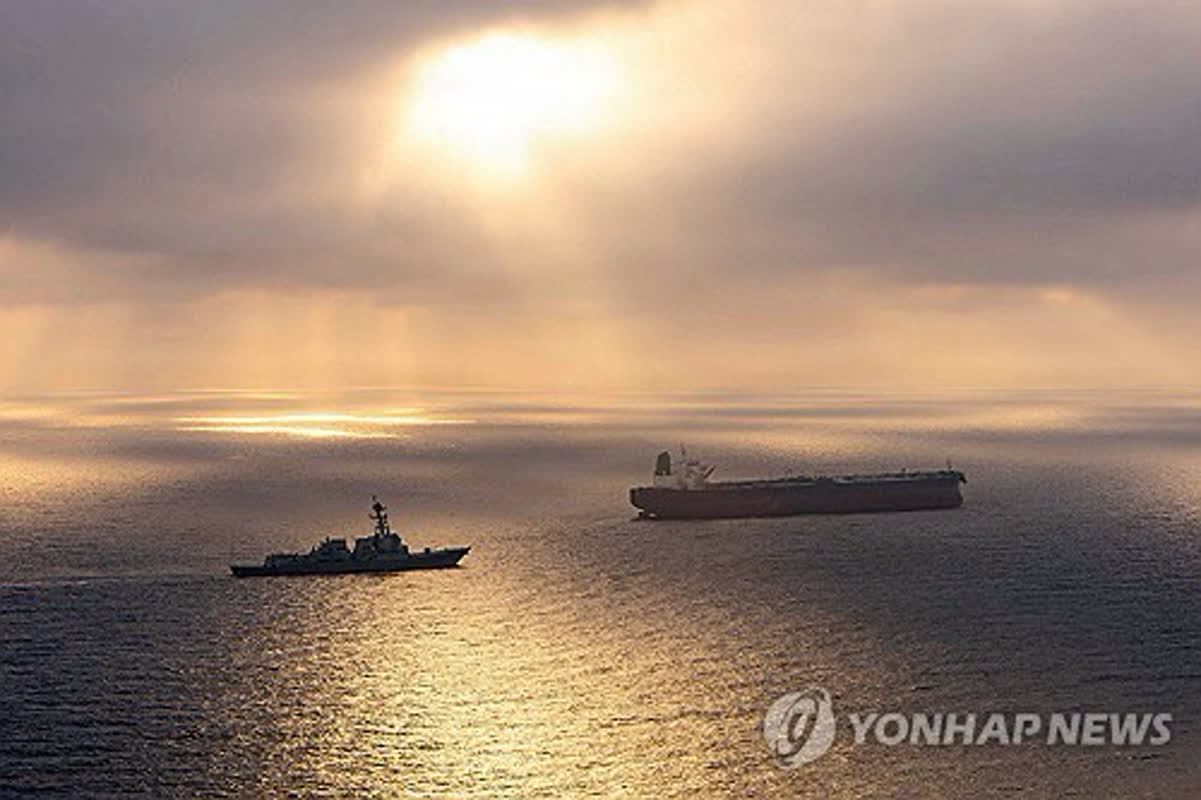
The Foreign Ministry said an explosion and subsequent fire occurred around 8:40 p.m. KST on the 4th aboard the HMM NAMU, a 28,000-ton cargo vessel operated by a South Korean carrier that had been anchored near the United Arab Emirates inside the Strait of Hormuz. The ship had unloaded cargo in Saudi Arabia in mid-March and was attempting to sail to Shanghai when it became trapped in the strait amid the Middle East conflict.
MBC reported on May 5 that at about 8:40 p.m. on the 4th (3:40 p.m. local) a loud “thud” was heard aboard the HMM NAMU, and the sound appeared to originate from the port-side engine room. After reviewing video, government and company officials reportedly observed smoke coming from the engine room and water splashing on the sea surface.
Woo Byung-seon, HMM’s chief manager, told MBC by phone that the fire began on the port side of the engine room with a “thud” and that inspections so far show no structural damage, cracks, or breaches, and no flooding.
In a report titled “Mysterious water plume on CCTV … Weight given to external impact,” MBC examined the possibility of a mine. The network noted that a direct mine hit would typically perforate the hull and risk sinking the vessel, while the HMM NAMU appears only to have lost propulsion without flooding. MBC suggested a near-miss explosion or contact producing a shock wave could have damaged electrical systems in the engine room and ignited a fire. The network also discounted an internal defect as the most likely cause, noting the HMM NAMU was launched last fall and entered service in January, making a catastrophic manufacturing failure while at anchor less probable.
JTBC, citing a shipping industry source familiar with the HMM NAMU, reported that crew recalled two sudden explosion-like noises while the ship was anchored. JTBC added that crew members said a nearby Chinese vessel was reportedly struck around the same time, leading seafarers to suspect a broader, indiscriminate attack.
Yoon Jeong-ho, anchor of TV Chosun’s News9, opened the program by noting analysts are considering whether this could be the first direct attack on a South Korean vessel and that the government has raised its alert level in response.
TV Chosun reporter Hwang Byung-jun, on News9, raised the possibility of deliberate targeting. He suggested an Iranian fast-attack craft could have approached the port side and fired a missile into the engine room; if a warhead detonated inside, fuel stored aboard might have spread the fire.
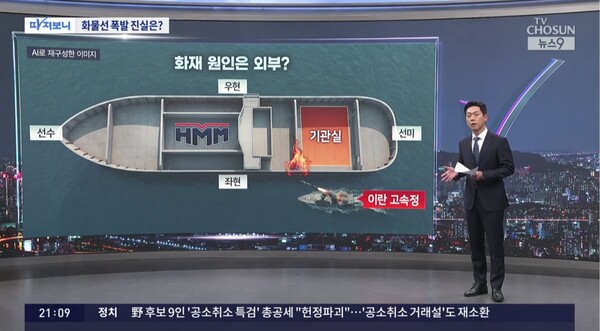
Analysts caution, however, that a mine strike would likely produce far more extensive damage than an engine-room fire alone, and they consider a drone strike improbable given the available evidence.
Channel A reporter Kim Yoo-jin told NewsA that a direct missile or mine hit would likely have left more visible wreckage. Kim outlined several plausible scenarios: an intentional strike by Iran, an accidental stray shot fired by Iran or the United States, or a shipboard malfunction that triggered an explosion.
Channel A also aired what it said was an intercepted IRGC radio warning transmitted around 7 p.m. on the 3rd, in which a voice threatened ships in the Strait of Hormuz, “If you do not obey my orders, you will be destroyed.”
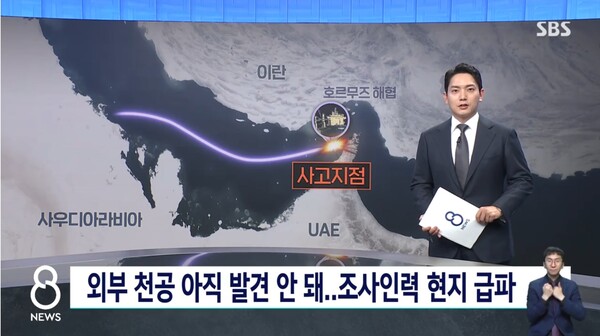
SBS, on its 8 News bulletin, said investigators rushed to the scene and have not yet found external perforations to the hull. While they are not ruling out an attack as Iran tightens control in parts of the strait, SBS noted the lack of visible external damage has left open the possibility of an internal explosion caused by a shipboard fault.
MBN reporter Pyo Sun-woo, on News7, summarized the leading hypotheses as an IRGC attack, an accidental event, or an internal mechanical problem.
Jeon Jeong-geun, chairman of the HMM labor union, told MBC Radio’s Kim Jong-bae’s Focus on May 6 that the timing and location make it hard to regard the incident as an ordinary accident. Given the military tensions near the Strait of Hormuz, he said investigators should first examine external causes.
Jeon said he finds it puzzling that an external strike would cause an internal fire without a hull breach. “From what I’ve been told, there was no hull breach and no flooding,” he said. He added that if a shock wave reached the hull, investigators should look for visible deformation below the waterline.
Asked whether an external physical impact could directly trigger a fire, Jeon replied that a transmitted shock wave could cause electrical shorting or damage to generators, and such deformation could lead to a fire. He also suggested Seoul’s efforts to maintain ties with Tehran indicate Iran may not have been targeting a specific vessel. Responding to President Trump’s claim that the South Korean ship was operating alone and was struck, Jeon said the account does not match the facts: the vessel was anchored with all anchors down when it was damaged. He warned that even escorted transits would not be safe if Iran intends to attack.










Most Commented