
How the Iran-US Conflict is Shaping Military Strategies in China, Russia, and North Korea
Daniel Kim Views
Translation result.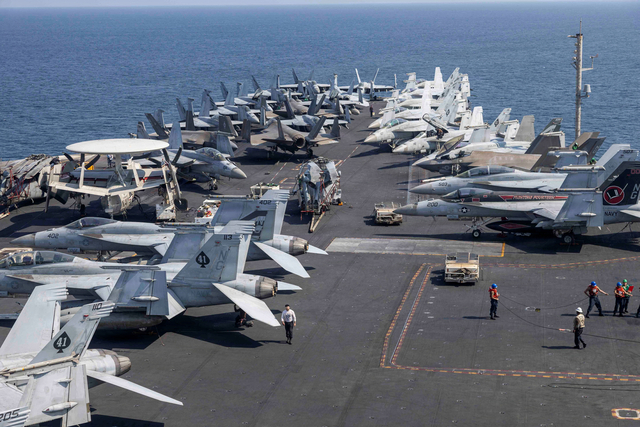 The Wall Street Journal reported on May 1 (local time) that the U.S.-Iran war is giving key American adversaries — China, Russia and North Korea — a real-time window to assess U.S. combat capabilities and limits.
According to the WSJ, those states are watching U.S. new systems, including AI-assisted precision airstrikes, while closely analyzing how rapidly U.S. missile stockpiles are being drawn down. The paper noted in particular how Iran’s low-cost drones have challenged U.S. defenses.
U.S. Indo-Pacific Command leader Adm. Samuel Paparo told Congress that “China likely confirmed the power of low-cost, small precision-guided weapons through this war.” Analysts warn Beijing could adopt similar tactics in a Taiwan contingency.
The United States rapidly expended large quantities of expensive munitions — notably Tomahawk cruise missiles and Patriot interceptors — exposing strains in logistical supply and resupply. The Center for Strategic and International Studies (CSIS) estimates that inventories of four of seven major U.S. munitions used in the conflict have fallen to less than half their pre‑Feb. 28 levels. Some analysts say it could take up to six years to fully replenish offensive and defensive missile stocks.
The WSJ warned that this dynamic is giving adversaries an opportunity to craft tailored strategies against the United States. China, in particular, has been monitoring how Chinese-made components and technologies in Iranian weapons perform against U.S. high-end systems. Russia has been collecting important data on how Iran’s drones can degrade advanced interceptors such as Patriot and THAAD.
Because Russia fields drone capabilities similar to Iran’s, analysts say Moscow can study U.S. weapons engagement patterns to refine tactics for the war in Ukraine and potential future clashes in Europe.
The WSJ also reported that the conflict has reinforced for North Korean leader Kim Jong Un the value of possessing nuclear weapons. Seeing how Iran’s stock of highly enriched uranium preserves bargaining leverage with the United States, Pyongyang has likely reassessed the strategic importance of its own nuclear arsenal.
In a congressional hearing defending the U.S. strike on Iran, Secretary of Defense Pete Hegseth said North Korea “takes lessons” from the conflict, citing Pyongyang’s approach of using conventional missile “shields” to buy time while pursuing nuclear development.















Most Commented