
Translation result
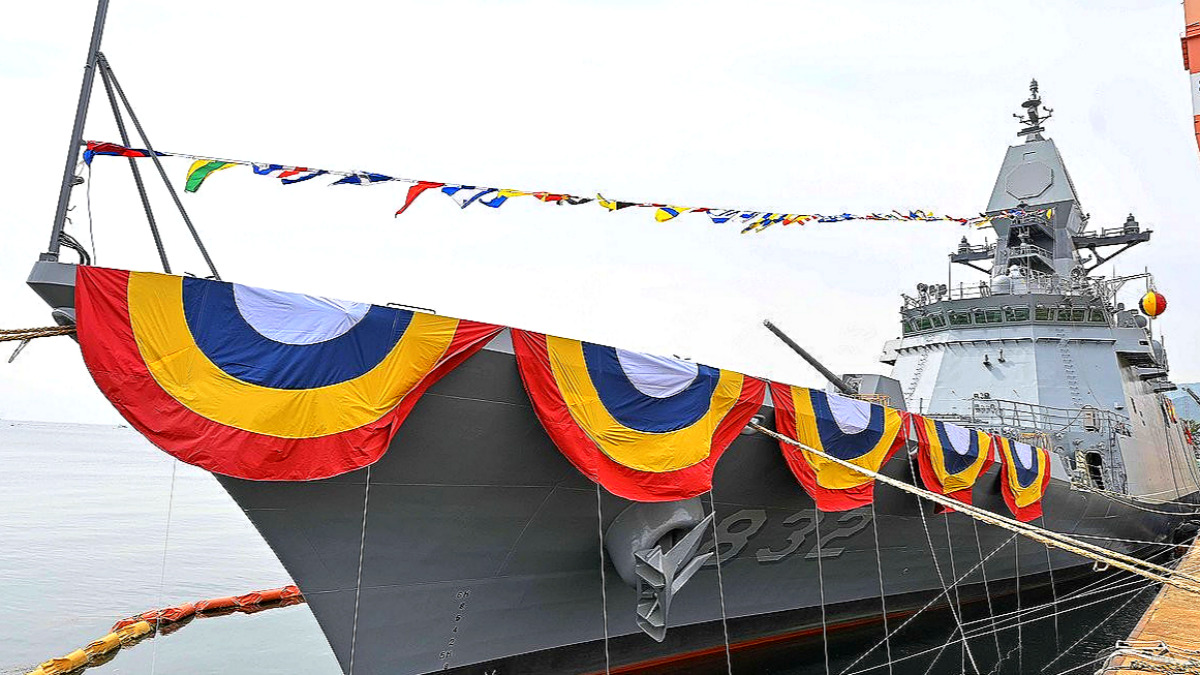
Typically, a 3,600-ton-class frigate is seen as a lightly armed warship meant for coastal patrol and convoy escort.
The Republic of Korea Navy takes a different tack. It has pushed a \”maximum-firepower\” design philosophy: stuffing as much combat capability as the hull will allow.
The result is the ROK Navy’s next FFX Batch-III frigate, Jeju, launched on April 29, 2026.
Labelled a frigate, Jeju in practice behaves like a compact Aegis-capable platform — able to contest enemy radars, hunt and destroy submarines, and strike shore installations.
Destroyer-level firepower crammed into a 3,600-ton hull
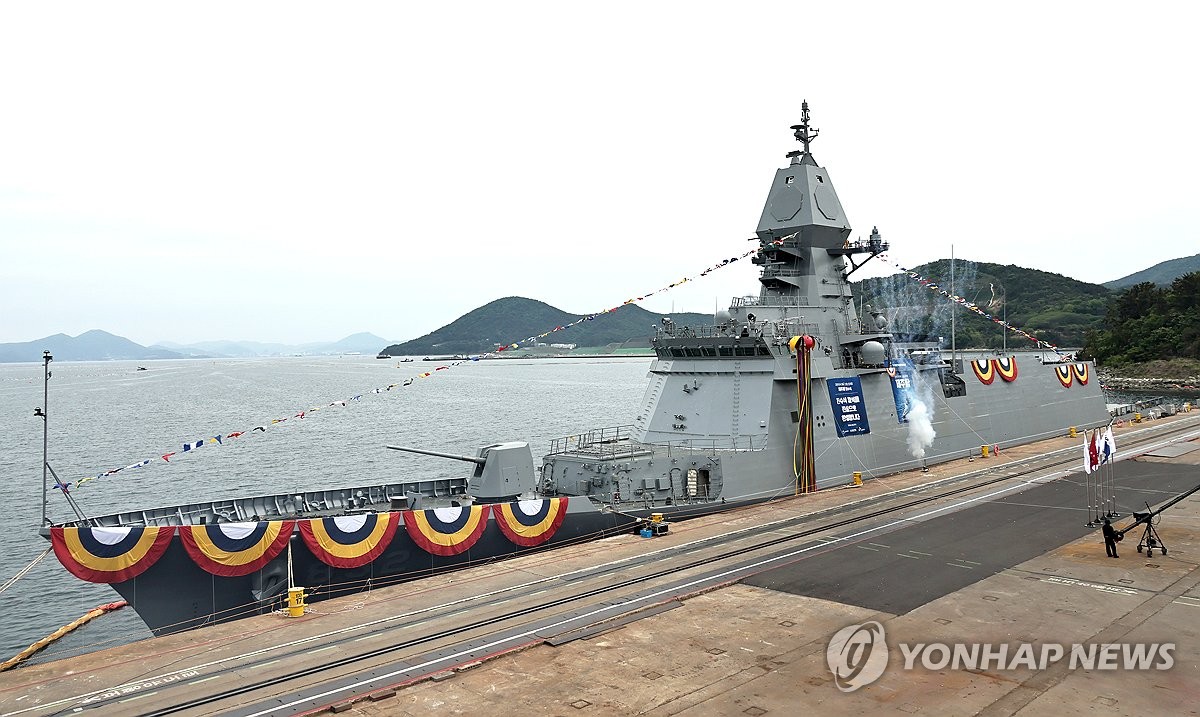
Jeju’s equipment roster raises doubts about whether the ship should still be called a frigate.
A 5-inch gun — more commonly fitted to larger destroyers — sits on the bow. Midships houses a Korean Vertical Launch System (KVLS) that can fire anti-ship weapons and a tactical ship-to-shore missile known as Haeryong for precision strikes ashore.
The ship’s anti-submarine suite is equally formidable. Jeju will field a long-range anti-submarine torpedo, HongSang-eo, which travels dozens of kilometers, enters the water, and targets enemy submarines.
An advanced multifunction phased-array radar (MFR) is integrated into the mast to detect and track incoming anti-ship missiles and aircraft across all sectors.
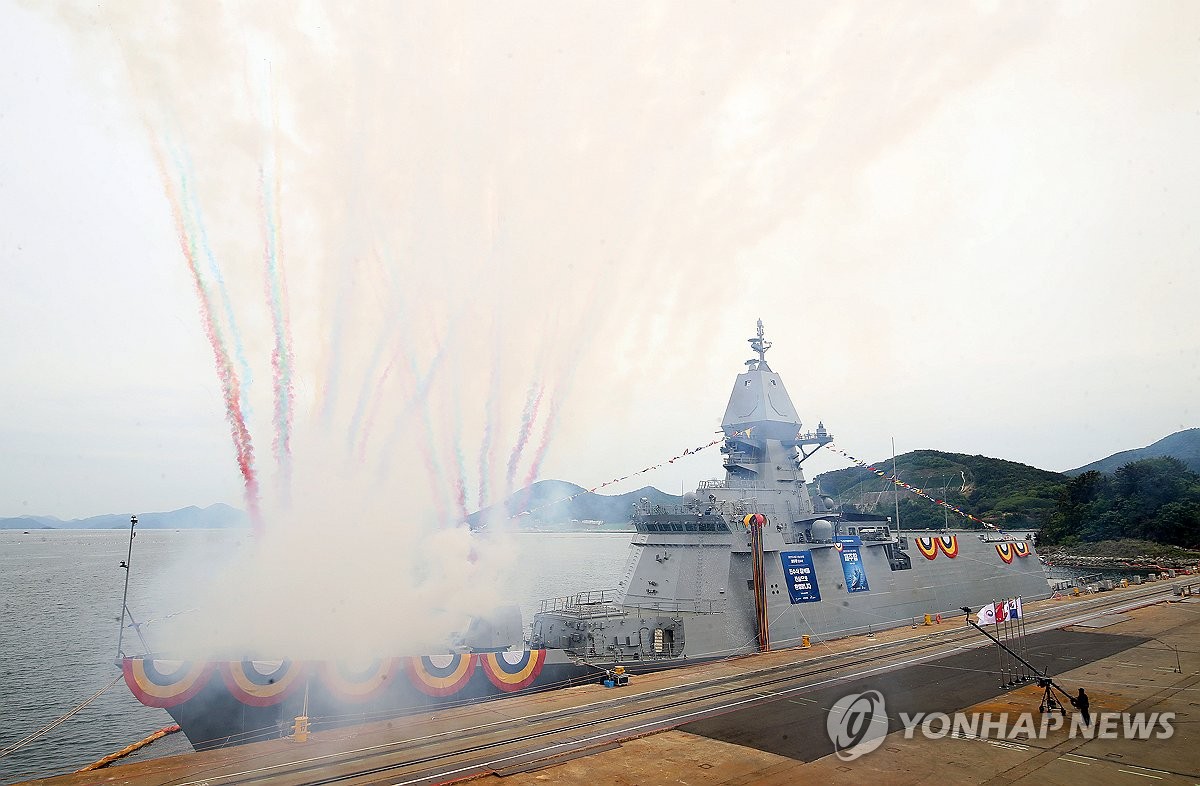
In short, Jeju takes the Aegis destroyer’s core trait — 360-degree surveillance and simultaneous multi-target engagement — and compresses it into a 3,600-ton hull.
The targets are clear: North Korean submarines and coastal missile sites
The ROK Navy’s insistence on heavy armament has a clear rationale: operating around the Korean Peninsula is among the most demanding maritime environments anywhere.
Every weapon on Jeju is aimed at North Korea’s asymmetric threats. Pyongyang fields dozens of older submarines and newer boats capable of launching submarine-launched ballistic missiles (SLBMs), posing a persistent threat to South Korea’s rear areas.
Jeju’s high-performance sonar, multifunction radar and long-range anti-submarine torpedoes form a critical node in the kill chain intended to neutralize North Korean submarines while they remain submerged — before they can surface to fire SLBMs.
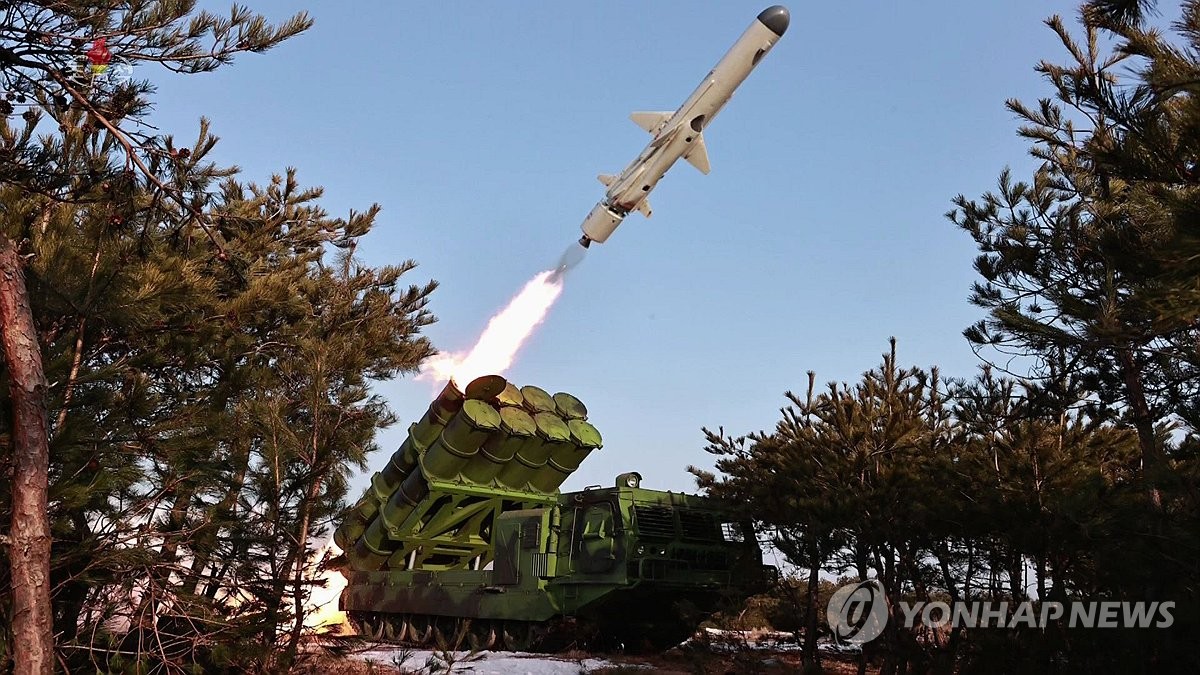
Densely deployed coastal anti-ship missile batteries and shore-based artillery along North Korea’s coast are among the greatest threats facing ROK naval vessels.
Jeju’s tactical ship-to-shore missiles give it the ability to preempt those threats — striking missile launch sites and command nodes on the North Korean coast before they can fire.
Jeju is not primarily a defensive platform. At the first sign of provocation, it can deliver simultaneous, multi-domain strikes at sea, under the surface and ashore — an offensive combatant built to respond immediately.
By taking on elements of an Aegis destroyer’s role in a 3,600-ton hull, Jeju’s commissioning signals that the North Korean navy now faces a new, nightmarish threat at sea.















Most Commented