
Is South Korea’s Military Power Ranking Misleading? A Deep Dive into Global Firepower’s 2024 Assessment
Daniel Kim Views
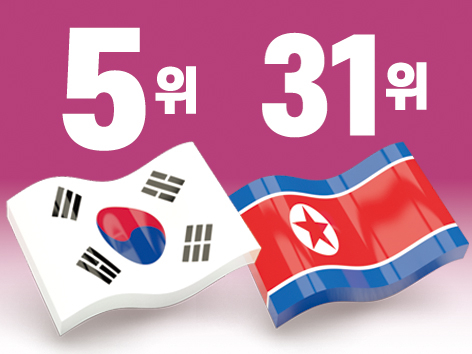 Global Firepower (GFP), a U.S.-based military strength assessment site, has published annual rankings of major countries since 2005. South Korea was ranked 12th in 2010 and jumped to 7th the following year. After some fluctuation, GFP has placed South Korea fifth since 2024. The problem is that GFP excludes nuclear weapons from its calculations and does not account for asymmetric capabilities that now shape modern conflict—drones, cyber operations and other nonconventional tools. GFP ranks states by conventional military power alone. Against nuclear-armed neighbors that have rapidly expanded drone and cyber capabilities—North Korea, China and Russia—South Korea’s No. 5 ranking for conventional forces can be misleading.
The wars in Iran and Ukraine underscore that point. The country ranked No. 1 by GFP, the United States, has spent more than two months without resolving its confrontation with 16th-ranked Iran. Second-ranked Russia invaded 20th-ranked Ukraine and has been mired in that campaign for four years. Those outcomes reflect how modern warfare has moved beyond traditional force-on-force battles into hybrid and asymmetric domains. Other decisive variables include alliance support, geography, economic strength and national cohesion.
President Lee Jae-myung recently reminded his Cabinet that South Korea ranks fifth in the world, asking, “So why do people keep feeling anxious as if we couldn’t defend ourselves without foreign troops?” The comment appeared aimed at assuaging public security concerns. But comparing rankings alone offers limited guidance on the battlefield. North Korea ranks 31st under GFP, yet it is expanding not only its nuclear arsenal but also its drone and conventional forces. It has learned lessons in advanced hybrid warfare from the Ukraine conflict and has deepened ties with China and Russia. Meanwhile, Seoul has shaken up its Drone Operations Command and, after disputes over joint exercises, has suffered setbacks in military intelligence sharing with the U.S. The clearest way to reduce public anxiety is to build credible, independent defense capabilities, solidify the ROK military’s operational readiness, and strengthen the U.S.-ROK alliance.
- Customers lost money after leaving Coupang…FTC overhauls unfair contract terms [Pick Economy]
- Korea in the grip of depression and anxiety…spent over 1 trillion KRW (approximately 750 million USD) on mental health treatment
- New credit loans exempt from annual income caps…gives vulnerable borrowers breathing room
- Will KOSPI and KOSDAQ keep rallying? Korea’s market faces a ‘Super Week’ — investors watch direction [Weekly Market Outlook]
- Despite blocking Hormuz, Iran plays a ‘three-step’ card…Trump: “No meeting unless you give up nukes” [Global Morning Briefing]
- Families of the Dec. 29 disaster: “Boeing airframe defect is the root cause”…call for full investigation [Incident Plus]
- “OpenAI misses revenue targets”…red flag over its ability to cover investment costs
- Cut petroleum-based plastics by 30% by 2030…“expand use of recycled feedstock” [Pick Economy]
- Stock jumps 7.7% after finding Jensen Huang’s eldest daughter…NVIDIA and Physical AI partnership draws attention [ZupZup Report]
- Trump rejects ‘three-step peace plan’…Iran opens accounts for Hormuz transit fees [Global Morning Briefing]










Most Commented