Quick access to main page (top) Direct access to main contents Quick access to main page (bottom)

How the Iran War is Draining U.S. Military Ammo: A Deep Dive into Costs and Readiness

Daniel Kim Views  

Translation result. 도널드
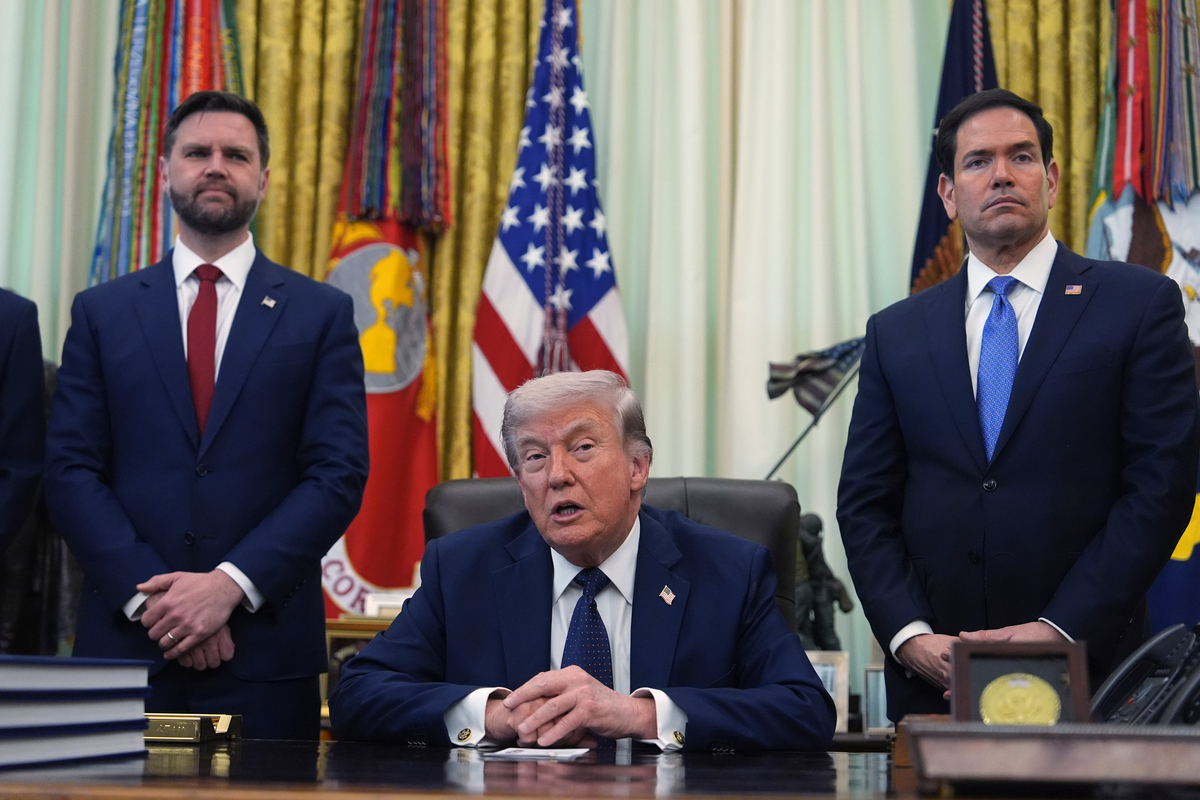
Estimated war costs early this month: 41 trillion–52 trillion KRW (approximately $30.75 billion–$39.0 billion); daily spending nears 1.5 trillion KRW (about $1.125 billion)
Advanced-weapon stocks drained by the Iran war…Asia and Europe’s readiness at risk
“At current production rates, it could take years to replenish expended ammunition”


The New York Times reported on April 23 that the conflict with Iran has sharply depleted U.S. stocks of advanced precision munitions, including key missiles, and that the drawdown has eroded readiness in Asia and Europe to deter potential adversaries such as China and Russia.

According to U.S. administration and congressional sources cited by the NYT, since launching the campaign dubbed “Operation Magnificent Fury” U.S. forces have fired roughly 1,100 long-range stealth cruise missiles known as the Joint Air-to-Surface Standoff Missile–Extended Range (JASSM-ER), leaving about 1,500 in inventory.

The JASSM-ER is a roughly 1,000-kilometer-range missile built to penetrate hardened targets beyond enemy air-defense envelopes. Each round costs about 1.6 billion KRW (approximately $1.2 million).

U.S. forces also fired more than 1,000 Tomahawk long-range cruise missiles, each costing roughly 5.3 billion KRW (about $4.0 million) — roughly ten times the typical annual peacetime buys.

The campaign began with an unannounced U.S. and Israeli strike on Iran on Feb. 28. A cease-fire was announced in the pre-dawn hours of April 8, and the fighting stopped.

In a March 27 report released before the cease-fire, the Washington, D.C.–based Center for Strategic and International Studies (CSIS), citing the Washington Post, estimated U.S. forces had used about 850 Tomahawks in Operation Magnificent Fury and that remaining Tomahawk stocks were likely in the low thousands.

CSIS warned that while there is enough ammunition to conduct the current campaign, the heavy expenditure of Tomahawks and other missiles raises risks in other theaters — particularly the Western Pacific.

The Tomahawk has been a widely used U.S. weapon since the 1991 Gulf War.

More than 1,200 Patriot interceptor missiles have been expended so far — each approaching 5.9 billion KRW (about $4.425 million) — about twice last year’s total production of roughly 600.

Precision Strike Missiles (PrSM) and Army Tactical Missile System (ATACMS) surface-to-surface missiles have also seen combined usage exceeding 1,000 rounds, driving inventories to alarmingly low levels.

With global munitions stocks severely drawn down, the Pentagon has rushed missiles and bombs from forces in Asia and Europe to the Middle East.
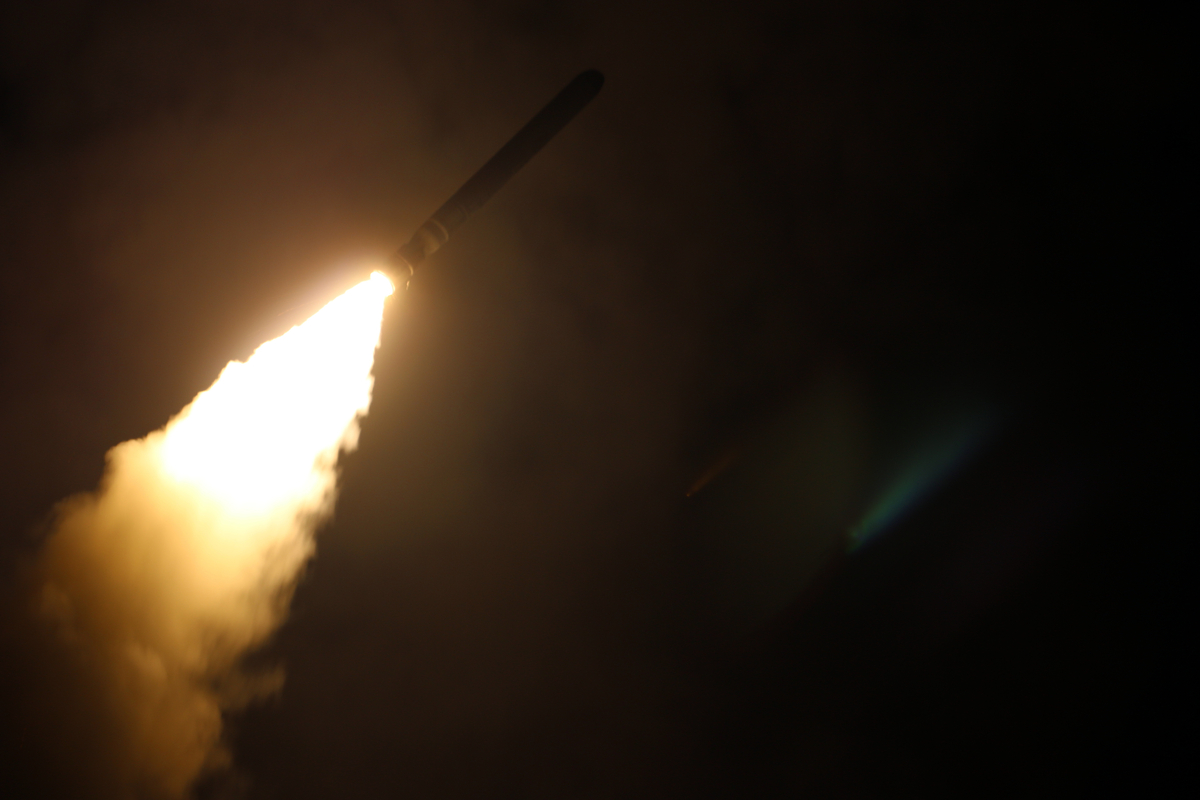
토마호크 The financial toll of the Iran campaign is substantial.

The White House has not provided an official total, but two independent think tanks — CSIS and the American Enterprise Institute (AEI) — estimated in early April that the conflict had cost 41 trillion–52 trillion KRW (approximately $30.75 billion–$39.0 billion) and that daily costs approached 1.5 trillion KRW (around $1.125 billion).

Pentagon officials told members of Congress that the ammunition expended in the first two days cost roughly 8.3 trillion KRW (about $6.225 billion).

The NYT cautioned that restoring U.S. munitions stocks to previous levels will force difficult trade-offs in how regional forces are maintained.

Sen. Jack Reed, the top Democrat on the Senate Armed Services Committee, said, “At current production rates, it could take us years to replenish what we’ve expended.”

Mark F. Cancian, a retired Marine colonel and senior adviser at CSIS, added, “The U.S. has ample stocks of many types of munitions, but several key ground-attack and missile-defense munitions were in short supply before this campaign and are now even more strained.”

The redeployment of assets from the Asia-Pacific region is particularly notable.

The U.S. moved the Abraham Lincoln carrier strike group from the South China Sea to the Middle East and shifted roughly 4,400 Marines from two Marine Expeditionary Units (MEUs) that had been positioned in the Pacific.

The U.S. also transferred interceptors from the Terminal High Altitude Area Defense (THAAD) system deployed in South Korea to the Middle East.

White House spokeswoman Karoline Leavitt dismissed the NYT report as fundamentally false, saying, “U.S. weapons and ammunition stockpiles, at home and abroad, remain more than sufficient to defend the homeland effectively and to carry out any military operation the commander in chief directs.”

Daniel Kim
content@tenbizt.com

Comments0

300

Comments0

[Military] Latest Stories

  • 30 of 33 Iran Missile Bases Still Active: Intelligence Defies Trump Claims
    30 of 33 Iran Missile Bases Still Active: Intelligence Defies Trump Claims
  • US Javelin Missiles Deployed in Taiwan’s High-Stakes Live-Fire Drill
    US Javelin Missiles Deployed in Taiwan's High-Stakes Live-Fire Drill
  • North Korea’s 10-Year Nuclear Threat: Is a Limited Strike Imminent?
    North Korea's 10-Year Nuclear Threat: Is a Limited Strike Imminent?
  • AI vs. Video Compression: How RMX is Redefining Tactical Edge Tech
    AI vs. Video Compression: How RMX is Redefining Tactical Edge Tech
  • US-South Korea Security Meeting Sparks Tension Over Military Control
    US-South Korea Security Meeting Sparks Tension Over Military Control
  • Iran Claims Missile Strikes on U.S. Military Bases: Did They Hit?
    Iran Claims Missile Strikes on U.S. Military Bases: Did They Hit?

Weekly Best Articles

  • Choi Dong-seok’s Family Bond: How a Simple Engraving Reveals Deep Love for His Children
  • Kwak Sun-hee’s Stunning Wedding Photos: A Celebration of Love and Courage
  • Is ‘I Am a Natural Person’ Just a Big Lie? Comedian Yoon-taek Reveals Shocking Secrets!
  • Health Scare: Why Fans Are Worried About Go Ji Yong’s Dramatic Weight Loss
  • Discover the Winter Gongju Chestnut Festival: A Taste of Korea at H-Mart in the USA!
  • 2026 Spring Wildfire Prevention: How Gyeryong City is Cutting Response Time to 30 Minutes!

You May Also Like

  • 1
    Trump Slashes AI Review Window to 30 Days Amid National Security Debate

    Politics 

    Trump Slashes AI Review Window to 30 Days Amid National Security Debate
  • 2
    Ukraine’s EU Bid Surges as Hungary Drops Opposition Amid Russian Attacks

    Politics 

    Ukraine’s EU Bid Surges as Hungary Drops Opposition Amid Russian Attacks
  • 3
    Trump Backs Colombia's 'El Tigre' — What It Means for U.S. Relations

    Politics 

    Trump Backs Colombia’s ‘El Tigre’ — What It Means for U.S. Relations
  • 4
    Trump Backs Colombia's Far-Right Outsider—What's at Stake?

    Politics 

    Trump Backs Colombia’s Far-Right Outsider—What’s at Stake?
  • 5
    12.5% Tariff Hit: South Korea Faces New U.S. Trade Penalties

    Politics 

    12.5% Tariff Hit: South Korea Faces New U.S. Trade Penalties

Popular Now

  • 1
    12.5% Tariff Alert: Why the U.S. Is Targeting South Korean Imports

    Politics 

  • 2
    Marta Kostyuk Makes History at French Open Amid Ukraine Crisis

    Politics 

  • 3
    37 Years in Exile: The Tiananmen Leader Who Just Wants to Go Home

    Politics 

  • 4
    South Korea's Cheongju Airport Faces Crisis as Passenger Numbers Explode

    Politics 

  • 5
    Nuclear Submarine Race: South Korea's High-Stakes Bid for U.S. Fuel

    Politics 

Weekly Best Articles

  • Choi Dong-seok’s Family Bond: How a Simple Engraving Reveals Deep Love for His Children
  • Kwak Sun-hee’s Stunning Wedding Photos: A Celebration of Love and Courage
  • Is ‘I Am a Natural Person’ Just a Big Lie? Comedian Yoon-taek Reveals Shocking Secrets!
  • Health Scare: Why Fans Are Worried About Go Ji Yong’s Dramatic Weight Loss
  • Discover the Winter Gongju Chestnut Festival: A Taste of Korea at H-Mart in the USA!
  • 2026 Spring Wildfire Prevention: How Gyeryong City is Cutting Response Time to 30 Minutes!

Must-Reads

  • 1
    Trump Slashes AI Review Window to 30 Days Amid National Security Debate

    Politics 

    Trump Slashes AI Review Window to 30 Days Amid National Security Debate
  • 2
    Ukraine’s EU Bid Surges as Hungary Drops Opposition Amid Russian Attacks

    Politics 

    Ukraine’s EU Bid Surges as Hungary Drops Opposition Amid Russian Attacks
  • 3
    Trump Backs Colombia's 'El Tigre' — What It Means for U.S. Relations

    Politics 

    Trump Backs Colombia’s ‘El Tigre’ — What It Means for U.S. Relations
  • 4
    Trump Backs Colombia's Far-Right Outsider—What's at Stake?

    Politics 

    Trump Backs Colombia’s Far-Right Outsider—What’s at Stake?
  • 5
    12.5% Tariff Hit: South Korea Faces New U.S. Trade Penalties

    Politics 

    12.5% Tariff Hit: South Korea Faces New U.S. Trade Penalties

Popular Now

  • 1
    12.5% Tariff Alert: Why the U.S. Is Targeting South Korean Imports

    Politics 

  • 2
    Marta Kostyuk Makes History at French Open Amid Ukraine Crisis

    Politics 

  • 3
    37 Years in Exile: The Tiananmen Leader Who Just Wants to Go Home

    Politics 

  • 4
    South Korea's Cheongju Airport Faces Crisis as Passenger Numbers Explode

    Politics 

  • 5
    Nuclear Submarine Race: South Korea's High-Stakes Bid for U.S. Fuel

    Politics 

Share it on...