
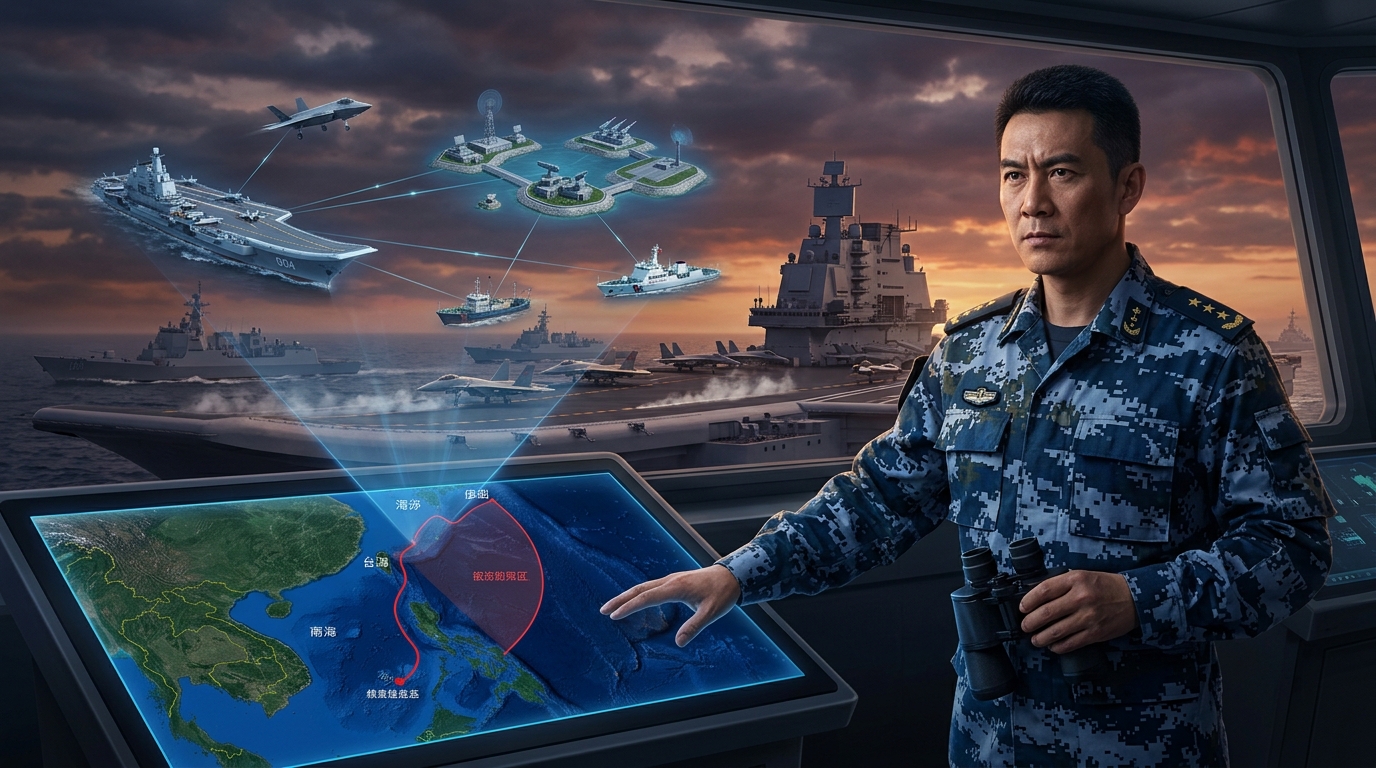
On its 77th anniversary, the People’s Liberation Army Navy publicly signaled the likely development of a fourth aircraft carrier, widely assessed to be nuclear-powered. Maritime-security analysts say the announcement is less about a single ship and more the opening move in Beijing’s effort to build an integrated sea-control architecture anchored to artificial-island military infrastructure across the South China Sea.
This push coincides with the Ministry of Natural Resources’ plan to protect and develop roughly 11,000 islands. Taken together, expanded carrier capability and an aggressive island-development policy suggest China is aiming to stitch the South China Sea into a single, contiguous operational theater.
Don’t judge it by the carrier alone — the integrated ‘islands, coast guard, missiles’ network is the real threat
Where early carriers such as the Liaoning and Shandong were used mainly for flight trials and demonstrations of tonnage, Beijing’s current strategy is a packaged approach that changes the equation. Experts warn that the real combat power of China’s carrier force won’t come solely from individual ships but from a network linking artificial-island bases, coast guard units, maritime militia and layered air-defense and anti-ship missile systems.
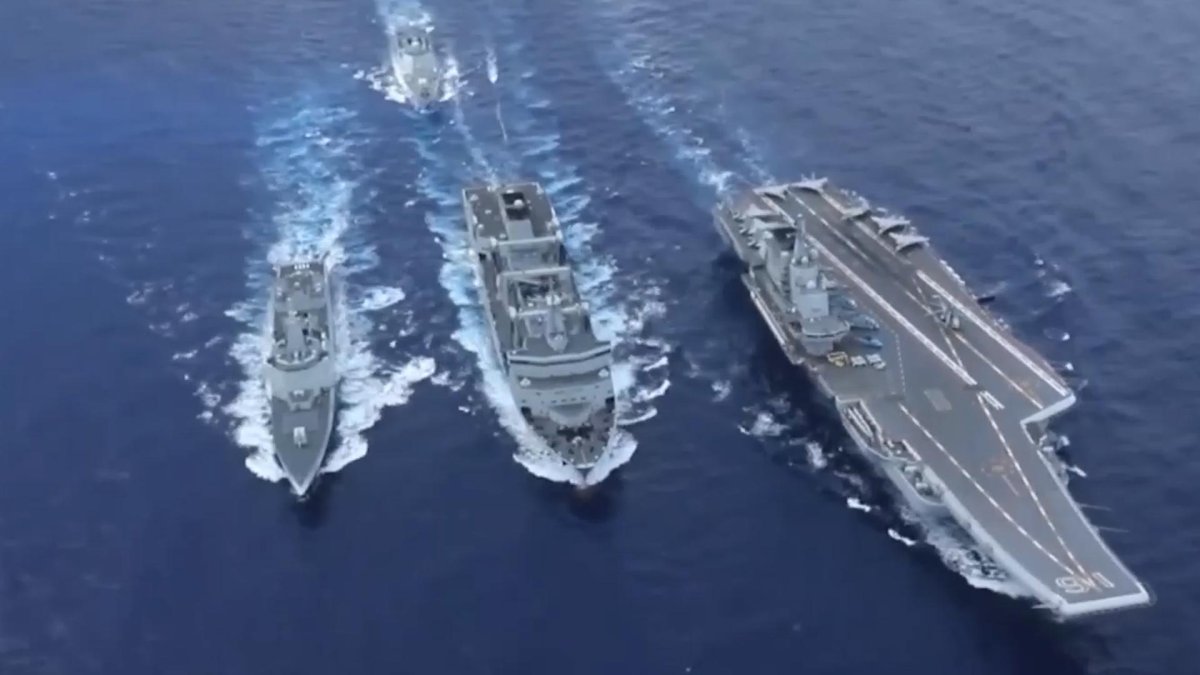
Analysts estimate that China’s artificial-island network already supports year-round patrols extending up to 1,000 nautical miles (about 1,852 km) from its coastline. While a single carrier strike group still cannot match the U.S. Navy on its own, the combination of land-launched anti-ship ballistic missiles and long-range radars sited on artificial islands gives Beijing a potent coastal and near-sea control capability that imposes a heavy strategic burden on regional states.
J-35 takeoffs and landings succeed — the Fujian ushers in a new era
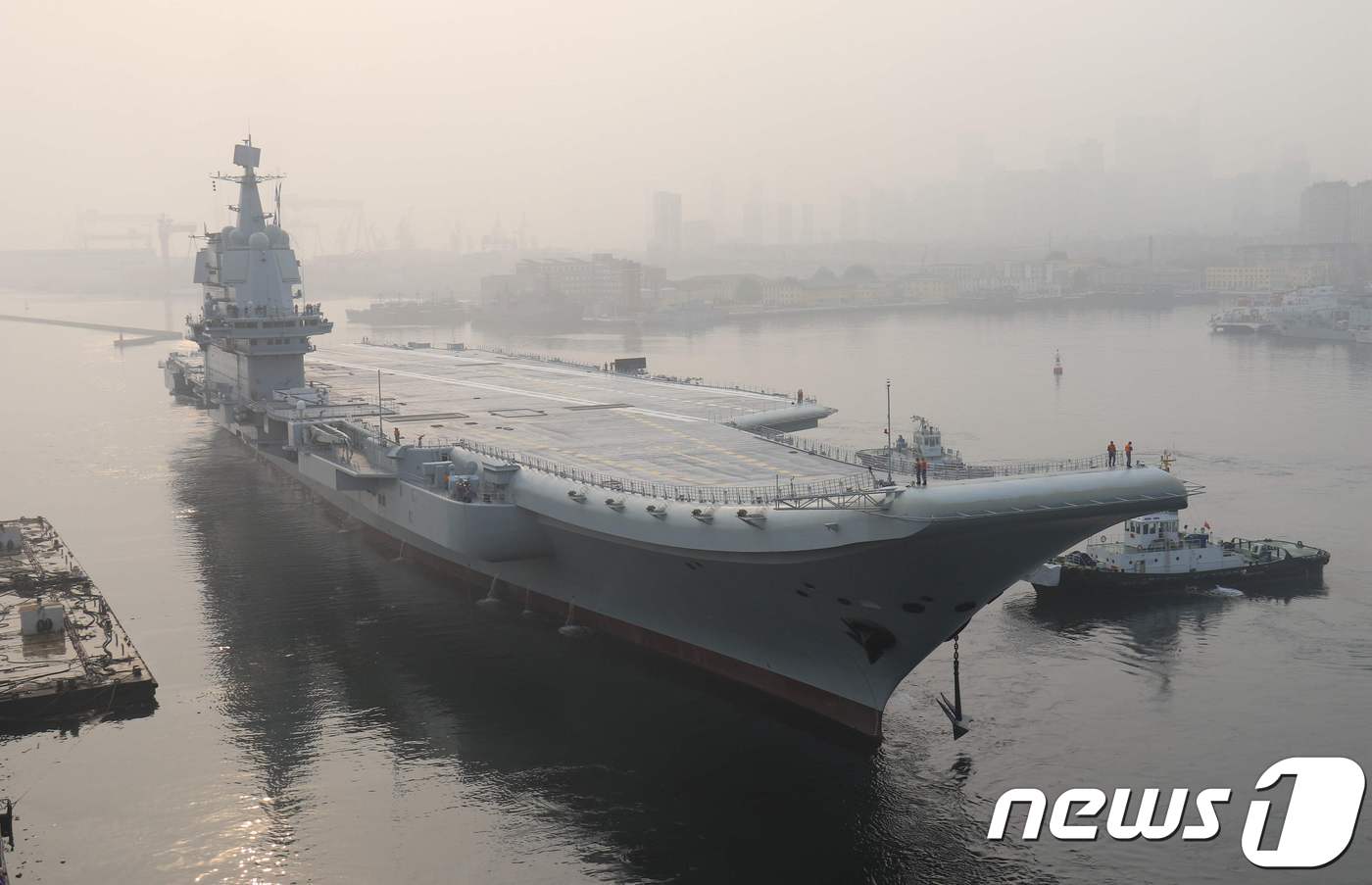
China’s technical advances have been rapid. The Type 003 carrier Fujian, equipped with electromagnetic catapults (CATOBAR), completed successful takeoff and landing trials for the stealthy, fifth-generation J-35 during Yellow Sea trials in May 2025. Beijing released footage in September to highlight its progress. Fielding the J-35, developed from the FC-31 concept to counter U.S. F-35 variants, marks a qualitative leap in the air capability available to Chinese carrier groups.
The fourth carrier, known as Type 004, is widely expected to use nuclear propulsion while retaining electromagnetic catapults. If fixed island bases and nuclear-powered carrier strike groups are linked to form a mesh-like maritime control zone, commercial shipping—and even the movement of regional naval forces—could be effectively constrained.
Pressure reaches Ieodo and south of Jeju — what strategic choices does the ROK Navy face?
This is not a distant problem. In a Taiwan contingency or a flare-up over South China Sea claims, South Korea’s logistics network—which depends on these sea lanes for oil imports and critical trade—could face severe disruption. Areas near Ieodo and south of Jeju are particularly exposed to operations enabled by Beijing’s “carrier + island + coast guard” pressure package.
Seoul has bolstered sea-lane protection by deploying the Aegis destroyer Jeongjo Daewang and KSS-III Dosan Ahn Changho–class submarines built for extended submerged operations. Still, analysts argue that to counter China’s geography-driven anti-access/area-denial (A2/AD) posture, South Korea must refine multi-layered responses—expanding intelligence-sharing with allies, diversifying maritime routes and developing coordinated operational plans.
China’s effort to bundle carriers, artificial islands, coast guard forces and missiles into a single operational package is already taking shape. With that pressure now reaching the southwest waters off the Korean Peninsula, South Korea’s maritime-security posture needs to evolve beyond force accumulation into a flexible, multidimensional deterrent and response framework.
Most popular stories right now
- “Why it could be worse than an oil blockade”: Iran’s ‘real weapon’ — submarine cables with no practical alternative
- “At 136 km, Camp Humphreys falls within range”… North Korea’s cluster-warhead SRBM poses a direct threat to the Seoul metropolitan area and U.S. bases
- “North Korean squid is being passed off as Chinese and sold in supermarkets”… Dandong approved a 2,000-ton facility, raising concerns that the sanctions net is collapsing















Most Commented