
South Korea’s Hanwha Ocean Eyes Second Chance in Poland’s $8 Billion Submarine Deal
Daniel Kim Views
Translation result.
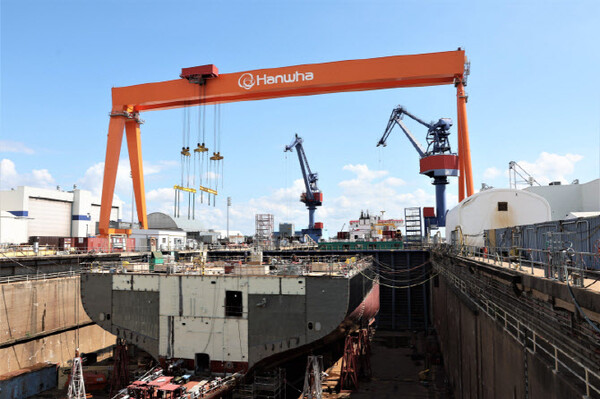
[The Public — Reporter Hong Chan-young] Negotiation turbulence around Poland’s next-generation submarine procurement has reopened the possibility that South Korean shipbuilders could re-enter the contest. Attention is focused on whether Hanwha Ocean will get a second chance.
On the 21st, local media and industry sources reported that Poland’s Defense Ministry warned it could reopen talks with other bidders if Sweden’s defense firm Saab fails to meet expectations with its final offer. The statement injects fresh uncertainty into a process that had appeared to be nearing conclusion.
The Orca project calls for three 3,000-ton-class submarines and is structured as a long-term package that covers construction as well as the establishment of maintenance, repair and operations (MRO) systems. Industry estimates place the program’s value at up to 8 trillion KRW (approximately $6.0 billion).
The development has revived talk of re-entry by major competitors, including South Korea, Germany, France and Italy. Analysts say South Korean shipyards could become frontrunners if the procurement shakes up, citing their cost competitiveness and extensive build experience.
Hanwha Ocean and HD Hyundai Heavy Industries previously teamed up as a joint bidder but were eliminated from the final selection. Observers attributed that outcome to European-centric procurement preferences and concerns about operational fit with regional requirements.
If Warsaw restarts negotiations from scratch, industry watchers expect renewed scrutiny of Hanwha Ocean’s prospects. Submarine programs hinge on long-term sustainment and support after delivery, so integrated support capabilities and a proven track record are decisive evaluation factors.
Hanwha Ocean is currently concentrating its efforts on Canada’s submarine procurement program (CPSP). The company has been expanding local partnerships and building cooperation frameworks to strengthen its bid prospects.
Industry insiders say success in the Canadian program would serve as a valuable reference when attempting to re-enter European markets; demonstrated experience on large submarine projects would bolster credibility with procurement authorities.
Still, experts caution that submarine procurements are shaped as much by diplomatic and security considerations as by technical merits, leaving the ultimate award highly uncertain.
An industry official said, “If negotiations actually restart, opportunities could open for Korean firms,” but added, “This program involves political and security variables, so we need to monitor developments closely.”















Most Commented