Quick access to main page (top) Direct access to main contents Quick access to main page (bottom)

Japan’s Shift to Military Export: What It Means for Regional Security in 2026

Daniel Kim Views  

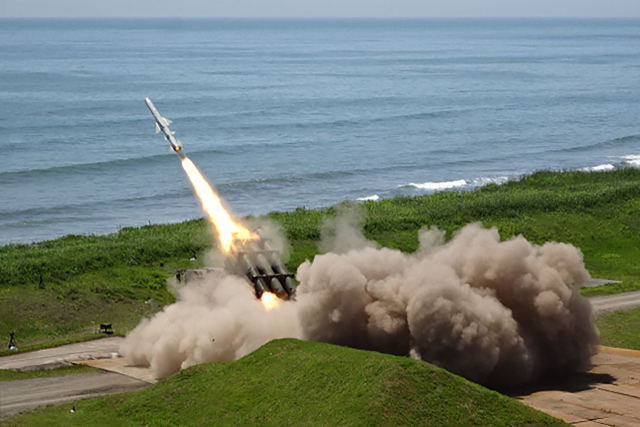
Japan is moving decisively toward becoming a country with the capacity to wage war after the government moved to, in principle, allow exports of lethal weapons that have been banned since 1976. The policy shift comes 12 years after then–Prime Minister Shinzo Abe first signaled a willingness to loosen export controls in 2014. Analysts say the administration of Sanae Takaichi, who won a landslide in the last general election, is likely to accelerate a rightward policy trajectory.

On April 21, the government revised the Three Principles on Transfer of Defense Equipment and related implementing guidelines at a Cabinet meeting and a National Security Council session. Since 1976, Tokyo had effectively banned arms exports by treating equipment tied to weapons manufacture the same as weapons themselves. That posture was rooted in Article 9 of the constitution—the so‑called “peace constitution”—which renounces war and the use of force.

Those constraints were partially relaxed in 2014, when Abe cleared the way for conditional exports and limited allowable defense equipment to five categories: rescue, transport, security, surveillance and mine‑clearance. Exports of finished weapons with lethal capability remained broadly prohibited. By removing that remaining barrier now, the Takaichi government has intensified its push to normalize Japan’s defense industry role.

Tokyo says it will, as a rule, not export weapons to countries that are parties to active armed conflicts. But it also carved out an exception: under special circumstances tied to security needs, the National Security Council’s “four ministers” meeting—the prime minister, foreign minister, defense minister and chief cabinet secretary—can authorize exports. Critics warn that leaves room for discretionary, potentially politicized decisions.
Japan’s neighbors are likely to view the policy shift with concern. Tokyo has increased military activity around the Taiwan Strait, raising tensions with Beijing. In that context, the Nikkei argued that as China expands its missile and carrier forces and North Korea continues missile development, Japan needs to deepen cooperation with allies such as the United States and Australia—an argument used to justify the move toward permitting lethal‑weapon exports.

Constitutional revision appears to be the next step. The ruling Liberal Democratic Party is expected to propose amendments to explicitly recognize the Self‑Defense Forces, add an emergency clause, address merged electoral districts and strengthen education policy. Enshrining the SDF in the constitution would lower the political barrier to Japan functioning as a war‑capable state. Plans are already underway to establish a National Intelligence Agency, a Japanese counterpart to the CIA, slated for July.

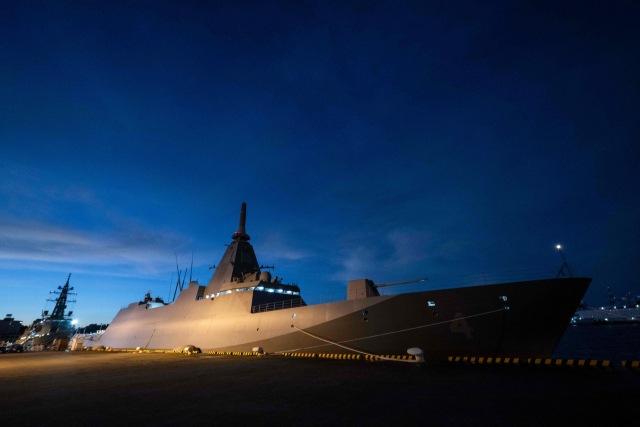
Tokyo also announced what would be its first postwar export of a warship. On April 18, Defense Minister Shinjiro Koizumi signed a memorandum of understanding with Australian Defense Minister Richard Marles to jointly develop an upgraded version of the Maritime Self‑Defense Force’s Mogami‑class escort ship. Japan will build a total of 11 escort ships and officials say Tokyo is exploring potential sales to partners including New Zealand, the Philippines and Indonesia.

Daniel Kim
content@tenbizt.com

Comments0

300

Comments0

[Military] Latest Stories

  • 30 of 33 Iran Missile Bases Still Active: Intelligence Defies Trump Claims
    30 of 33 Iran Missile Bases Still Active: Intelligence Defies Trump Claims
  • US Javelin Missiles Deployed in Taiwan’s High-Stakes Live-Fire Drill
    US Javelin Missiles Deployed in Taiwan's High-Stakes Live-Fire Drill
  • North Korea’s 10-Year Nuclear Threat: Is a Limited Strike Imminent?
    North Korea's 10-Year Nuclear Threat: Is a Limited Strike Imminent?
  • AI vs. Video Compression: How RMX is Redefining Tactical Edge Tech
    AI vs. Video Compression: How RMX is Redefining Tactical Edge Tech
  • US-South Korea Security Meeting Sparks Tension Over Military Control
    US-South Korea Security Meeting Sparks Tension Over Military Control
  • Iran Claims Missile Strikes on U.S. Military Bases: Did They Hit?
    Iran Claims Missile Strikes on U.S. Military Bases: Did They Hit?

Weekly Best Articles

  • Choi Dong-seok’s Family Bond: How a Simple Engraving Reveals Deep Love for His Children
  • Kwak Sun-hee’s Stunning Wedding Photos: A Celebration of Love and Courage
  • Is ‘I Am a Natural Person’ Just a Big Lie? Comedian Yoon-taek Reveals Shocking Secrets!
  • Health Scare: Why Fans Are Worried About Go Ji Yong’s Dramatic Weight Loss
  • Discover the Winter Gongju Chestnut Festival: A Taste of Korea at H-Mart in the USA!
  • 2026 Spring Wildfire Prevention: How Gyeryong City is Cutting Response Time to 30 Minutes!

You May Also Like

  • 1
    Trump Slashes AI Review Window to 30 Days Amid National Security Debate

    Politics 

    Trump Slashes AI Review Window to 30 Days Amid National Security Debate
  • 2
    Ukraine’s EU Bid Surges as Hungary Drops Opposition Amid Russian Attacks

    Politics 

    Ukraine’s EU Bid Surges as Hungary Drops Opposition Amid Russian Attacks
  • 3
    Trump Backs Colombia's 'El Tigre' — What It Means for U.S. Relations

    Politics 

    Trump Backs Colombia’s ‘El Tigre’ — What It Means for U.S. Relations
  • 4
    Trump Backs Colombia's Far-Right Outsider—What's at Stake?

    Politics 

    Trump Backs Colombia’s Far-Right Outsider—What’s at Stake?
  • 5
    12.5% Tariff Hit: South Korea Faces New U.S. Trade Penalties

    Politics 

    12.5% Tariff Hit: South Korea Faces New U.S. Trade Penalties

Popular Now

  • 1
    12.5% Tariff Alert: Why the U.S. Is Targeting South Korean Imports

    Politics 

  • 2
    Marta Kostyuk Makes History at French Open Amid Ukraine Crisis

    Politics 

  • 3
    37 Years in Exile: The Tiananmen Leader Who Just Wants to Go Home

    Politics 

  • 4
    South Korea's Cheongju Airport Faces Crisis as Passenger Numbers Explode

    Politics 

  • 5
    Nuclear Submarine Race: South Korea's High-Stakes Bid for U.S. Fuel

    Politics 

Weekly Best Articles

  • Choi Dong-seok’s Family Bond: How a Simple Engraving Reveals Deep Love for His Children
  • Kwak Sun-hee’s Stunning Wedding Photos: A Celebration of Love and Courage
  • Is ‘I Am a Natural Person’ Just a Big Lie? Comedian Yoon-taek Reveals Shocking Secrets!
  • Health Scare: Why Fans Are Worried About Go Ji Yong’s Dramatic Weight Loss
  • Discover the Winter Gongju Chestnut Festival: A Taste of Korea at H-Mart in the USA!
  • 2026 Spring Wildfire Prevention: How Gyeryong City is Cutting Response Time to 30 Minutes!

Must-Reads

  • 1
    Trump Slashes AI Review Window to 30 Days Amid National Security Debate

    Politics 

    Trump Slashes AI Review Window to 30 Days Amid National Security Debate
  • 2
    Ukraine’s EU Bid Surges as Hungary Drops Opposition Amid Russian Attacks

    Politics 

    Ukraine’s EU Bid Surges as Hungary Drops Opposition Amid Russian Attacks
  • 3
    Trump Backs Colombia's 'El Tigre' — What It Means for U.S. Relations

    Politics 

    Trump Backs Colombia’s ‘El Tigre’ — What It Means for U.S. Relations
  • 4
    Trump Backs Colombia's Far-Right Outsider—What's at Stake?

    Politics 

    Trump Backs Colombia’s Far-Right Outsider—What’s at Stake?
  • 5
    12.5% Tariff Hit: South Korea Faces New U.S. Trade Penalties

    Politics 

    12.5% Tariff Hit: South Korea Faces New U.S. Trade Penalties

Popular Now

  • 1
    12.5% Tariff Alert: Why the U.S. Is Targeting South Korean Imports

    Politics 

  • 2
    Marta Kostyuk Makes History at French Open Amid Ukraine Crisis

    Politics 

  • 3
    37 Years in Exile: The Tiananmen Leader Who Just Wants to Go Home

    Politics 

  • 4
    South Korea's Cheongju Airport Faces Crisis as Passenger Numbers Explode

    Politics 

  • 5
    Nuclear Submarine Race: South Korea's High-Stakes Bid for U.S. Fuel

    Politics 

Share it on...