
How HD Hyundai and Hanwha Are Revolutionizing US Navy’s Autonomous Vessel Market in 2026
Daniel Kim Views
■ HD Hyundai, Hanwha to supply unmanned vessels to the U.S.
From MRO and design to unmanned combat capabilities
Full‑spectrum cooperation on U.S. Navy next‑generation programs
HD Hyundai to deploy autonomous navigation solutions
Hanwha to integrate advanced missile systems
Joint development of AI‑driven robotic shipyards
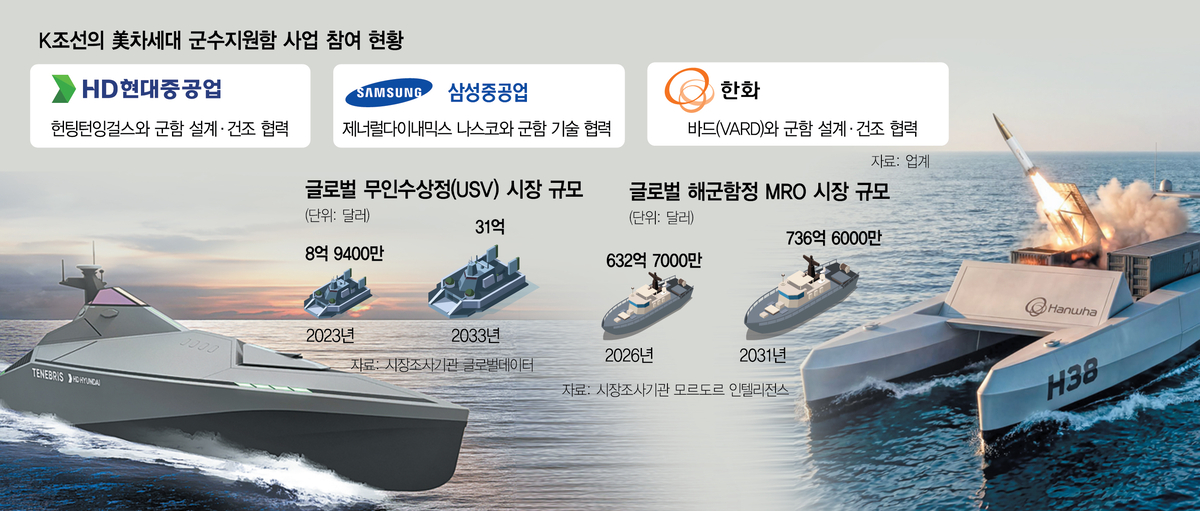 South Korean maritime and defense firms are deepening partnerships with U.S. companies and are increasingly winning roles in core U.S. Navy programs. As MASGA cooperation expands rapidly, the U.S.–South Korea alliance is tightening, and trade pressure tied to the Trump administration is expected to ease.
HD Hyundai(267250) has strengthened its partnership with U.S. defense tech firm Anduril to enter the American ship market. After signing an MOU in April last year to develop and market unmanned surface vessels (USVs), the companies moved in November to a contract to design and build an autonomous USV prototype and to supply AI solutions, elevating their collaboration.
Anduril, a tech company with expertise in AI‑driven battlespace networks and sensors, serves as a key partner to the U.S. Department of Defense. Though it already has global recognition, Anduril viewed collaboration with a Korean shipbuilder as essential to secure leadership in the maritime defense sector.
Anduril said, “What the U.S. Navy wants is scale. A single unmanned ship won’t change the equation. You have to deliver reliable vessels efficiently, on schedule, and within budget — that’s why we chose HD Hyundai.” The two companies are also accelerating local production capacity through cooperation with major U.S. shipbuilder Edison Chouest Offshore.
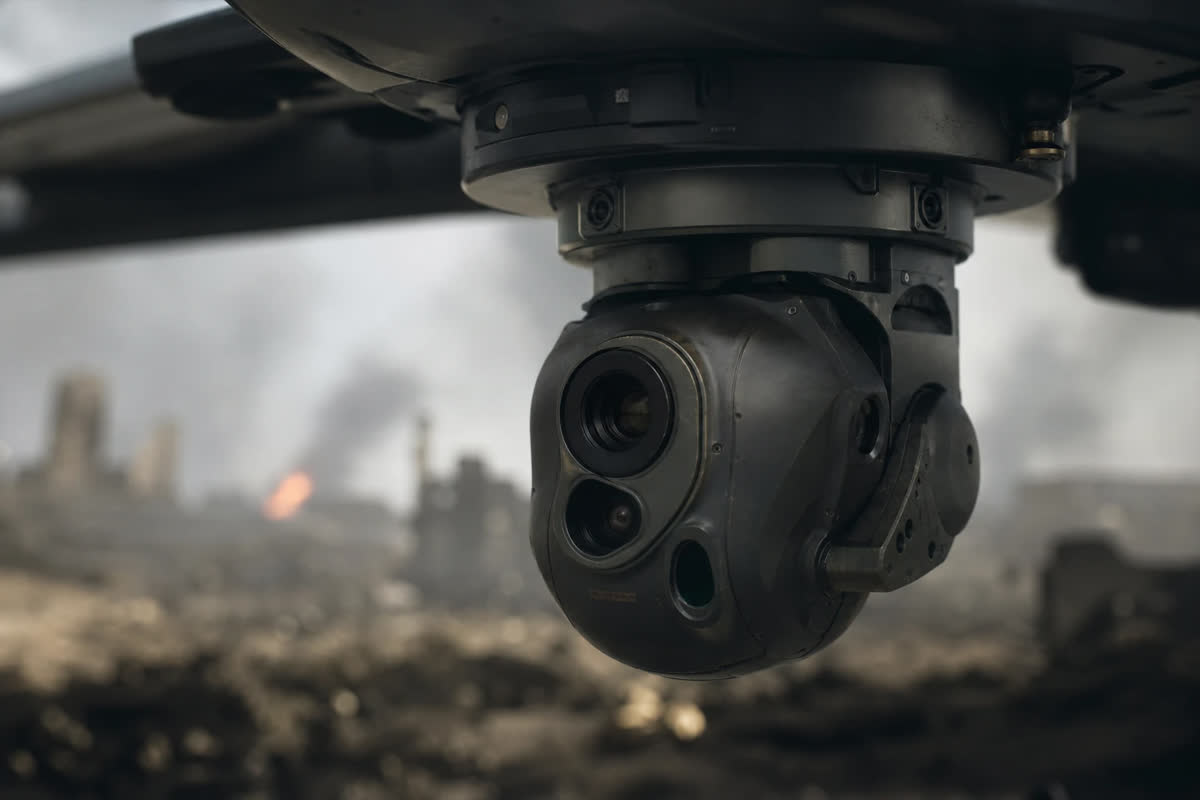
HD Hyundai plans to equip the unmanned surface craft with an autonomous navigation suite developed by its autonomous‑navigation unit Avikus. An HD Hyundai official said, “The system integrates AI technologies ranging from navigation assistance to engine automation.”
HD Hyundai and Anduril intend to use the autonomous USV to compete in the U.S. Department of Defense’s effort to build the Navy’s next‑generation unmanned maritime forces. Their immediate target is the Navy’s recently announced Medium Unmanned Surface Vessel (MUSV) program; the U.S. government has allocated approximately 2.1 billion USD (approximately 2.8 trillion KRW) for the MUSV program alone.
Hanwha(000880) has opted to pair Magnet Defense’s proven platform with its own advanced weaponry. Magnet’s M48 claims the longest endurance among operational USVs, at 17,000 nautical miles. In 2024, it completed real‑world validation totaling 32,000 nautical miles, including a round trip from Miami to American Samoa, a Panama Canal transit, and operations through sea‑state 9 storm conditions.
Hanwha will add advanced missile systems, manufacturing capacity, and robotics expertise to Magnet’s platform. Michael Coulter, CEO of Hanwha Defense USA, said, “By combining Hanwha’s manufacturing and advanced robotics with Magnet Defense’s proven autonomous navigation, we will field the most capable and lethal unmanned surface vessels to support U.S. forces and allies in conflict.” The two firms will also collaborate on AI‑driven robotic shipyards and software development.
Trust and cooperation between Korean and U.S. shipbuilders and tech firms extend into maintenance, repair, and overhaul (MRO) and design. HD Hyundai Heavy Industries(329180) and Hanwha Ocean(042660) each secured two U.S. Navy ship MRO contracts in the first quarter of this year, already surpassing last year’s totals (HD Hyundai Heavy Industries: 1, Hanwha Ocean: 2). Market researcher Mordor Intelligence projects the global naval ship MRO market will grow from 63.27 billion USD (approximately 84.36 trillion KRW) this year to 73.66 billion USD (approximately 98.21 trillion KRW) by 2031, identifying it as a future growth driver.
Korean firms are also making deeper inroads into U.S. ship design. Hanwha’s Philippine shipyard and Samsung Heavy Industries(010140) recently joined U.S. partners on the concept design for the U.S. Navy’s Next Generation Logistics Ship (NGLS). The long‑term program aims to replace at least 10 aging Navy replenishment ships; it marks the first time Korean companies have participated in a U.S. Navy ship project from the concept stage.
Patrick Cronin, senior fellow for security studies at the Hudson Institute, said, “Korea’s shipbuilding capability is a pivotal partner for the expansion of U.S. naval power. The United States alone cannot outpace China’s production capacity to build the fleet it needs.”
As Korean firms broaden their presence in the U.S. maritime defense market, their local outreach is accelerating. LIG Defense & Aerospace (LIG D&A) partnered with HD Hyundai Heavy Industries at the U.S. maritime defense expo in Maryland through the 22nd, showing a strike (suicide) USV and the 130 mm anti‑ship guided rocket ‘Biryeong.’
With the Korea‑U.S. shipbuilding cooperation project MASGA expanding from ship MRO into vessel design, defense systems, and unmanned capabilities, analysts say the two nations’ maritime defense partnership has reached a critical phase that could shape future naval warfare.
- “If you just lend your bank account, they’ll give you money” — Don’t be fooled: Financial Supervisory Service warns of virtual account scams
- It took unusually long…Incheon Airport, always crowded, received a lower ‘speed’ rating
- “It’s really hard to get my son into medical school”…This year’s medical school admission cutoff hits a three‑year high
- [Trump Stockker] How long will the seafaring clash that fattens futures speculators last?
- Didimdol loans drop 40%…Curbing speculative demand but leaving real buyers anxious
- I thought AI would wipe out everything…“Actual jobs lost will be only about 10%”
- Made 4.5 billion KRW (approximately 3.38 million USD) selling pumpkins, then “I can’t pay taxes”…Court rules
- The coal briquette era fades…Prices may rise by 100 KRW (approximately $0.08 USD) as early as next month [Pickconomy]
- Blue House: “President Yoon’s persistence + Korean firms’ capabilities”…‘Korea‑India ties are changing’
- From 50 billion KRW (approximately $37.5 million) to 900 billion KRW (approximately $675 million) in a month…Which accounts did retail investors who dumped U.S. stocks swarm into?









Most Commented