
Why Are South Korean Spy Investigations Stalled? Unpacking the 0 Convictions Since 2024
Daniel Kim Views
Translation result.
Yoo Dong-yeol, president of the Liberal Democracy Institute, released a paper titled ‘The State and Response to Crippled Spy Investigations’
Since the National Intelligence Service’s counterintelligence authority was abolished, zero spies have been arrested, indicted, and convicted over the past two years and three months
“Restore the NIS counterintelligence authority; establish an independent National Security Investigation Headquarters within the National Police Agency”
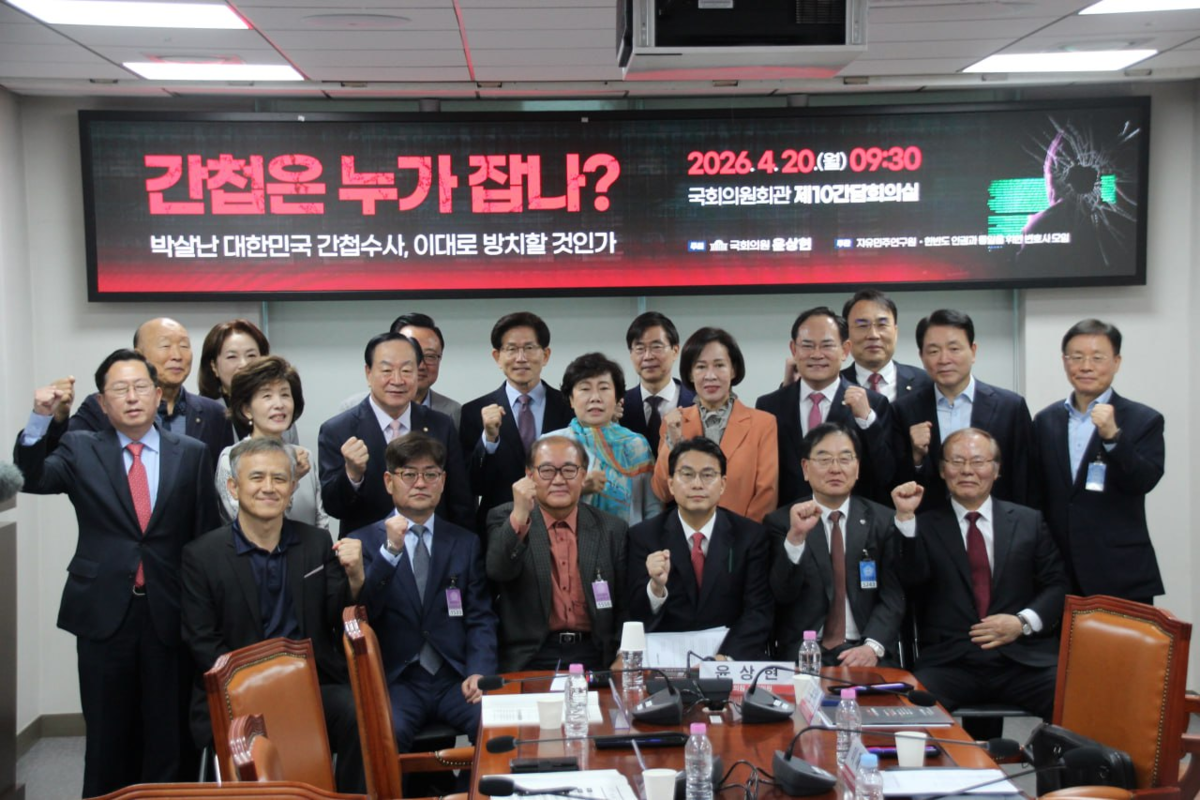 Since the National Intelligence Service’s (NIS) counterintelligence authority was revoked on January 1, 2024, and the police took over espionage investigations, critics say those investigations have largely been idle. One of the two counterintelligence divisions under the National Police Agency’s Security Investigation Unit even dispatched personnel to a special probe into domestic unrest instead of pursuing espionage suspects.
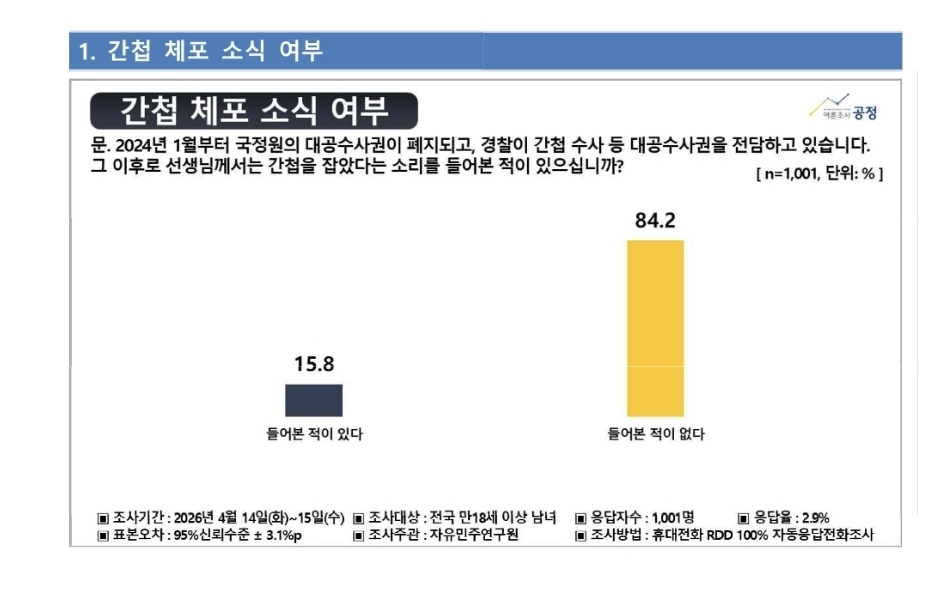
On the morning of the 20th, National Assembly briefing room 10 hosted a policy seminar titled Who Catches the Spies? South Korea’s Broken Counterintelligence Investigations — Will We Leave Them This Way?, organized by Rep. Yoon Sang-hyun of the People Power Party, the Liberal Democracy Institute, and the Lawyers for Human Rights and Unification of Korea. In a presentation titled The State and Response to Crippled Spy Investigations, Yoo Dong-yeol, president of the Liberal Democracy Institute, said, “Of the two counterintelligence divisions (each led by a senior superintendent) under the Police Agency’s Security Investigation Unit (headed by a commissioner), one division — accounting for roughly 40% of the unit’s investigative staff — did not pursue assigned espionage targets. Instead, it deployed personnel to the special investigation into domestic unrest, leaving its core counterintelligence duties undone.”
Yoo added, “From January 1, 2024, when the NIS lost its counterintelligence authority and the police assumed responsibility, through April 2026, authorities have recorded zero cases in which a spy was arrested, indicted, and convicted. In other words, over two years and three months, South Korea’s espionage investigations have effectively been dormant.” He asked whether spies truly do not exist in society, whether North Korea has halted espionage operations targeting the South, or whether the police lack the will or the investigative capacity to catch active spies. “We must analyze causes and develop countermeasures,” he said.
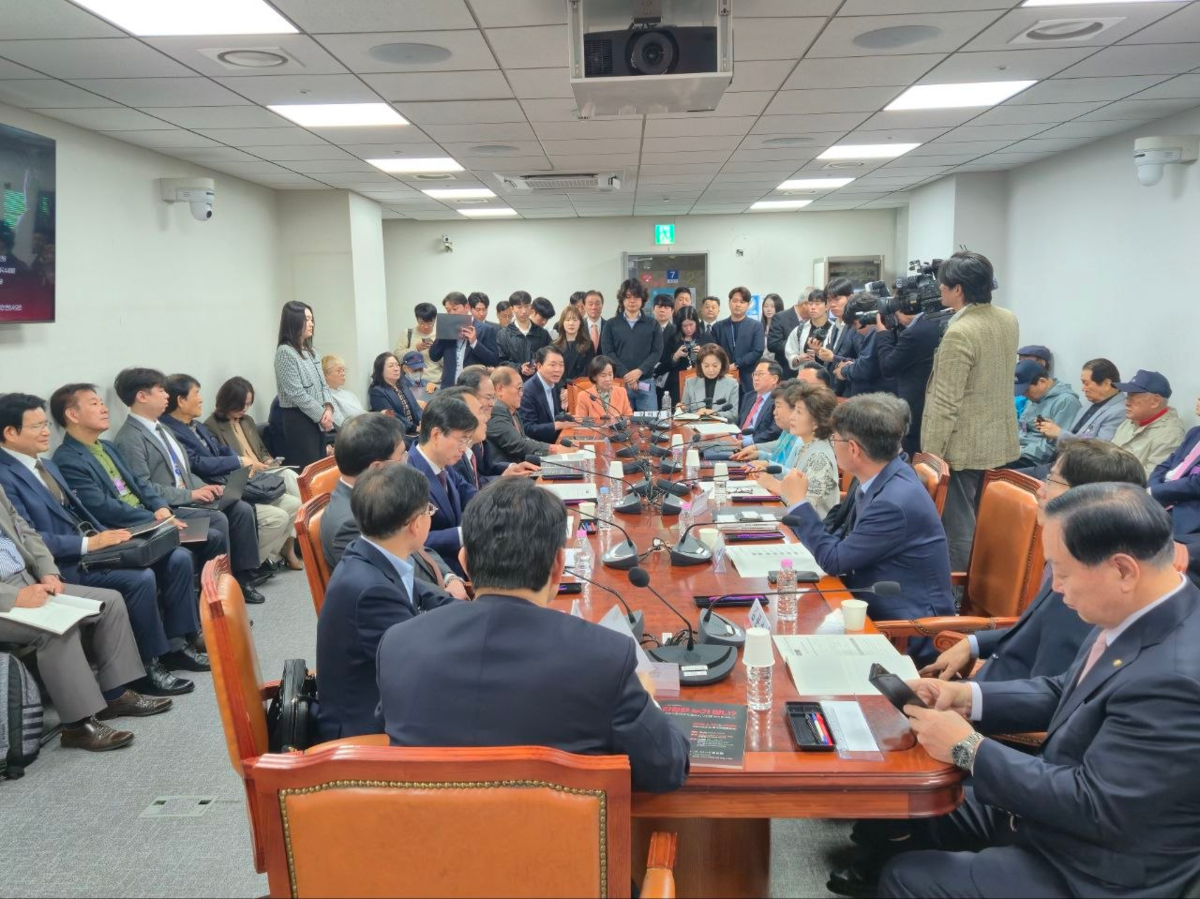
The Liberal Democracy Institute commissioned polling firm Fair Public Opinion to conduct a survey on espionage between April 14 and 15. The poll found 68.1% of respondents believe spies exist in South Korean society, while 22.3% said they do not. When asked why police espionage investigations lag, 37.2% blamed the current administration’s perceived pro-North Korea stance on policy, and 28.9% blamed the police’s lack of will and capability for counterintelligence. Two-thirds of respondents (66%) said police spy investigations are sluggish — a finding consistent with the view that these investigations have been largely dormant.
Yoo outlined the current status of espionage investigations: “Since the police took sole responsibility on January 1, 2024, through April 2026, there have been zero convictions of spies. The National Police Agency has announced two domestic espionage arrests in 2024 and one in 2025, but in those cases the suspects remained unrestrained while police investigated and then forwarded them to prosecutors under Article 4 (purposeful conduct) of the National Security Act. Prosecutors did not indict, and the cases never reached trial.” He added, “Despite claims of major spy arrests, police did not apply for detention warrants; they conducted espionage probes without detaining suspects. This practice highlights the current gaps in Korea’s police-led counterintelligence.”
Since the NIS’s counterintelligence mandate was fully revoked on January 1, 2024, the Police Agency has exercised counterintelligence authority — but chronic staff shortages and other structural problems cast doubt on whether the police can properly carry out national security investigations, including espionage probes.
Yoo identified six core problems with the police-led espionage investigation system: a shortage of security police personnel; only about 15% of nationwide security police assigned to frontline investigative roles; security investigations led by officers without security investigation backgrounds; only 9 of the country’s 258 police stations operate dedicated security divisions while the rest combine security, intelligence, and foreign affairs duties; national security investigations directed under the National Investigation Headquarters (국수본); and overall police counterintelligence capabilities lagging behind the former NIS.
First, Yoo said, the security police force is critically understaffed. Before the Kim Dae-jung administration took office in 1998, the country had roughly 4,507 security police officers (now called security officers). Over the next decade under Kim and Roh administrations, that number fell by more than half to under 2,000. Observers criticized cutting the force dramatically at a time when North Korean espionage and other threats persisted, calling the reductions indefensible.
The Park Geun-hye administration planned to add thousands of security police officers and increased the force by about 500, maintaining roughly 2,300 personnel. But the Moon Jae-in administration again reduced security police numbers.
Notably, despite plans to abolish the NIS’s counterintelligence power, the Moon police leadership cut 210 security police posts. Among counterintelligence investigators, numbers fell from 576 in 2017 to 451 in 2020 — a drop of 125 officers (22%). Yoo warned that this decline undermines the police’s ability to manage espionage and other national security threats. He criticized the Yoon Suk-yeol administration for failing to increase staff and for reallocating security-division personnel across police stations to cover investigative roles — a temporary fix that has continued under the current government.
Nationwide, only about 40% of security police are assigned to investigative duties. The rest perform administrative support such as planning and analysis or handle protection for North Korean defectors. Among those in investigative roles, if you exclude investigators focused on industrial technology crimes, advanced security, and counterterrorism, officers dedicated to traditional espionage investigations make up less than 15%. Yoo said, “In an organization created to conduct security investigations, the fact that fewer than 15% of personnel carry out core espionage investigations is a clear inversion of priorities. Local police station security divisions and intelligence-affairs-security units find proper counterintelligence work nearly impossible.”
The only units still capable of handling espionage investigations are the headquarters’ and provincial security investigation squads. But their staffing levels are worrying. Provincial police agencies typically have two security squads: one for traditional counterintelligence and another for counterterrorism and industrial security. The first squad usually lists 12 members; after excluding the squad chief, an administrative clerk, one or two officers on training or business travel, one on duty, and one or two on leave, the team has only about five active investigators during normal operations. Yoo said, “Expecting this staff to cover an entire province and conduct normal counterintelligence work is virtually impossible,” noting that aside from Seoul and southern Gyeonggi provincial police, most provincial security squads face similar shortfalls.
With the NIS’s counterintelligence role removed, the Police Agency’s Security Investigation Bureau now serves as the country’s primary counterintelligence body. Yoo warned that senior positions — the bureau chief (vacant), provincial security division chiefs, and security squad commanders — largely lack prior espionage investigation experience. “More than 70% of the commanders who would lead counterintelligence operations in practice have no field experience in this area,” Yoo said. “It’s hard to accept that officers without that background now lead investigations critical to national survival.” He noted the long exclusion of counterintelligence specialists from police promotion pipelines, which has made suitable candidates scarce. Yoo proposed that security squad commanders (typically superintendent level) and subordinate inspectors be appointed based on investigative expertise. Currently, only about 10% of the Police Agency’s Security Investigation Unit personnel have counterintelligence experience; most come from general investigative backgrounds. Yoo compared the mismatch to assigning a general surgeon to perform complex heart surgery and warned that such misplacement offers hollow assurances about saving lives — calling it effectively self-harm to national security. He recalled that the NIS’s former counterintelligence bureau maintained deep expertise, with leaders and senior staff serving 20–30 years in the field, a record that made North Korea’s Reconnaissance General Bureau wary.
Only 9 of the country’s 258 police stations operate dedicated security divisions; the others fold security duties into combined intelligence-and-foreign-affairs units. Yoo criticized this setup: “Labels might say intelligence, security operations, or security affairs, but in practice those units prioritize guard and intelligence tasks while security work is sidelined.” For example, Seoul’s metropolitan police operate security divisions at only 6 of 31 stations and run a regional security team at the precinct level. At station level, security officers mainly handle protection for North Korean defectors and rarely conduct counterintelligence investigations.
Under the Moon administration, police leadership placed the security investigation bureau — which handles espionage and related national security crimes — under the National Investigation Headquarters (국수본), a unit oriented toward general criminal investigations. That move put non-specialist National Investigation Headquarters directors in charge of security investigations and forced the mechanical application of general criminal investigation guidelines to sensitive security cases, which critics say hindered effective counterintelligence work.
Yoo said, “When police had a dedicated security bureau, counterintelligence operations retained a basic level of operational security. Under the National Investigation Headquarters framework, we cannot guarantee that.” He criticized the 국수본 leadership for lacking a security mindset and for making it hard to respect the “principle of containment” in sensitive cases. Yoo added, “Within the 국수본, counterintelligence cases that pertain to national survival slip behind ordinary criminal investigations and become marginalized. As a result, security officers have lost out on promotions and honors to general investigators; in some cases, security officers were even excluded from awards such as the Order of Merit for National Foundation.”
Cuts to staff and budgets and falling morale have eroded the specialized capabilities of security police and weakened counterintelligence responsiveness. To plug the gap left by the transfer of counterintelligence authority, Yoo said the government must honestly acknowledge police counterintelligence shortcomings compared with the NIS system and build capabilities to compensate — something he says has not been done, with current efforts amounting to superficial fixes.
To normalize espionage investigations, Yoo argued, the police’s security investigation system needs a major reinforcement. He urged the restoration of the NIS’s counterintelligence authority and an end to dismantling counterintelligence units.
Yoo proposed measures including ▲restoring the NIS’s counterintelligence authority; ▲strengthening the police’s counterintelligence system by creating an independent (provisional name) National Security Investigation Headquarters within the National Police Agency; and ▲establishing a National Security Investigation Office and reforming the national intelligence system.















Most Commented