
Translation result.
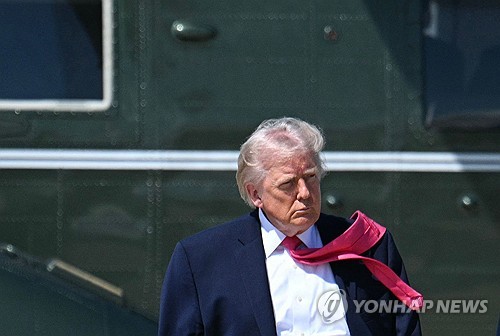 도널드 트럼프 미국 대통령[AFP=연합뉴스 자료사진 제공][AFP=연합뉴스 자료사진 제공]
The Wall Street Journal reported on April 18 that people close to President Donald Trump and members of his staff told the paper the president has privately grappled with fear behind his public bluster throughout the Iran conflict. Aides say Trump was initially impressed by the scale of U.S. strikes, but began to lose confidence after Iran moved faster than expected to block the Strait of Hormuz and energy prices spiked. The WSJ also reported that, before the conflict, Trump told aides, “They will surrender before Iran blocks the strait,” but later voiced belated complaints about the Strait of Hormuz’s vulnerability. As his unease deepened, senior advisers repeatedly urged him to avoid off-the-cuff interviews, warning that mixed messages about prospects for ending the war would hurt public opinion. Trump’s anxiety was most evident on April 3, when two U.S. military pilots went missing. According to people who spoke with him, he shouted at aides for hours and ultimately walked out of the meeting. He did not participate in the pilots’ rescue situation-room meeting and was briefed only by phone on key developments. Kori Schake, a senior fellow at the conservative American Enterprise Institute, said that striking military performance has not translated into victory and blamed the shortfall on a lack of attention to detail and insufficient planning. #USA #Trump #Iran #Israel #Hormuz Yonhap News TV inquiries and tips: KakaoTalk/LINE jebo23 — Eun-nae Kang (rae@yna.co.kr)















Most Commented