
Navigating South Korea’s Rapid Prototyping Program: What You Need to Know About Defense Tech Innovations
Daniel Kim Views
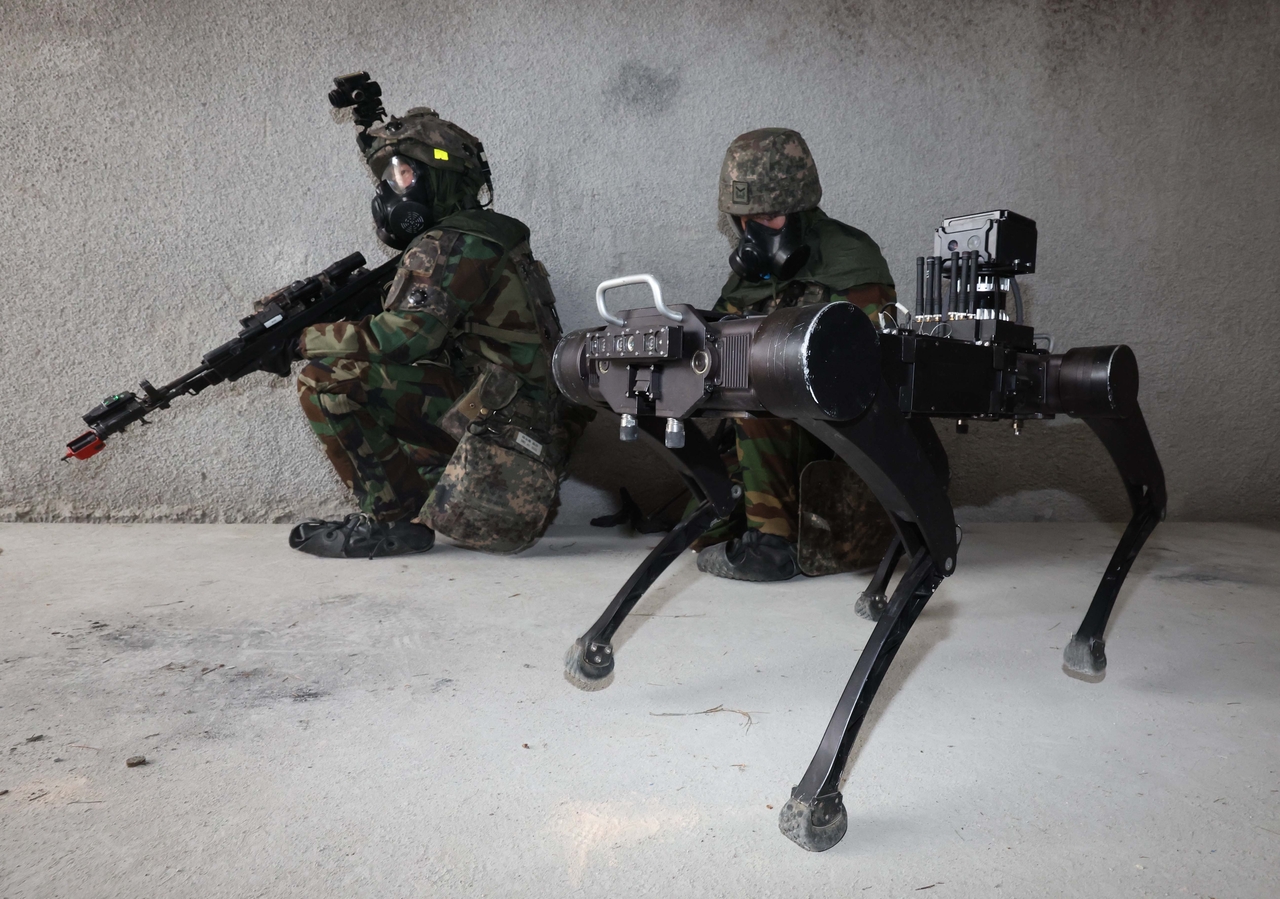 [Herald Economy=Reporter Jeon Hyun-geon] The government runs a rapid demonstration program intended to speed the transfer of advanced commercial technologies into defense, but companies that participated in 2022 are not benefiting from rules revised the following year. The Defense Acquisition Program Administration (DAPA) waived formal test evaluations to accelerate the 2023 program, but that relief does not apply retroactively to 2022 participants.
Defense industry sources said on the 19th that of the 11 prototypes selected for the 2022 rapid demonstration program, only one—the multi-legged walking robot for counterterrorism operations—has progressed to the point of drafting a basic project implementation strategy after the military validated the requirement.
A lightweight 105 mm self-propelled howitzer completed various procedures and the military submitted a requirement for it, but the Joint Chiefs convened an Integrated Concept Team (ICT) to re-examine the weapon system’s feasibility.
So far, only four products have received formal military recognition, including the two above. The service is preparing a requirements submission for an AI thermal sight for sniper rifles. One prototype was judged not approved, another received partial approval, and five others remain in trial operation.
Under rules in place before a September 2023 revision, companies selected for the rapid demonstration program developed prototypes, the military trialed those prototypes, and then decided whether to approve them. If the military approved a prototype, it would review requirements and—if a need was confirmed—conduct test evaluations before moving to mass production.
In September 2023, the Ministry of Defense added Article 59, Paragraph 5 to its Defense Capability Development Order, allowing performance verification test results to substitute for formal pre-production test evaluations. That change means companies selected after the revision can in some cases skip a separate test-evaluation phase.
Contracting remains another hurdle. The revised Article 36-2 (September 2023) permits projects selected after the amendment to transition to sole-source purchase contracts after the demonstration. Industry officials say earlier participants lack that provision, which creates legal and procurement confusion.
The gap has also stalled exports. Foreign buyers reportedly inquired about some products, but deals did not materialize. Foreign governments typically seek proof of adoption by the home military before committing, and that domestic fielding has not happened in many cases.
The U.S., which adopted rapid demonstration and rapid-acquisition models earlier than Korea, has institutionalized the process at the defense strategy level. Washington aligns program management authority, budget flexibility and follow-on production paths from the outset.
By contrast, Korean firms face greater commercial and operational risk because follow-on orders and mass production are not automatically guaranteed after a demonstration. The U.S. separates rapid-acquisition categories and refines follow-on procedures, creating institutional routes that can quickly follow trial operations.
The U.S. also gives program managers substantial authority and responsibility for rapid acquisition and builds more flexible budgeting into the process.
“The core problem with the rapid demonstration program is a weak link to initial military requirements,” a defense-industry official said. “Even when a project succeeds, it doesn’t immediately translate into operational adoption or mass production. Legal frameworks, procedures, budgets and incentives are not sufficiently organized, so projects repeatedly stall at the ‘demonstration’ stage.”
DAPA said, “We will continue these related projects, faithfully reflect the program’s intent, and ensure that systems achieve the performance required for military operations.”











Most Commented