
Navigating Uncertainty: The First Successful Oil Shipment from Saudi Arabia via the Red Sea Amid Regional Tensions
Daniel Kim Views
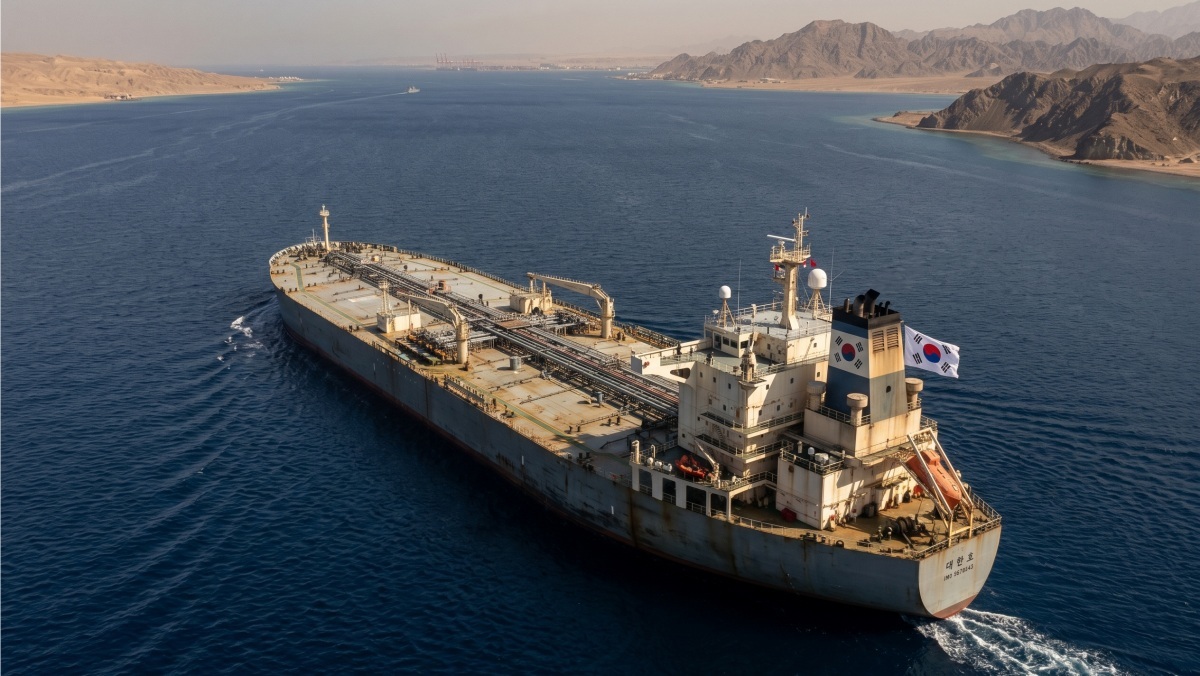
A crude-oil shipping route blocked by the Middle East conflict has reopened via an alternate path.
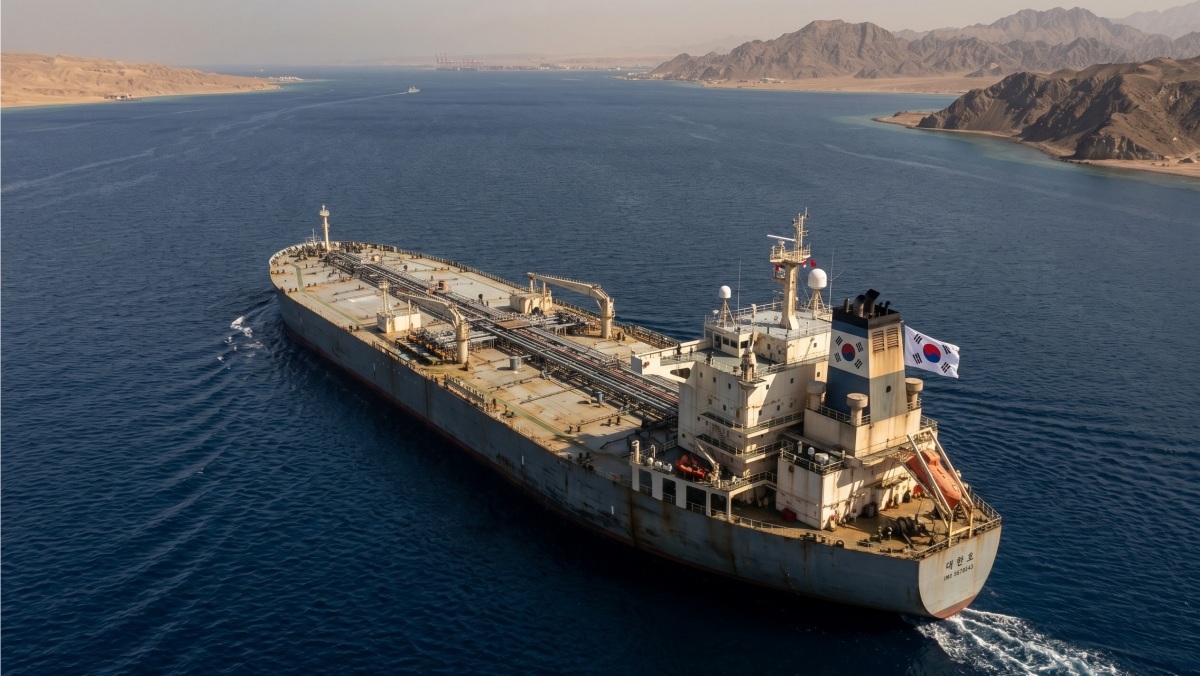
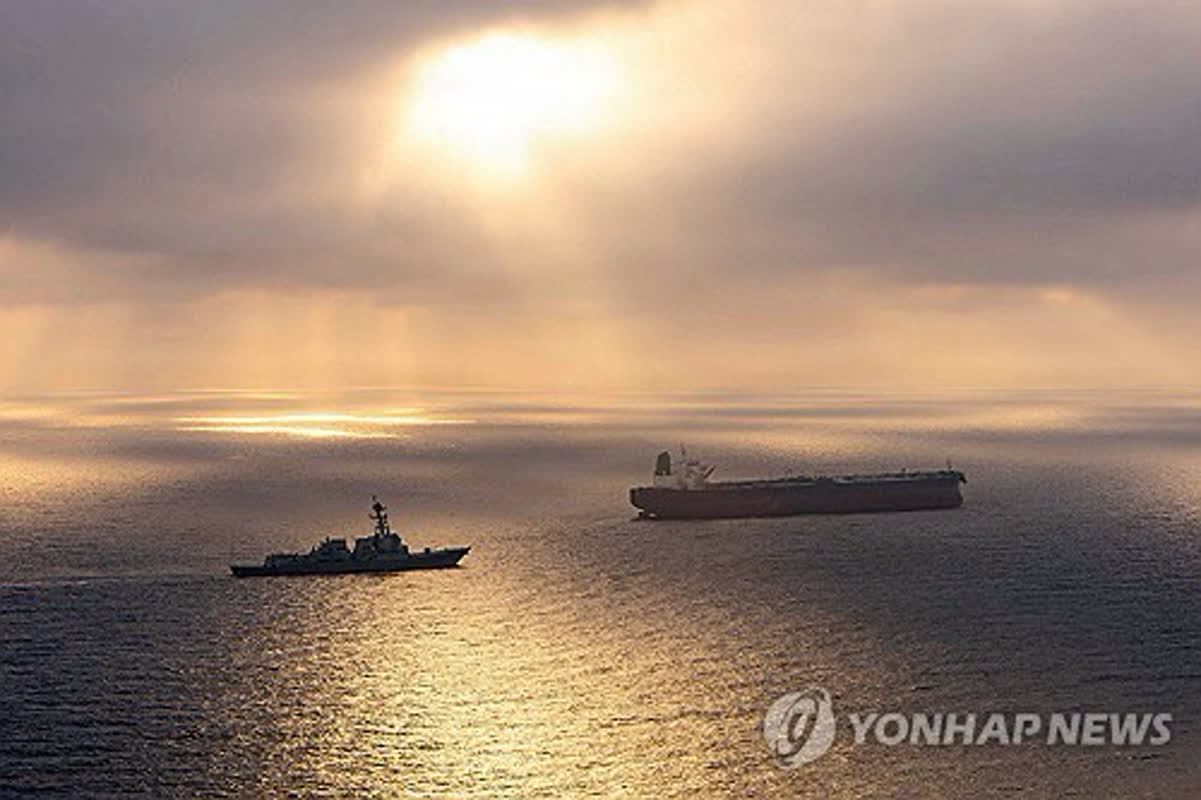
On April 17, the Ministry of Oceans and Fisheries announced that a South Korean tanker, loaded with crude at Saudi Arabia’s Yanbu port, completed a safe transit through the Red Sea.
This voyage is the first time a South Korean tanker has used the Red Sea to move crude home since the Strait of Hormuz was effectively closed amid heightened U.S.-Iran tensions. South Korea had relied primarily on the Hormuz route for Middle East oil. After the closure, supply-chain concerns grew, prompting government and industry officials to evaluate alternative corridors. The Red Sea route was selected and has now been tested in operation.
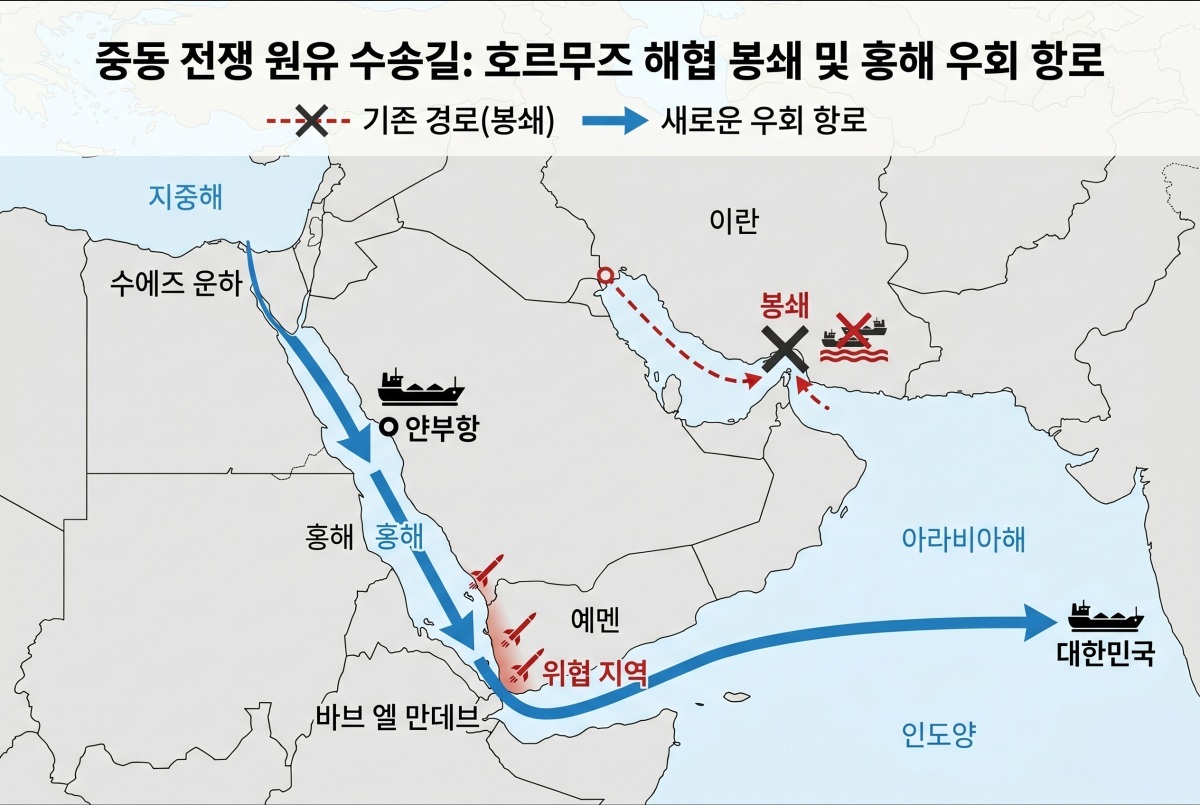
The Red Sea remains a high-risk transit zone. Iran-backed Houthi militants in Yemen operate in the area and have repeatedly threatened and struck commercial vessels. Since October 2023, the region has seen dozens of attacks, and international authorities have warned against routine transits. Under those conditions, the passage carried elevated operational risk.
The government prioritized ship and crew safety throughout the voyage. Authorities operated a 24-hour, real-time monitoring network during the transit and issued continuous navigational safety updates. They maintained an open communications line with the shipowner to manage any contingencies. For operational security, officials withheld specifics such as the vessel’s name and arrival times.
Cabinet debated a ‘Red Sea detour’ — discussion becomes action
On April 6, the government discussed using the Red Sea to bypass the Strait of Hormuz at the 14th Cabinet meeting, which doubled as the 4th Emergency Economic Review. Officials focused on measures to stabilize oil supplies as Middle East tensions worsened.
South Korean President Lee Jae-myung raised the prospect of further blockades involving Houthi forces and assessed the level of realistic threat. The Foreign Ministry judged large-scale enforcement to have limited feasibility. The Ministry of Oceans and Fisheries reported plans to track vessels in real time from a joint operations center, working with the Cheonghae Unit, and to intensify safety monitoring. The president urged interagency cooperation to ensure the safest possible shipments given the restricted alternate routes.
The ministry coordinated with the Ministry of Trade, Industry and Energy and other agencies to develop the Red Sea detour. This voyage represents the first operational milestone from that effort.
President calls it “a valuable achievement,” highlights oil-supply response
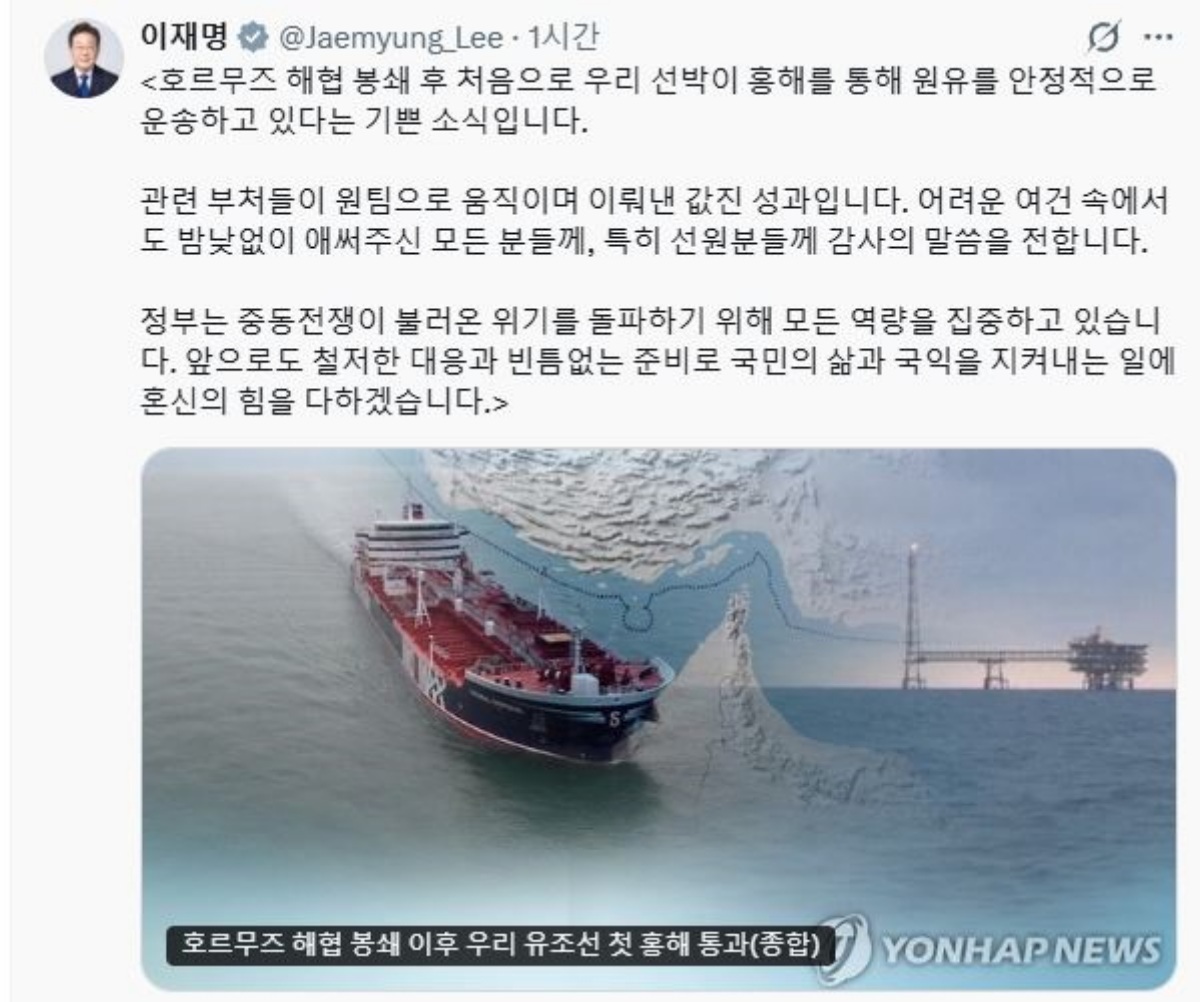
President Lee wrote on social media that, for the first time since the Strait of Hormuz was blocked, the government has safely moved oil through the Red Sea. He framed the outcome as the product of interagency cooperation and thanked the personnel and seafarers who managed the operation under difficult conditions.
The government says it is concentrating all available resources to overcome supply-chain instability caused by the Middle East conflict and will continue robust preparations and responses to secure energy supplies and protect national interests.
The Ministry of Oceans and Fisheries said the Red Sea transit demonstrated that government measures had yielded tangible results amid growing uncertainty over oil supplies. Minister Hwang Jong-woo said the ministry will continue to prioritize ship and crew safety and deepen cooperation with relevant agencies and the shipping industry to keep Middle East oil flows on schedule.
The situation at the Strait of Hormuz remains tense, with military skirmishes and diplomacy occurring in parallel. The U.S. has stepped up maritime interdictions targeting Iran-linked vessels, increasing pressure, while Iran has signaled it could assert control over the strait.
Both sides, however, appear to be leaving room for negotiation rather than escalating to full-scale confrontation. Some ships are still able to transit, but many remain immobilized, and normal operations have not resumed. That continuing uncertainty keeps oil shipments under strain.












Most Commented