
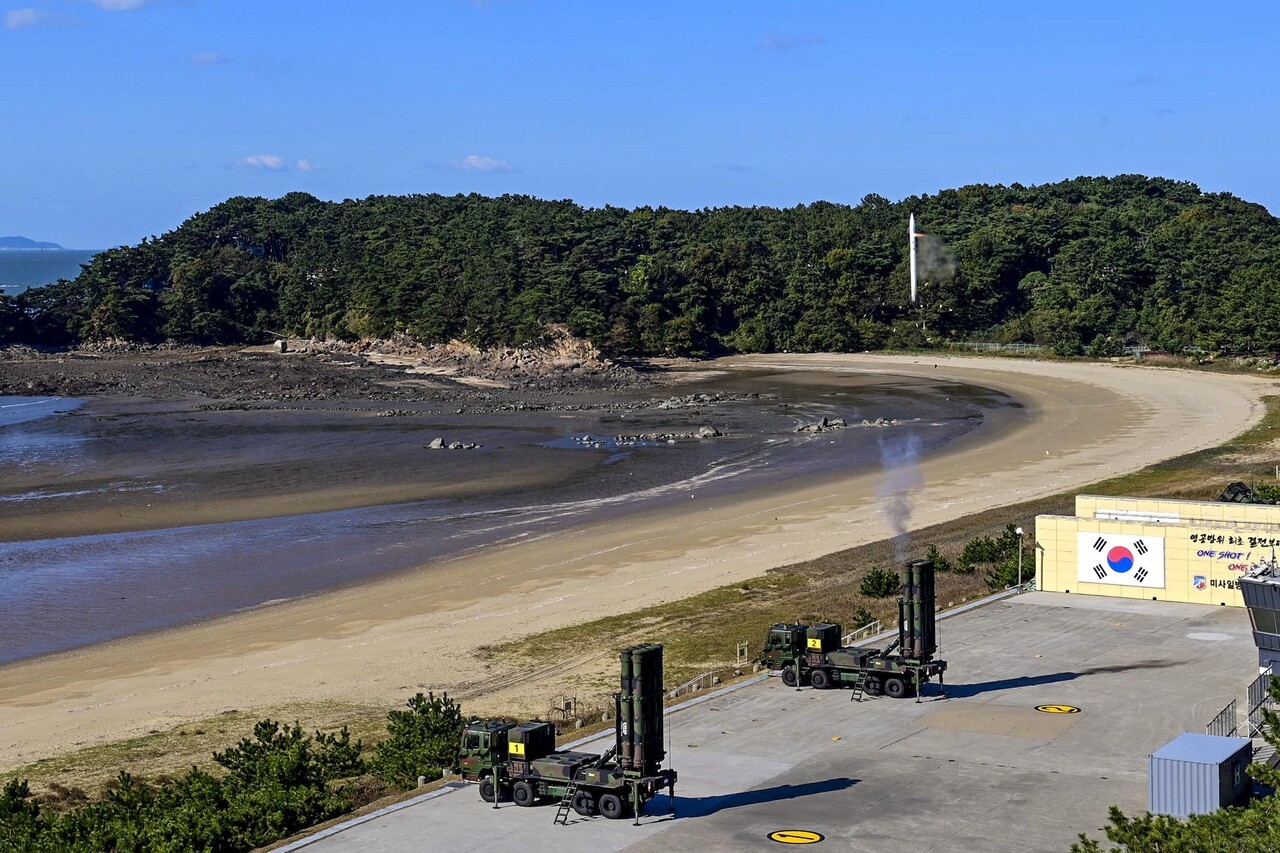
TODAY KOREA = Jin Min-seok | After Iran’s large-scale airstrikes rattled Gulf air defenses, analysts say Saudi Arabia, the United Arab Emirates (UAE) and Qatar have rapidly diversified away from reliance on U.S. arms, turning to suppliers such as South Korea and Ukraine.
They say proven, combat-ready South Korean air-defense systems have emerged as a practical alternative amid U.S. supply delays and rising costs.
The Wall Street Journal reported on the 12th (local time) that Gulf states including Saudi Arabia, the UAE and Qatar saw their stocks of air-defense missiles fall sharply while defending against six weeks of Iranian retaliatory strikes.
As a result, they are racing to secure alternative weapons that can be deployed immediately.
In particular, South Korea’s medium-range surface-to-air defense system, Cheongung-II (M-SAM II), has drawn attention. The UAE, which used Cheongung-II in combat to intercept Iranian missile and drone attacks, has reportedly asked South Korean firms for additional supplies and faster delivery schedules.
The WSJ said Saudi Arabia has contacted Japan to secure U.S.-made Patriot missiles while also probing whether South Korea could deliver Cheongung-II systems earlier. With U.S. weapons deliveries delayed, analysts view South Korean systems as a realistic alternative.
This shift in procurement focuses not only on acquiring expensive interceptors but on building layered air-defense networks that offer better cost-effectiveness.
To counter Iran’s mass attacks using low-cost Shahid-series drones, Gulf states are assembling layered defenses that combine Ukrainian-made interceptor drones, low-cost U.K. missiles and electronic-warfare equipment.
To that end, Saudi Arabia and Qatar have signed defense cooperation agreements with Ukraine and visited local drone training facilities, expanding practical cooperation. Observers say they aim to import Ukraine’s hard-won experience in countering drones.
The WSJ analyzed that these changes show U.S. defense firms can’t meet simultaneous global demand.
As the wars in Ukraine and the Middle East overlapped and delayed U.S. arms deliveries, even long-standing Gulf allies have begun securing independent supply chains to survive.
Experts say the Iranian strikes exposed limits of existing air-defense strategies. Using expensive interceptors against cheap drones and rockets isn’t sustainable; stocks deplete too quickly under mass saturation attacks.
A Saudi official told the WSJ, “We still cooperate seamlessly with U.S. firms, but we also have excellent relationships with others.” Analysts interpret that comment as a signal that the de facto de-Americanization of air-defense procurement has begun in earnest.















Most Commented