
Translation result
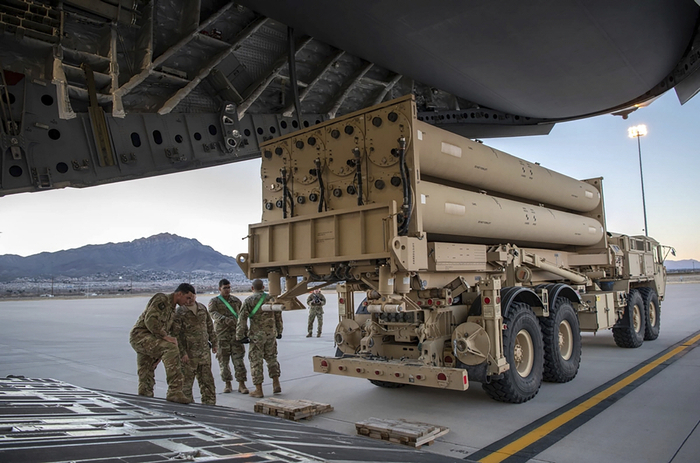
With the U.S. and Iran entering a two-week cease-fire, the U.S. military must now account for weapons systems depleted after more than five weeks of fighting and develop plans to restock them. A new variable has emerged: Washington depends heavily on China for key parts and processing.
During the conflict, Iran concentrated attacks on U.S. radar and missile-intercept systems deployed across the Middle East. Experts say many radar units were likely damaged or destroyed.
Repairing those systems requires gallium. Gallium is a critical mineral used in radars, missile-intercept systems and advanced semiconductors. China effectively dominates gallium processing, and in past disputes with Washington it has restricted exports of gallium and rare earths to exert leverage.
Gallium prices have risen about 32% over the past month. That jump suggests China could gain greater bargaining power if the U.S. moves quickly to restock weapons after the conflict.
Beyond gallium, medium-heavy rare earths such as terbium and dysprosium are also at issue. These minerals are essential for missile guidance, target acquisition and the production of advanced radars and sensors. China controls more than 90% of the medium-heavy rare earth processing industry, and the U.S. cannot quickly build alternative supply chains.
Former USTR deputy Wendy Cutler warned, “Holding resources your counterpart needs increases bargaining power.” Minerals investor Mikhail Zeldovich added, “It’s clear the U.S. has become more vulnerable overall.”
Analysts say that could give China an advantage at the presidential summit between U.S. President Donald Trump and Chinese President Xi Jinping scheduled for May, since the U.S. may have to rely on Chinese gallium and rare earths to repair radars and interception systems.
Still, it is unclear whether Beijing will use that leverage aggressively. Both countries appear to want to avoid a deterioration of ties ahead of the summit. The Chinese government says it continues to approve rare-earth exports for civilian use and has delayed some export-control measures until November. China’s Ministry of Commerce emphasized that Beijing will continue communicating with Washington through economic and trade negotiation channels.
By Sangmok Lee












Most Commented