
Translation result.
Local outlets, including state-run IRNA, reported that U.S. and Israeli forces struck petrochemical complexes and a nuclear power plant in Iran on the morning of April 4 (local time).
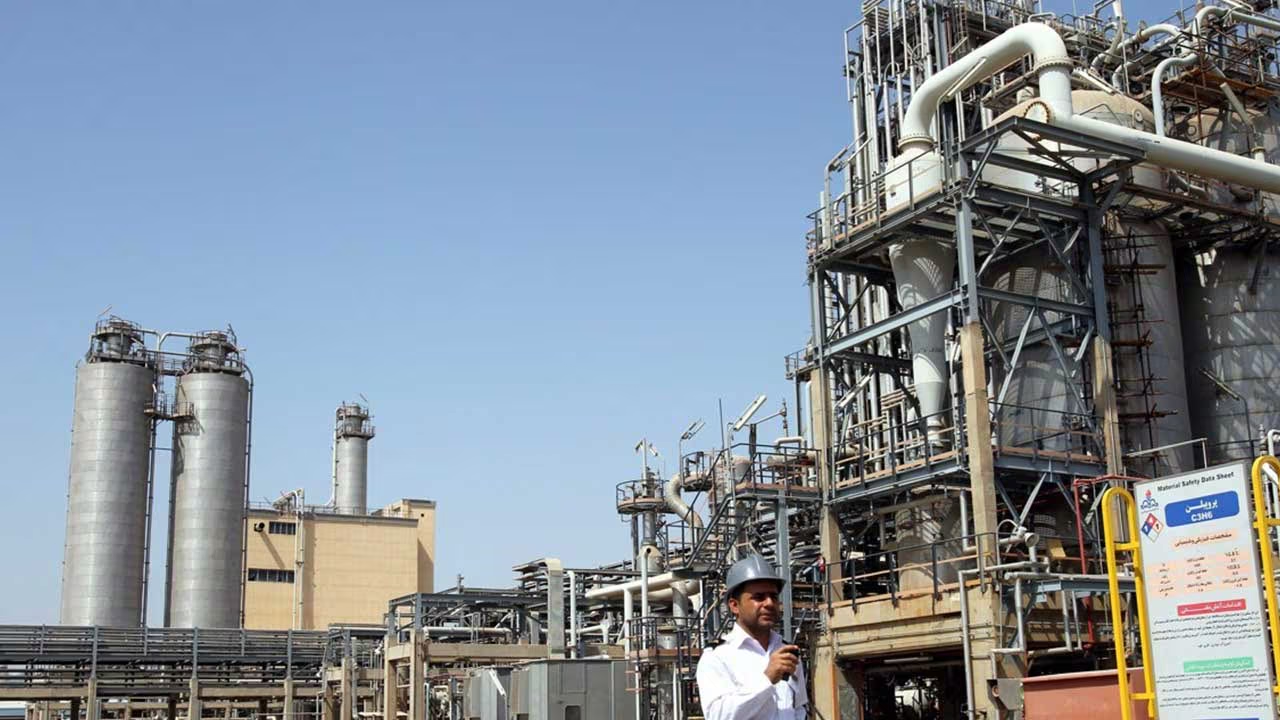
Khuzestan provincial authorities said the Mahshahr petrochemical complex and the Bandar-e Imam area were hit around midday, injuring at least five people. Deputy Governor Valiollah Hayati told reporters that U.S. and Israeli warplanes struck the Fajr 1 and 2 complexes as well as the Razal, Amir Kabir and Abu Ali petrochemical facilities. He said parts of the Bandar-e Imam complex were damaged, though the Amir Kabir plant did not sustain direct hits.
Earlier that morning, the Bushehr nuclear power plant in southern Iran was also targeted. IRNA reported one member of the plant’s security personnel was killed and that blast effects damaged some auxiliary buildings. Preliminary inspections found no abnormalities in the reactor’s core systems, and officials said plant operations were not affected.
IRNA said Bushehr has been struck four times since U.S. and Israeli strikes against Iran began in late February. Officials warned that because the facility houses significant quantities of radioactive material, severe damage could produce irreversible consequences.
In Hormozgan province in the southeast, the Bandar Hamir cement plant was also hit, but authorities reported no casualties or disruptions to production.
Iran has historically responded to attacks by striking similar types of targets, raising the prospect that petrochemical facilities in Gulf states and in Israel could become targets for retaliation.
Foreign Minister Abbas Araghchi posted on X, “Remember the West’s reaction to the attack on the Zaporizhzhia nuclear plant,” accusing Israel and the U.S. of striking Bushehr four times. He warned that radioactive fallout could endanger lives in Gulf capitals rather than in Tehran, and said the strikes on petrochemical sites reveal the true targets.
The International Atomic Energy Agency confirmed Bushehr was struck but said it had not detected any rise in radiation levels so far. IAEA Director General Rafael Grossi stressed that auxiliary buildings contain critical safety equipment and warned that nuclear plants and surrounding areas must never be targeted, urging military restraint to prevent a nuclear accident.









Most Commented