
How Iran’s Control of the Strait of Hormuz Could Impact Global Energy Prices in 2026
Daniel Kim Views
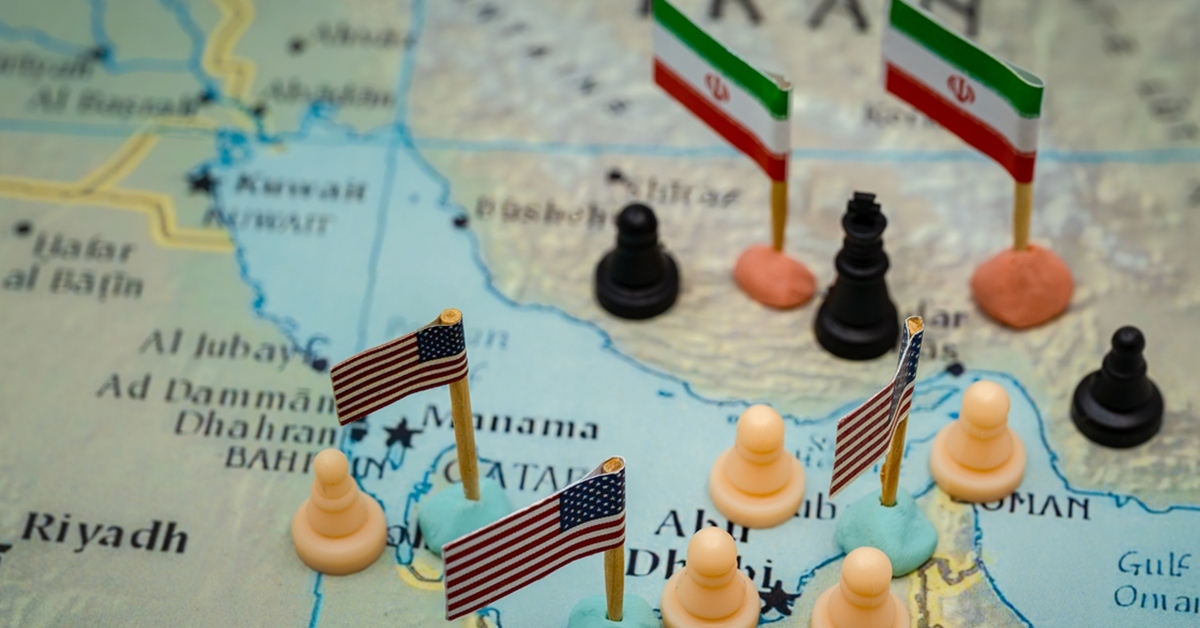
As the Middle East war moves into its closing phase, control of the Strait of Hormuz has emerged as the decisive factor that could determine the conflict’s outcome.
Foreign reporting compiled on April 3 indicates the strait has become Iran’s last deterrent and a political and economic pressure point for the United States, turning it into the conflict’s central battleground.
The U.S. and Iran are locked in an intense standoff over control of the waterway.
Iran has begun drafting legislation to impose transit fees on oil and gas carriers passing through the strait, while President Donald Trump has made reopening the waterway a precondition for a cease-fire and increased pressure on Tehran.
Trump warned that if negotiations show no progress by April 6, he would target and destroy Iran’s critical infrastructure, including energy facilities.
For Tehran, control of the Strait of Hormuz is the regime’s last credible deterrent to ensure its survival.
Vali Nasr, a Middle East expert at Johns Hopkins University, told the Wall Street Journal that for the Iranian regime the strait has become more strategically important than its nuclear program.
He argued that Iran’s nuclear program was largely symbolic and offered limited practical deterrence. By contrast, Iran’s only tangible leverage to withstand the war lies in controlling the strait and the revenue that control yields.
Since the U.S. and Israel struck Iranian targets on Feb. 28, maritime traffic through the strait has been effectively paralyzed for more than a month. Daily transits that normally reached about 100 ships have fallen to a few dozen, leaving many tankers and container ships stranded inside the Persian Gulf.
Tehran is advancing a bill to classify transiting vessels as friendly or unfriendly and to discriminate in treatment accordingly. It is also reviewing concrete plans to collect transit fees.
Bloomberg reports Iran is considering charging tankers roughly $1 per barrel, payable in yuan or stablecoins.
A very large crude carrier that typically carries about 2 million barrels would generate roughly 2 million USD (approximately 2.667 billion KRW) in fees per transit under that proposal.
U.S. officials view Iran’s moves as a threat that could strike a key U.S. economic vulnerability. Following the strait’s effective closure, international oil prices surged past $120 per barrel, driving up inflation and gasoline prices in the United States.
U.S. pump prices have crossed the psychological threshold of $4 per gallon, increasing political pressure on President Trump ahead of the November midterm elections.
Many analysts say the war’s direction will depend on how long Iran can maintain control of the strait. Ebrahim Azizi, chairman of Iran’s parliamentary National Security Committee, said the Strait of Hormuz will reopen but only to countries that comply with Iran’s new rules—signaling Tehran’s intent to retain leverage even after hostilities end.
Trump has signaled strong military options while also urging European and Asian partners to take leading roles, sending mixed messages. That reflects concern that a military operation to reopen the strait could invite heavy retaliation from Iranian drones, missiles and fast attack craft.
French President Emmanuel Macron has criticized the U.S. military plan as unrealistic. Trump has threatened to intensify strikes over the next two to three weeks and to set Iran “back to the Stone Age,” but whether Tehran will capitulate remains unclear.
Experts warn that if Iran emerges from the conflict still controlling the strait, it would pose a long-term risk to global energy security.
Hassan Al-Hassan of the U.K.’s International Institute for Strategic Studies said Iran could impose de facto sanctions on targeted countries at times of its choosing, creating a persistent threat to global maritime logistics.
Saudi Arabia and the United Arab Emirates are rerouting crude via pipelines to the Red Sea and the Gulf of Oman, but those measures cannot fully replace the lost export capacity.
Legal controversy also persists. The Strait of Hormuz is a natural international passage, not an artificial canal a single state can unilaterally close; Iran’s attempts to control transit risk being treated as unlawful interference with navigation.
Analysts note that because the United States and the European Union have designated Iran’s Islamic Revolutionary Guard Corps a terrorist organization, shipping companies that pay transit fees could face legal exposure, making practical acceptance unlikely.
Ultimately, whether the Strait of Hormuz returns to normal has become the single biggest variable determining global energy supplies and the stability of the international order. Analysts warn that if the United States abandons this issue and withdraws, the resulting disruption could spread beyond energy markets and destabilize the broader international system.
Daily horoscope report — see what today holds!















Most Commented