
How the KF-21 Joint Development is Reshaping South Korea-Indonesia Defense Cooperation
Daniel Kim Views
During the KF-21 co-development, Indonesia cut its financial contribution from 1.6 trillion KRW (approximately $1.2 billion) to 600 billion KRW (approximately $450 million).
A 2024 episode in which Indonesian technicians seconded to Korea Aerospace Industries (KAI) were accused of removing documents raised doubts about the partnership. Despite that controversy, President Lee Jae-myung is scheduled to meet Indonesian President Subianto on the 1st to discuss expanding defense cooperation.
Seoul’s government and the defense sector treat Korea‑Indonesia cooperation as strategic investment rather than a simple export transaction.
Officials point to the relationship’s roots in the 2001 KT-1 trainer sale, saying 25 years of accumulated trust has become both the starting point and a reference case that helped propel South Korea’s defense industry onto the global stage. They argue the long-term value of that partnership outweighs episodic disputes.
The first KF-21 production aircraft rolled out on the 25th of last month, and the program is scheduled to conclude in June. The Republic of Korea Air Force is set to receive 120 jets by 2032, and Indonesia is slated to acquire 16.
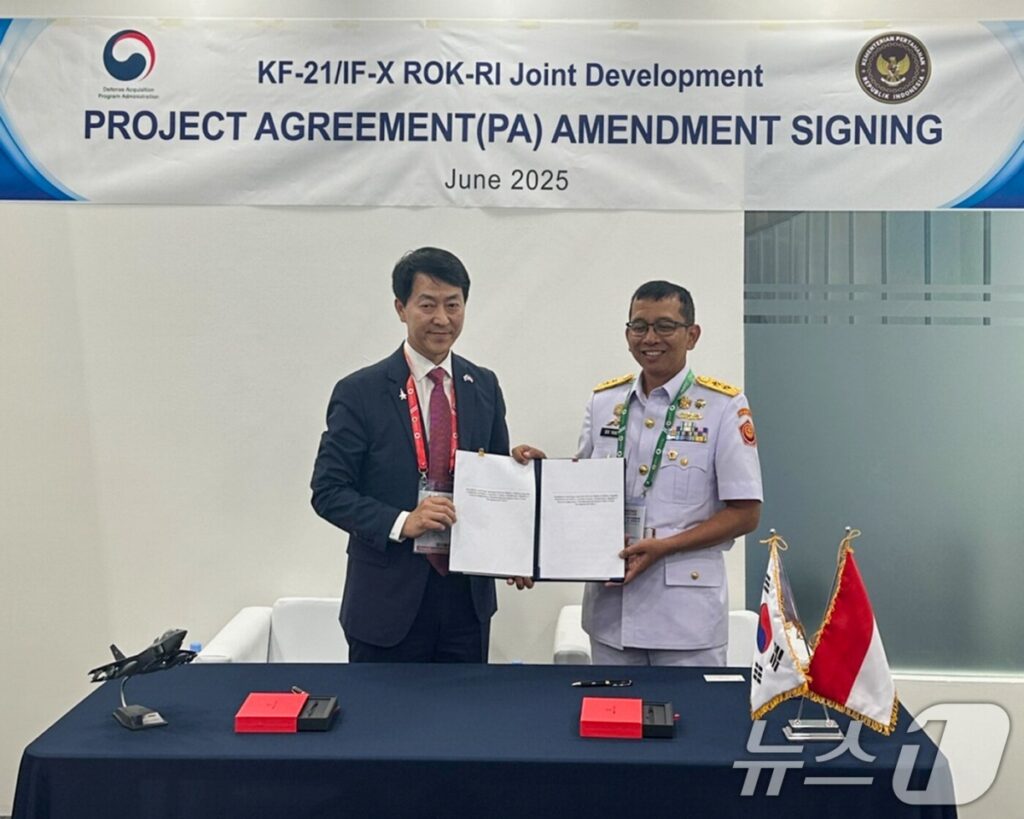
Building on the amended Basic Agreement on Joint Development (June 2025), which resolved earlier disputes, the two countries aim to finalize the export implementation contract at this summit.
A 1 trillion‑KRW contribution dispute — and why Indonesia remains a strategic partner (1 trillion KRW ≈ $750 million USD)
The push to readjust Indonesia’s contribution was contentious. Jakarta cited budget constraints and demanded renegotiation, delaying the program more than two years and narrowing the originally planned scope of technology transfer.
The defense sector, however, frames that accommodation as an investment in future cooperation and market access rather than a pure loss.
A defense official stressed, “In a rapidly changing security environment, long‑term, trust‑based partnerships are essential to secure stable arms exports and maintain technological competitiveness.”
Indonesia has since fielded South Korean systems across services — from the Army’s Cheongung air-defense system to navy submarines and Air Force aircraft — becoming a live operational market for Korean defense products.
Operational records like those are a critical negotiating asset with third countries. Observers say the KF-21 joint development has evolved from a one-off purchase into a broader model of technology cooperation and industrial partnership.
After KF-21, a joint push into the global defense market
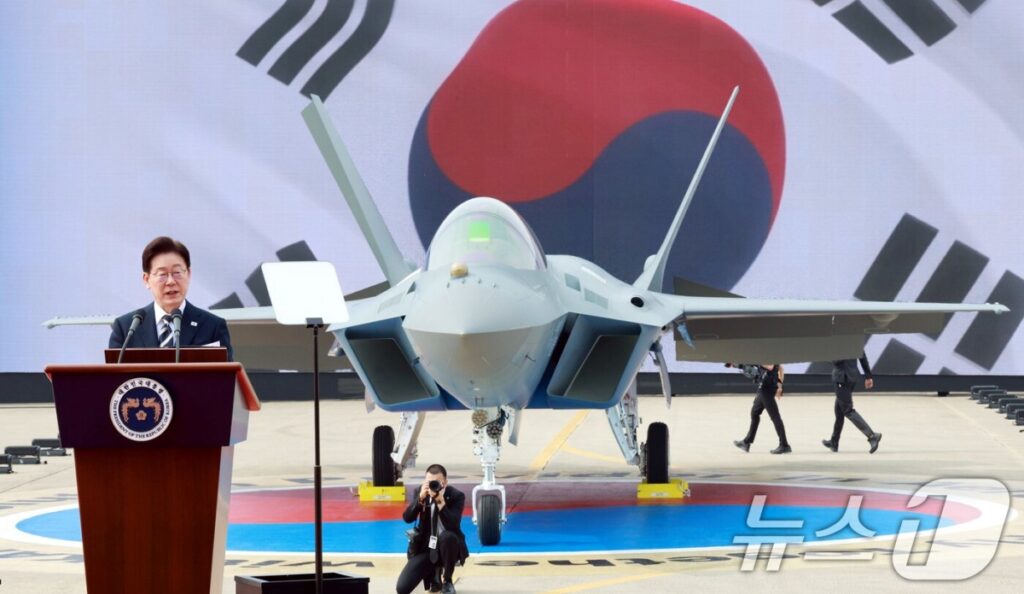
In an interview with Indonesia’s Kompas on the 31st of last month, President Lee described the Korea‑Indonesia joint fighter program as a potential global model for international defense cooperation. He said he hoped the success would open doors to collaboration in areas such as naval vessels and air‑defense systems.
With the KF-21 now the world’s eighth mass‑produced fighter, both governments are using the program as a springboard to pursue joint market entry in Southeast Asia, the Middle East and beyond.
The strategy emphasizes strengthening a long‑term partnership built on 25 years of trust rather than being sidetracked by short‑term disputes.
Officials say the strategic value of Indonesia as a regional hub and a gateway to broader markets outweighs the hit from a roughly 1 trillion KRW contribution (approximately $750 million). This summit with Indonesia is expected to further cement that positive cycle.










Most Commented