
Translation result
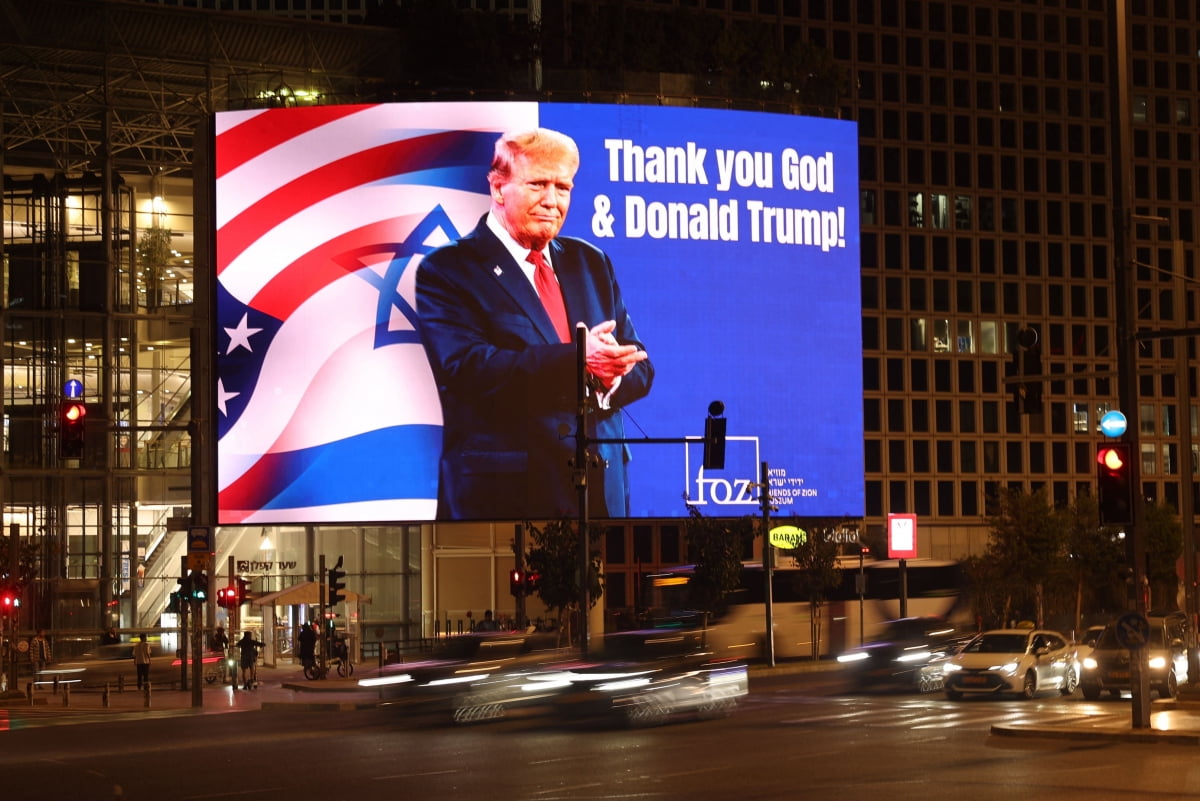
In the United States, the cost of war is often measured in stark numbers. A $100 million advanced U.S. stealth fighter was shot down. Bases that serve as the eyes and ears for operations in the Middle East sustained roughly $800 million in damage from Iran’s strikes (about 1.2 trillion KRW (about $900 million)). Although 2,500 U.S. Marines stationed in Japan have already deployed to the region, President Donald Trump says he will not send American ground forces to fight Iran. Still, another 2,500 Marines from the U.S. West Coast are preparing to deploy. U.S. strikes killed several senior Iranian figures, including a Revolutionary Guard commander. Iran has responded with relentless retaliation, putting the United States under increasing pressure. The bombing campaign unleashed thousands of bombs and missiles on the first day, yet four weeks in the conflict shows no sign of ending. Gas prices have doubled at the pump and inflation is rising, fueling public anger toward the Trump administration. More than 70% of Americans oppose the war, including over 40% of Republican voters.
MAGA figures who helped elect Trump — such as Tucker Carlson and Marjorie Taylor Greene — accuse him of betraying America First principles. Even an extremist militia founder pardoned by Trump after the Jan. 6 Capitol riot has begun to criticize him. Joe Kent, director of the National Counterterrorism Center (NCTC), resigned, saying he could not in good conscience support a war with Iran that he believes began under pressure from Israeli lobbying despite not posing an immediate threat to the United States. Mossad’s assessment that removing Iran’s top leadership would spark an uprising and topple the regime has proved wrong, and reports that Prime Minister Benjamin Netanyahu persuaded Trump to start the conflict to preserve his own political future are gaining traction.
Two days before U.S. and Israeli airstrikes, Iran offered to return to a permanent nuclear deal, halt stockpiling of highly enriched uranium, and conduct its nuclear program with U.S. participation. Britain’s negotiating team and the Omani mediator welcomed the proposal, and talks were close to a deal. Since then, everything has unraveled. Plans have collapsed and nothing is unfolding as intended. The administration asked allies — many of whom faced unclear reasons and objectives for joining — to enter the fight, and few responded. Decades of trust the United States built by aiding poor and vulnerable countries evaporated overnight, and the U.S. now faces the prospect of shouldering astronomical war costs largely on its own. The Trump administration has been forced to ask Congress for an additional $200 billion, a sum that exceeds U.S. spending on the Ukraine war over five years.
The ball has now moved to Congress. Without congressional approval, the administration cannot legally spend the money and may be unable to sustain the war. Powerful appropriations panels could reject the $200 billion request. With strong opposition among some House Republicans and Democrats, the House Appropriations Committee could refuse the funding or attach appropriations riders that limit military action in Iran to self-defense and prohibit offensive operations. If such measures pass the House and clear the Senate, they would effectively cut off the administration’s war funding. As Sen. Chris Van Hollen put it, cutting off the money may be the best way to end the war and rein in the administration.
From here, political reality trumps constitutional principle. Lawmakers face a dilemma: they must calculate which choice best serves their reelection prospects in the November midterms. Voters in many districts will weigh whether to reward or punish representatives who back massive overseas spending while failing to rein in inflation and domestic costs. The decision of Republican voters who supported Trump last cycle but have grown critical after a year of policy missteps and a second year of military action is particularly consequential. The brutal fact is that the lives of people half a world away now hinge on political calculations in Washington.
Could Congress have acted earlier — not merely by passively denying funds for a war already under way, but by proactively refusing authorization before strikes began? Since the founding, the Constitution has assigned the power to declare war to Congress; Article I remains clear. James Madison warned that the executive has the strongest incentives toward war and is most susceptible to temptation. To guard against that, the Constitution gave the declaration power to the most accountable branch, Congress, and limited the president to executing declared wars. Even when force is used, the War Powers Resolution requires the president to notify Congress within 48 hours and to secure approval within 60–90 days or withdraw forces. Yet Trump did not seek congressional approval; he notified an eight-member panel by phone just before the strikes and provided no clear objectives or exit strategy. If a president is inclined to sustain military action, why has the constitutionally empowered Congress failed to prevent the war at the outset or stop one begun in error? Decades of politicians delegating congressional authority to the executive for convenience share the blame.
Congress repeatedly looked the other way, and those exceptions hardened into precedent, eroding constitutional foundations. Over decades, lawmakers ceded authority to presidents for reasons such as “rapid crisis response” and “international security,” and now the country is paying the price. As politicians enlarged executive power without a long-term perspective, the balance among the three branches weakened. While presidents wielded near-limitless force in Afghanistan, Iraq, Syria and Yemen, Congress rarely exercised meaningful checks. The result is a system in which an impulsive, unpredictable leader can flout constitutional limits and launch extreme military action at any time.
Institutional principles and systems are designed to hold in moments of crisis. Even an entrenched leader can be constrained if institutions and norms remain strong; if they collapse, outcomes become unpredictable. The flames that began in the Middle East could blow back and strike the United States. With the founders’ principles and the constitutional system seriously weakened for the political convenience of subsequent leaders, America now sits on a testing ground. The missiles arcing through Iranian skies also trace a test: can the United States remain a superpower? Ending this risky experiment ultimately falls to Congress, the political parties and American voters. That is why the world is watching the November midterms.
Song Ho-chang, Director, Continental Asia-America Strategy Center (attorney, former member of the National Assembly)











Most Commented