
South Korea’s Defense Strategy: How ‘Self-Reliance’ is Shaping National Security in 2026
Daniel Kim Views
Self-reliant defense is the core of integrated defense…we must protect ourselves
We have the capability, so we must hold firm confidence
Will actively respond to U.S. efforts to operationalize ‘strategic flexibility’
Also: outlook on North Korea, presentations and discussions on large-scale accident response
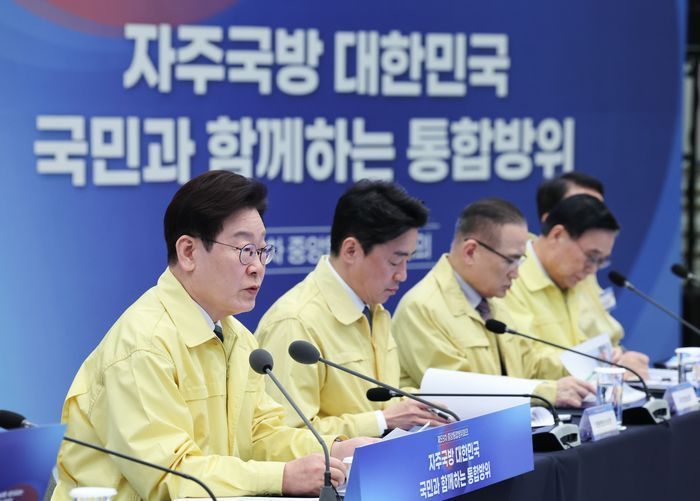
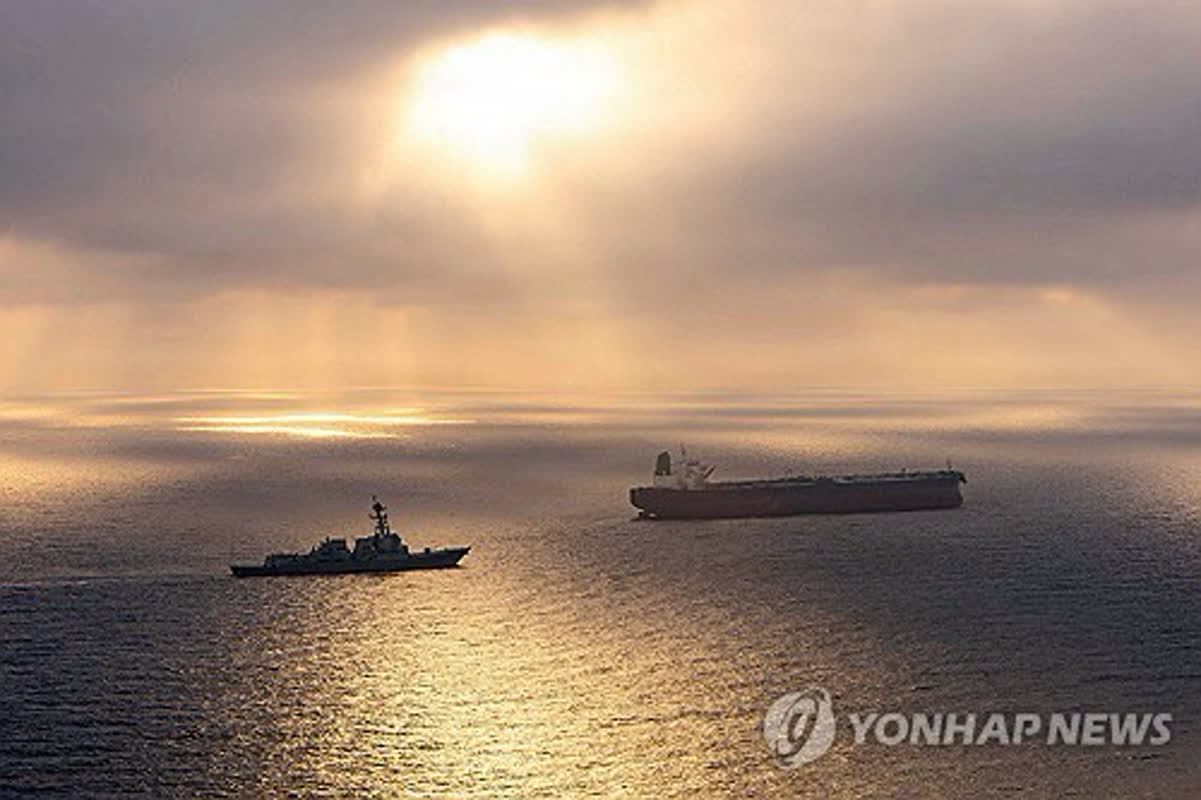
President Lee Jae‑myung presided over the Central Integrated Defense Meeting and underscored the need for a self-reliant defense posture. His remarks signaled a determination to actively respond to U.S. calls to strengthen and operationalize “strategic flexibility,” amid signs the Middle East conflict could be prolonged and reports that some U.S. Forces Korea assets have been redeployed to the region and that U.S. and Chinese fighter aircraft recently engaged in a tense face‑off.
At the Blue House on the 23rd, President Lee told attendees that self‑reliant defense is the singular, critical component of integrated defense. “We must be able to defend ourselves without relying on anyone, in any situation,” he said.
“We must be able to protect ourselves even if no external assistance is available,” he added. “We have the capability to do so. Now is the time to hold firm confidence.”
Lee cited statistics indicating South Korea’s annual defense spending is roughly 1.4 times North Korea’s annual gross domestic product, and noted that international assessments rank South Korea’s military among the world’s top five.
“Our defense industry is also robust and envied internationally,” he said. “Taken together, these factors mean we should be confident and organize systems so we can protect ourselves under any adverse conditions.”
The Central Integrated Defense Meeting, which began in 1968 as the Emergency Security Council, brings together civil agencies, government ministries, the military and police to review integrated defense posture and to discuss measures against national security threats such as North Korean infiltrations and provocations. Under the Integrated Defense Act, the council meets at least once a year. While the prime minister is the formal chair, the president typically presides when attending.
This was the first such meeting since the current administration took office. Under former President Moon Jae‑in, the president never presided; under President Yoon Suk‑yeol, the president chaired twice.
Lee said one of the national community’s most important responsibilities is securing its own safety — in other words, national security. He acknowledged that maintaining public order, improving citizens’ livelihoods and ensuring security are all vital, but he emphasized that security is the foundational prerequisite.
“Today’s international security environment is more complex than ever,” he said, pointing to not only military threats but also cyberattacks, terrorism, the climate crisis and disasters as challenges that require urgent response.
He urged that civilian agencies, government ministries, the military, police and fire services be able to respond in a unified, disciplined manner during crises. “While each organization must develop expertise and capability, building an integrated cooperation system is equally important,” he said.
Lee likened the commanders and senior officials at the meeting to stewards entrusted with a near‑sacred duty.
“The lives and deaths of our citizens depend on your state of readiness,” he told them. “Establish practical, operational systems and postures suited to modern threats.”
Before the meeting, Lee presented presidential citations to Jeollanam‑do province, the Army’s 36th Division, the Marine Corps’ 6th Brigade, the Gyeonggi Provincial Fire Headquarters and the Korea Gas Corporation Jeju LNG Headquarters for outstanding performance in establishing integrated defense posture over the past year, Blue House spokeswoman Kang Yoo‑jeong said in a written briefing.
During the meeting, the Joint Chiefs of Staff, the Ministry of the Interior and Safety, and the National Intelligence Service made the principal presentations, in that order, on “Evaluation and direction for integrated defense posture,” “Evaluation and direction for civil defense posture,” and “This year’s outlook on North Korea’s situation.”
They also discussed contingency plans for responding to large‑scale explosions at gas or refinery facilities that could cause significant human and material damage. Relevant agencies, including the Ministry of the Interior and Safety, the Ministry of Trade, Industry and Energy, the Ministry of National Defense and Ulsan City, offered their perspectives.
About 170 people attended the meeting, including Prime Minister Kim Min‑seok, cabinet members, National Intelligence Service Director Lee Jong‑seok, National Assembly Defense Committee Chair Seong Il‑jong, provincial governors and senior officials from the military, police, coast guard and fire services.
©Dailian Co. Unauthorized reproduction and redistribution prohibited.










Most Commented