
US-South Korea Joint Military Exercise: What Does the Freedom Shield 2026 Mean for Regional Security?
Daniel Kim Views
Translation result
|
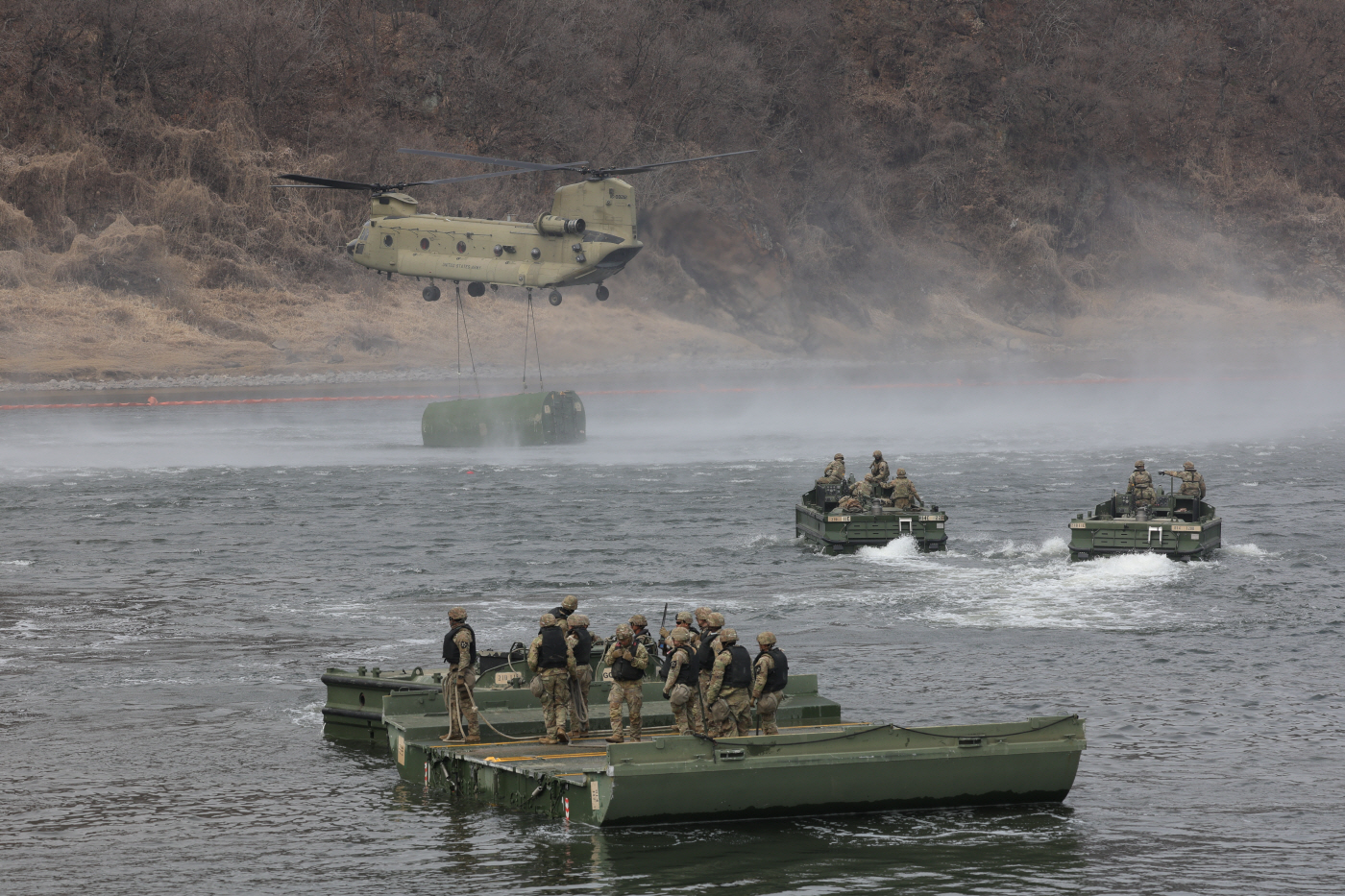
The U.S.-South Korea combined exercise aimed at defending the Korean Peninsula, Freedom Shield (FS), concluded on March 19. North Korea, which staged shows of force during the drills, is expected to continue military actions intended to advance the “parallel development of nuclear and conventional forces” announced at its 9th Party Congress and to keep signaling that it will not pursue denuclearization talks with the United States.
According to the South Korean Joint Chiefs of Staff and the U.S.-ROK Combined Forces Command, the FS exercise, which began on March 9, involved roughly 18,000 personnel and used scenarios tied to recent international conflicts. The drills focused on validating readiness for combined operations and increasing realism.
In a joint statement, the JCS and Combined Forces Command said the ROK-U.S. alliance concentrated on rapidly and effectively responding to complex security threats. Under Combined Forces Command direction, commanders and staff integrated capabilities across domains and strengthened the alliance’s ability to conduct joint operations across land, sea, air, space and cyber.
At a Ministry of Defense briefing, Jang Do-young, spokesman for the Joint Chiefs of Staff, said the allies “acted as one team to bolster joint operational capabilities and reaffirm the alliance’s solid combined defense posture.” He added that the exercise provided an opportunity to strengthen South Korea’s forces ahead of the planned transfer of wartime operational control. After a thorough assessment of the Combined Special Operations Component Command’s mission readiness, officials plan to make the command permanent later this year.
For the first time, the exercise publicly demonstrated the operation of the U.S. Army’s Indirect Fire Protection Capability (IFPC), often referred to as the U.S. version of Iron Dome. Deployed to U.S. forces in South Korea last September, the IFPC is designed to counter low-altitude threats such as drones. Its placement on the peninsula was the first such deployment to an overseas U.S. base.
During FS, the field training exercise “Warrior Shield” was also conducted across the peninsula. This year’s FTX included 22 events, fewer than half the 51 events held during last March’s FS. Officials said they scaled back as part of measures intended to ease tensions with North Korea, but Pyongyang responded throughout the exercise by launching strategic cruise missiles and large-caliber rocket artillery.
A Unification Ministry official told reporters that North Korea issued a statement from Kim Yo-jong and carried out missile and rocket launches observed by Chairman Kim Jong Un. “So far, we assess these as routine responses, but we will continue to monitor North Korea’s actions,” the official said.
Although FS has ended, analysts expect North Korea to maintain a steady pace of military activity. Park Won-gon, a professor at Ewha Womans University, said Pyongyang will keep developing nuclear, conventional and dual-use commercial weapons to demonstrate that it is a nuclear-armed state. He added that while North Korea’s messaging signals it will not engage in denuclearization talks and instead wants arms-control negotiations, he does not expect it to carry out strategic provocations such as ICBM launches or nuclear tests in the near term.










Most Commented