
Unveiling the Truth: How Civilian Suspects and Intelligence Agencies Are Linked in North Korea’s Drone Incident
Daniel Kim Views
|
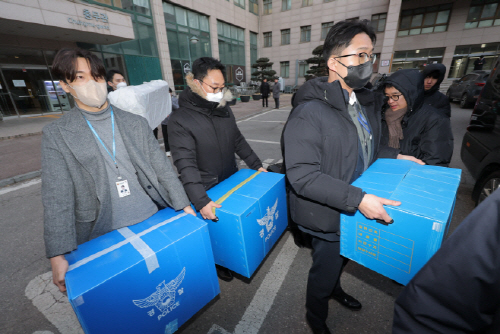
The Joint Military-Police Investigation Task Force (TF) probing the North Korean drone infiltration incident has initiated a forceful investigation into the Defense Security Support Command (DSSC) and the National Intelligence Service (NIS). These agencies are suspected of involvement in the drone infiltration, including providing financial support to the main culprits. While the NIS maintains there was no official involvement, given the nature of the incident as a high-level North Korean operation, it seems unlikely they can avoid responsibility. Some critics are questioning whether the secretive NIS is operating outside the control of the Lee Jae-myung administration, which seeks “peaceful coexistence on the Korean Peninsula.”
The TF announced that it executed search and seizure warrants on 18 locations, including the NIS and DSSC, starting at 9 AM on the 10th. The targets of the search included the suspects’ residences and offices. The TF has also identified three active-duty officers – a major and captain from the DSSC, and a captain from a regular unit – as suspects in the drone infiltration case, charging them with violations of the Aviation Safety Act. Additionally, three civilians who allegedly flew drones to North Korea from the border area are now facing charges of general treason under criminal law.
Previously, the TF had begun investigating three civilians: Chang, the CEO of a drone manufacturing company; Kim, who served as the North Korea liaison director at the same company; and Oh, a graduate student who claimed to have flown drones to North Korea. They were charged with flying modified drones to North Korea without permission (violating the Aviation Safety Act). During this process, the TF uncovered evidence that one NIS employee and three active-duty military personnel from the DSSC had contacted Oh, the primary suspect, and provided him with several million KRW (several thousand USD) in cash under the guise of activity funds. The DSSC maintains that Oh was recruited as a collaborator to assist their operatives’ intelligence activities, not for drone operations. The NIS also explained that the employee in question had never been in a position to use NIS funds since joining the agency, nor had they ever done so.
However, it’s realistically challenging for civilians to independently conduct drone infiltration activities targeting North Korea. Given that the individuals involved had ongoing contact with intelligence agents, it’s argued that the intelligence authorities must have been aware of this operation. There’s speculation that information sharing may have occurred, particularly centered around the NIS, which has the authority to adjust and control budgets and conduct audits of domestic intelligence agencies, including the DSSC. An insider familiar with intelligence operations stated that while it’s too early to say definitively, given the nature of the incident, it’s difficult to rule out the possibility that the NIS had at least prior knowledge or shared information about the operation.
Some argue that the closed organizational structure of intelligence agencies played a role in this situation. The budgets and operations of domestic intelligence agencies, including the NIS, are kept strictly confidential, with internal sharing of information between different projects prohibited. This structure allows for certain factions to potentially carry out activities covertly, even if they contradict the current administration’s North Korea policy. Another source familiar with intelligence operations stated, “Structurally, it’s difficult for a single agency to independently pursue an operation like this drone infiltration. Given the command and budget structures of intelligence agencies, with the NIS at the top, it’s hard to comprehend how this could have been carried out without going through the NIS.”









Most Commented